Key Takeaways
This blog explains what Google AI Overviews are and why they matter for dental practices trying to attract new patients through search. You will learn how Google AI Overviews work, what it takes to appear in them, and how the same strategies that help you show up in Google AI answers also help your practice get cited by ChatGPT, Perplexity AI, Google Gemini, and Microsoft Copilot. This guide also explains why traditional dental SEO is no longer enough and what you need to do right now to stay competitive.
- AI Overviews Priority: Generative summaries now occupy the absolute top space on Google results, pushing organic links downward.
- Factual Direct Synthesis: Google selects content that leads with clear, un-jargonized, and factually specific opening statements.
- Cross-Platform Visibility: Aligning content layouts for Google's AI crawler simultaneously improves positioning in third-party engines.
- GEO & AEO Implementation: Modern campaigns must blend classic keyword authority with chatbot readability structure.
- What Are Google AI Overviews and Why Should Dentists Care
- How Google AI Overviews Work and What Triggers Them
- What It Takes to Appear in Google AI Overviews
- Dental SEO Strategies That Support Google AI Overview Visibility
- Getting Cited by ChatGPT, Perplexity, Gemini, and Microsoft Copilot
- Why Traditional Dental SEO Is No Longer Enough
- A Simple Action Plan for Dental Practices Starting Today
- Final Thoughts on Google AI Overviews for Dental Practices
- Frequently Asked Questions
What Are Google AI Overviews and Why Should Dentists Care
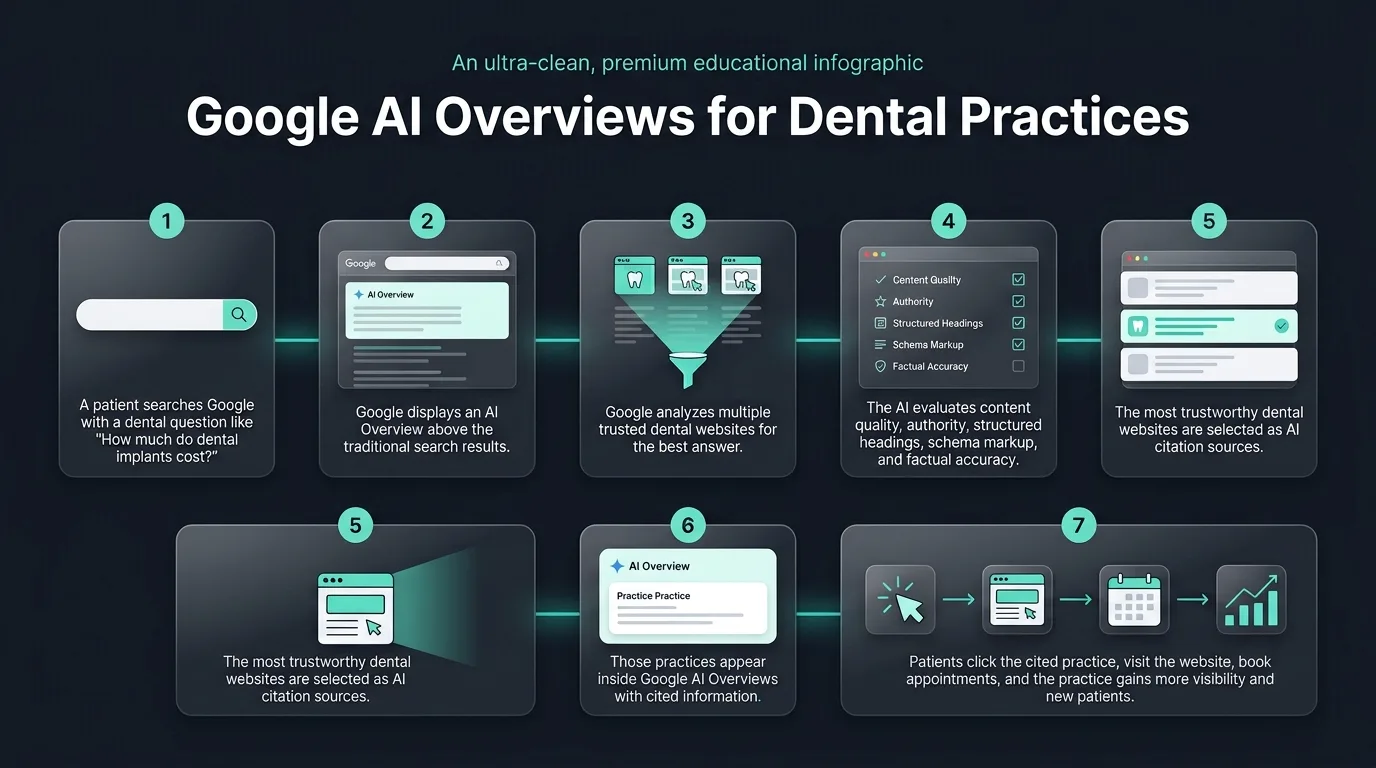
Google AI Overviews are AI-generated summaries that appear at the very top of Google search results. When a patient searches for something like "how much do dental implants cost" or "what is the best way to whiten teeth," Google now often shows an AI-written answer box before any regular website links appear.
This is a major shift in how Google works and it has a direct impact on dental SEO. In the past, ranking in the top three Google results was the goal. Now, the AI Overview appears above those results. If your dental practice is cited in that AI Overview box, you get visibility that is more prominent than any traditional ranking position.
If your dental website is not structured to be read and cited by Google's AI, you miss that top position entirely. Patients may get their answer from the AI Overview and never scroll down to see your website at all.
For dental practices investing in dental SEO marketing, Google AI Overviews represent both a challenge and a major opportunity. Understanding how to appear in them is now one of the most important dental SEO strategies available.
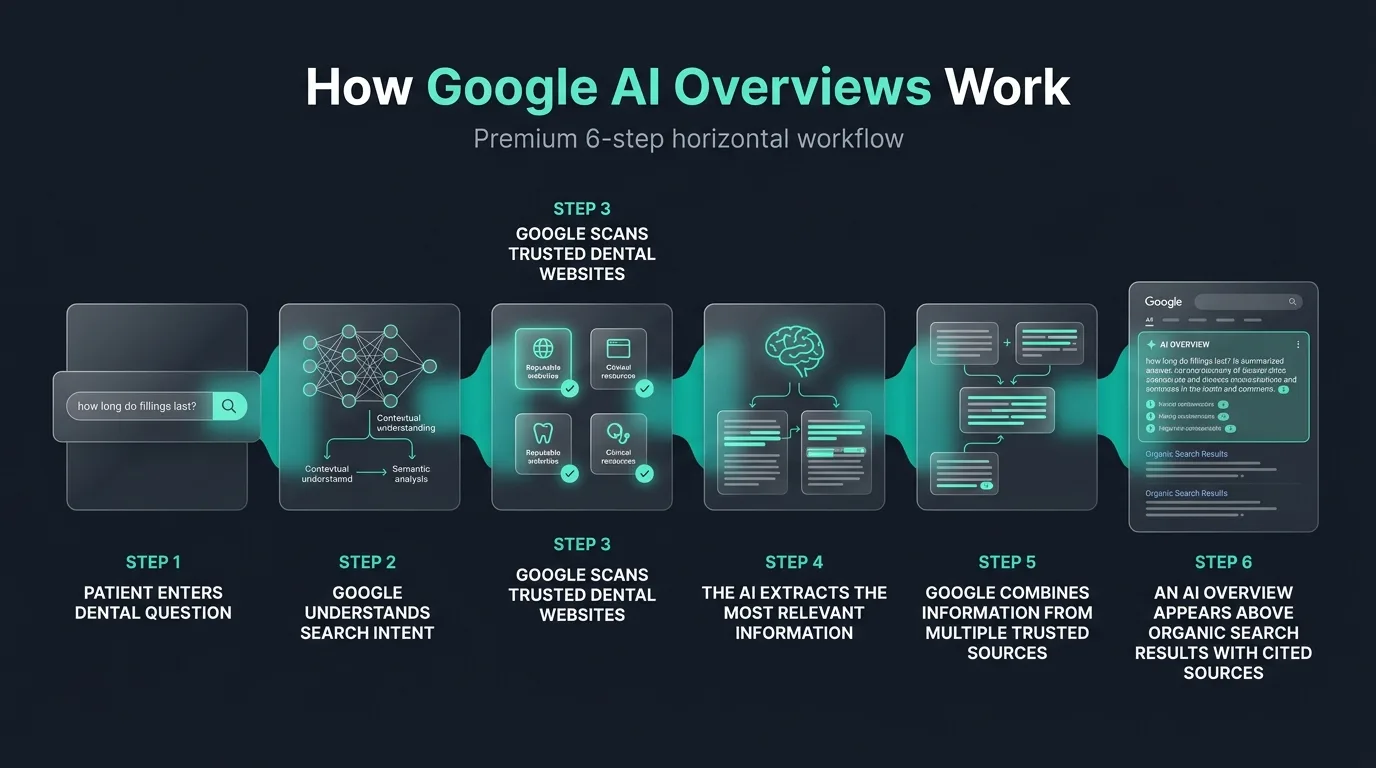 Figure 1: Google AI Overviews sit above organic rankings, presenting synthesised summaries and citation cards.
 How Google AI Overviews Work and What Triggers Them
Google AI Overviews are generated by Google's AI systems, which analyze content from across the web and synthesize a direct answer to the patient's query. They appear most often for informational questions, how-to queries, cost-related questions, and comparison searches.
For dental practices, this means AI Overviews frequently appear when patients search for things like how long dental implants last, what happens during a root canal, how to choose a dentist, and the difference between dental veneers and crowns.
Google pulls the content for AI Overviews from websites it considers trustworthy, well-organized, and factually accurate. It does not always pull from the top-ranked website. It pulls from the website whose content best answers the specific question being asked.
This means dental practices with clearly written, factually specific, and well-structured content can appear in AI Overviews even if they are not ranking in the number one organic position. That is a significant opportunity for dental practices and dental SEO agencies that know how to take advantage of it.
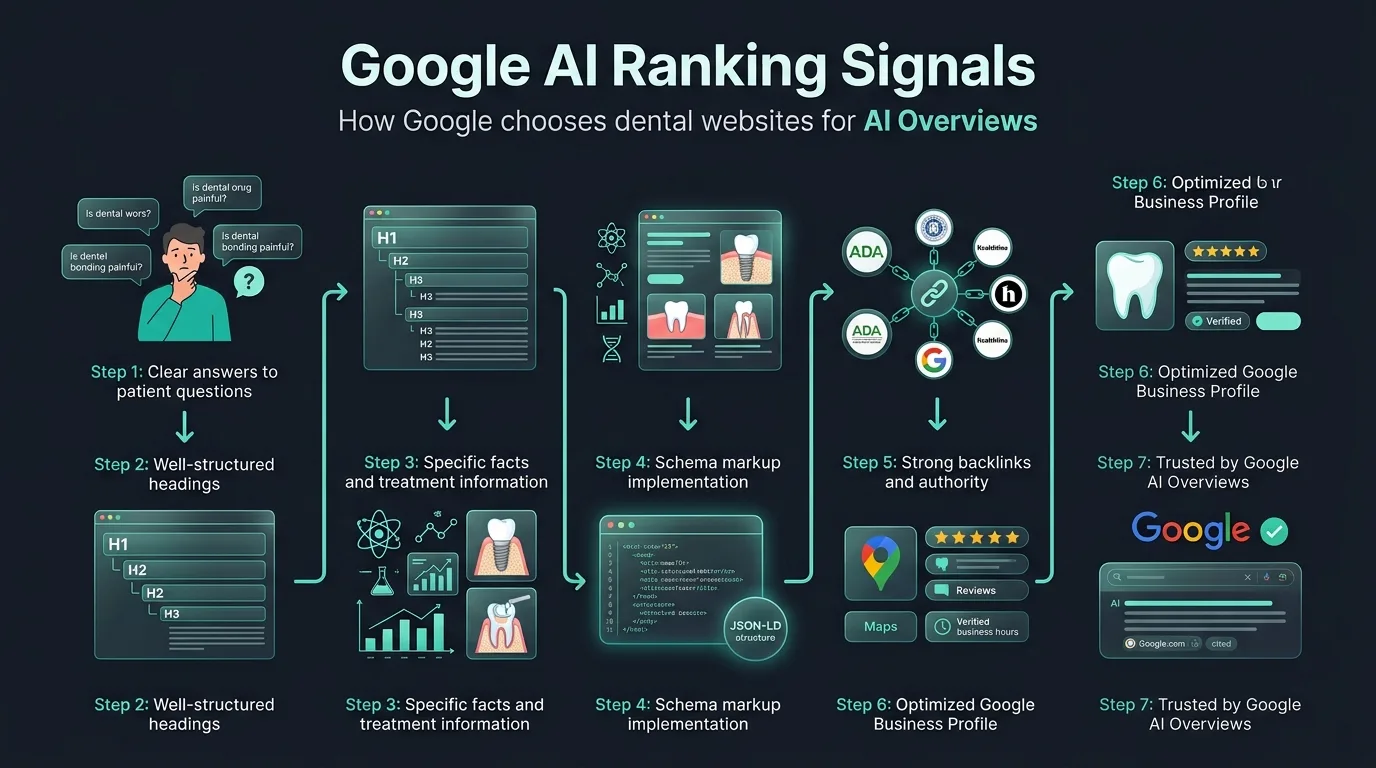 Figure 2: Informational and comparative patient queries are primary triggers for generative summaries.
 What It Takes to Appear in Google AI Overviews
Appearing in Google AI Overviews requires a specific approach to dental website content and dental SEO strategy. Here is what matters most.
- Direct and Clear Answers: Google AI pulls content that answers questions directly. Your dental website pages and blog posts need to answer the patient's question in the first paragraph. Do not bury the answer. Do not write a long introduction before getting to the point. State the answer clearly and then support it with additional detail. For example, if your page is about dental implant costs, the first paragraph should clearly state the typical cost range and what factors affect pricing. Google AI can extract that answer and include it in an Overview. A page that spends the first three paragraphs talking about how important teeth are before mentioning cost will not be cited.
- Well-Structured Content with Clear Headings: Google AI Overviews favor content that is organized with clear heading tags. Use descriptive headings that mirror the language patients use when searching. Each section of your dental content should cover one specific topic clearly and completely. Dental website optimization for AI Overviews means treating each section of your content as a standalone answer. Google can pull individual sections from a page without using the whole page. Make each section strong enough to stand on its own as a useful answer.
- Factual and Specific Information: AI Overviews favor content that includes real facts, numbers, and specifics. Instead of writing that dental implants are a popular solution for missing teeth, write that dental implants have a success rate above 95 percent and can last a lifetime with proper care. Specific information is more useful to Google AI and more likely to be cited.
- Authoritative and Trusted Dental Website: Google AI Overviews pull from websites that Google already trusts. This means your dental practice SEO foundation still matters. A dental website with strong local SEO, quality backlinks, consistent directory citations, a well-maintained Google Business Profile, and positive patient reviews is far more likely to be cited in AI Overviews than a thin or poorly maintained website.
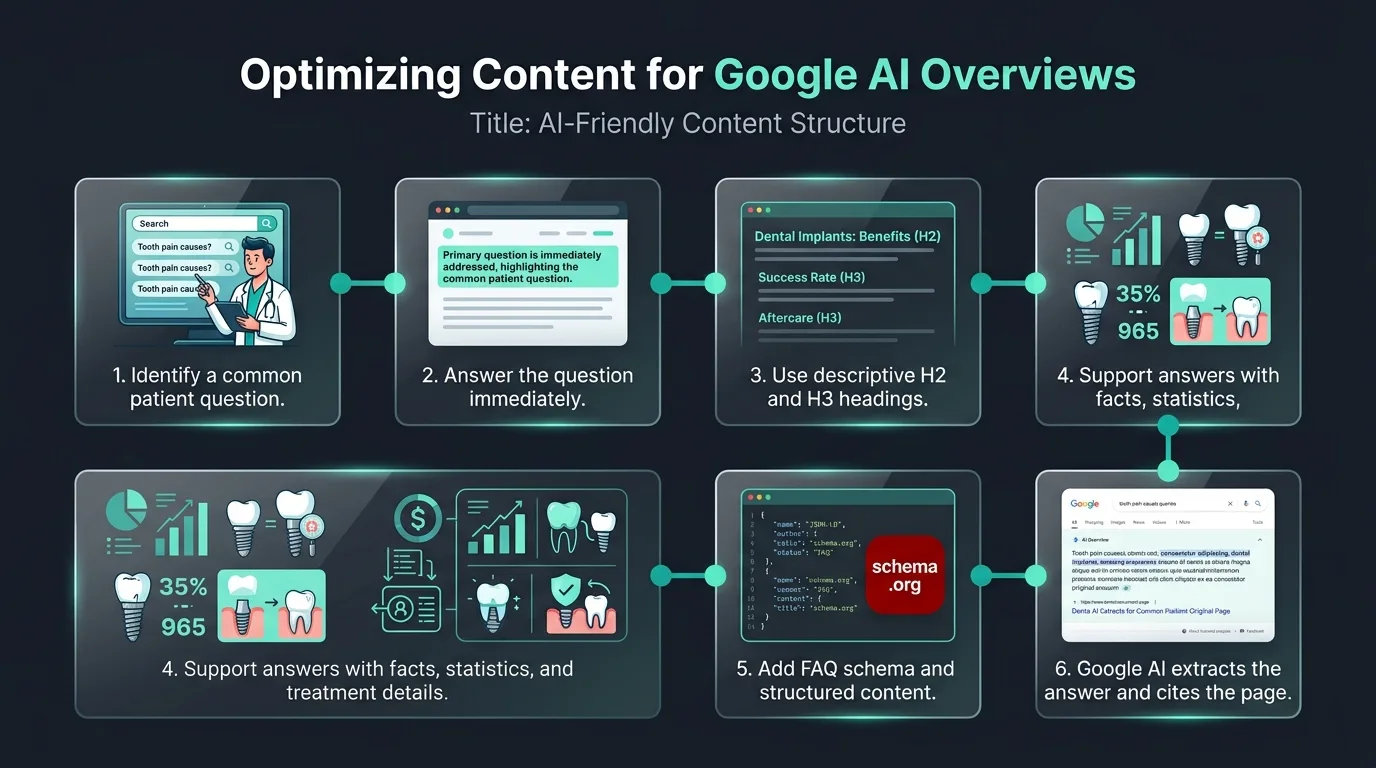 Figure 3: Quality content layout, structured lists, and direct answers support overview indexing.
 Dental SEO Strategies That Support Google AI Overview Visibility
The dental SEO strategies that help you appear in Google AI Overviews overlap significantly with broader AI search optimization practices. Here is what to focus on.
- Create an FAQ Section on Every Key Service Page: Frequently asked questions sections are one of the most reliable ways to get cited in Google AI Overviews. When you include specific patient questions as headings and answer them directly below, you create content that perfectly matches what AI systems are looking for. Add FAQ sections to your dental implant page, your cosmetic dentistry page, your new patient page, and any other high-priority service pages. Use the exact language patients use when searching. Ask your front desk team what questions patients ask most often and use those as your FAQ topics. Ensure you deploy proper FAQ schema markup to support search crawler parsing.
- Publish Educational Blog Content That Answers Patient Questions: A consistent dental blog that covers patient questions in detail is one of the most effective tools for appearing in Google AI Overviews. Each blog post should target one specific question, answer it directly, and include supporting detail that builds credibility. Topics like what to eat after a tooth extraction, how to care for dental implants, and when to see a dentist for tooth pain all generate strong AI Overview potential. These are exactly the kinds of questions patients ask Google every day.
- Optimize Your Google Business Profile: Your Google Business Profile directly influences how Google's AI systems perceive your practice. A complete and active profile with accurate information, recent photos, regular posts, and a strong review count signals to Google that your practice is trustworthy and locally relevant. Dental practices with strong Google Business Profiles are more likely to appear in both local AI answers and in Google AI Overviews for locally-focused dental queries. Local SEO for dentists and AI Overview optimization go hand in hand.
- Build Authority Through Backlinks and Mentions: Google AI Overviews pull from websites with established authority. Earning backlinks from trusted local websites, dental industry publications, and health-focused platforms raises your website's credibility in Google's eyes. The more trusted your dental website appears, the more likely Google AI is to cite your content in an Overview. We detail link outreach strategies in our local link building guide.
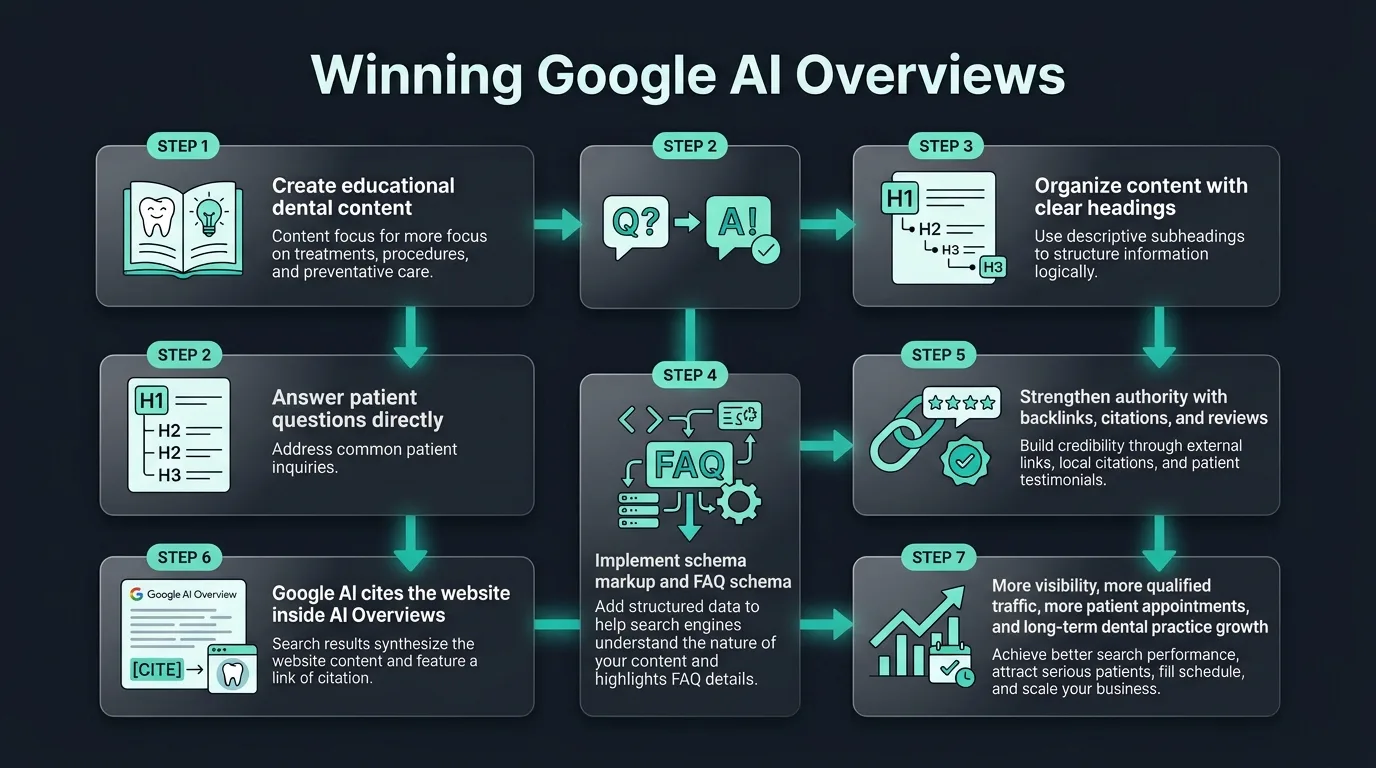 Figure 4: GBP completeness, FAQ structures, and schema attributes elevate localized trust.
 Getting Cited by ChatGPT, Perplexity, Gemini, and Microsoft Copilot
Google AI Overviews are not the only AI platform that dental practices need to optimize for. ChatGPT, Perplexity AI, Google Gemini, Microsoft Copilot, and SearchGPT are all being used by patients to find dental information and recommendations.
Getting cited by AI tools like ChatGPT requires your dental website to have content that is indexed, authoritative, and directly answers common patient questions. ChatGPT with browsing access pulls from current web pages. A dental practice blog with strong structured content and good backlinks is more likely to appear in ChatGPT answers. Track visibility recommendations in our guide on ChatGPT recommendations.
Getting featured in Perplexity's answer engine requires similar conditions. Perplexity cites its sources directly in every answer it generates. Dental practices that appear in Perplexity answers get direct name recognition with patients who are actively researching dental care. To appear there, your content must be specific, factual, and organized around clear patient questions. Learn more about zero-click parameters in our zero-click strategy guide.
Dominating Google's AI Overviews and ranking in Google Gemini answers requires the same foundation as strong traditional dental SEO combined with AI-optimized content structure. Google's AI tools are deeply integrated with its search index, so practices that perform well in traditional dental search engine optimization are better positioned to appear in Gemini answers.
Microsoft Copilot pulls from Bing's search index. Submitting your dental website to Bing Webmaster Tools and ensuring your site is well-indexed in Bing improves your chances of appearing in Copilot answers. Many dental practices ignore Bing entirely and miss Copilot visibility as a result. We outline crawl optimization structures in our mobile SEO guide.
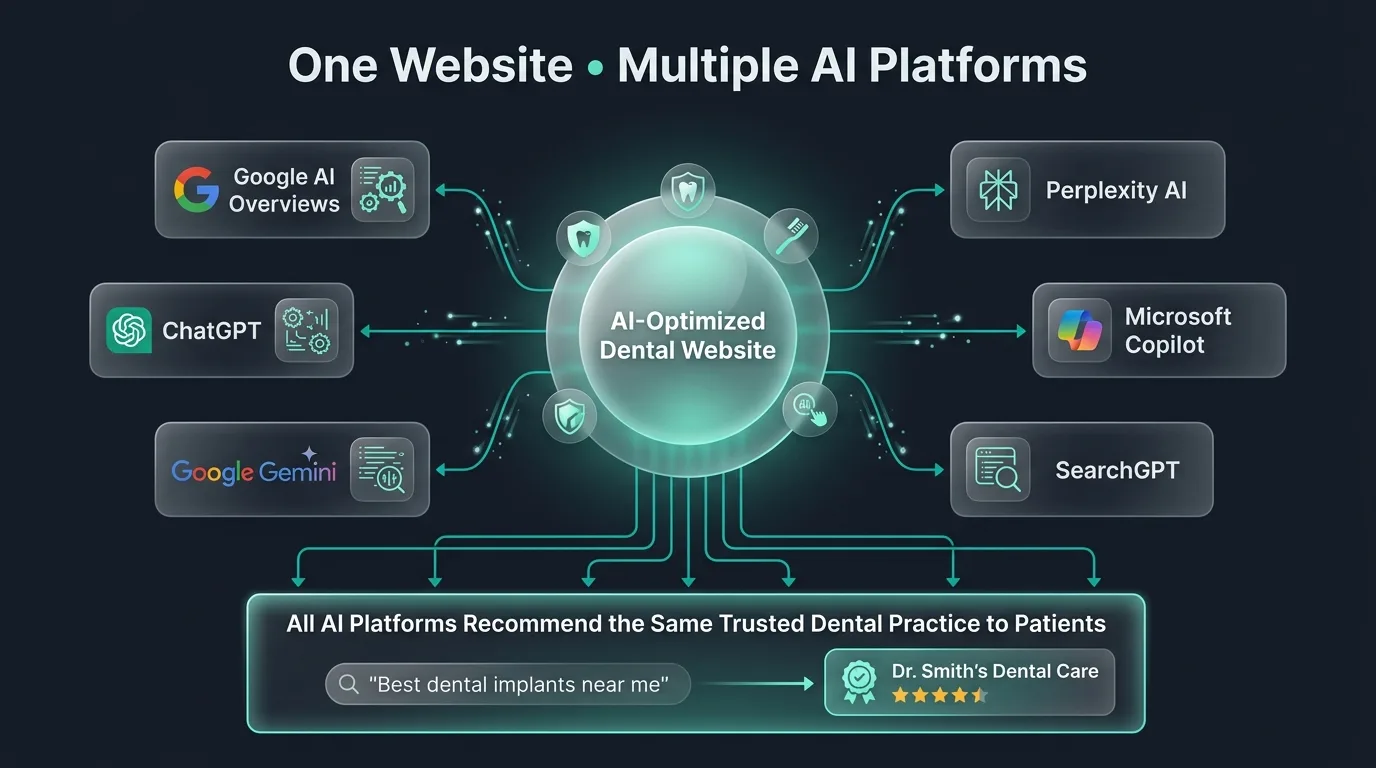 Figure 5: Building a clean digital footprint enables recommendations across multiple chatbot platforms.
 Why Traditional Dental SEO Is No Longer Enough
For years, dental SEO meant optimizing pages for keywords, building directory citations, and earning a handful of backlinks. Those strategies drove results because Google showed ten blue links and whoever ranked highest got the most clicks.
That model is changing rapidly. Google AI Overviews now appear above organic results for a growing share of dental queries. Patients are increasingly turning to ChatGPT, Perplexity, and other AI tools instead of scrolling through search results. The traditional dental SEO playbook does not account for any of this.
This is why dental SEO experts now talk about Generative Engine Optimization or GEO and Answer Engine Optimization or AEO as essential additions to traditional dental search engine marketing.
- Generative Engine Optimization (GEO): GEO means building the kind of online authority and content structure that AI engines can read, trust, and cite. It means being findable not just in Google's blue links but in AI-generated answers across every major platform.
- Answer Engine Optimization (AEO): AEO means structuring your dental website content to directly answer patient questions so that AI tools can extract and present your answers with confidence. It means writing for the AI engine that will summarize your content, not just for the human who will skim your page.
Dental practices and dental SEO agencies that continue relying only on traditional SEO tactics will gradually become less visible as AI search grows. The practices that adopt GEO and AEO alongside traditional dental local SEO will grow their patient base while competitors wonder why their rankings are not translating into new appointments.
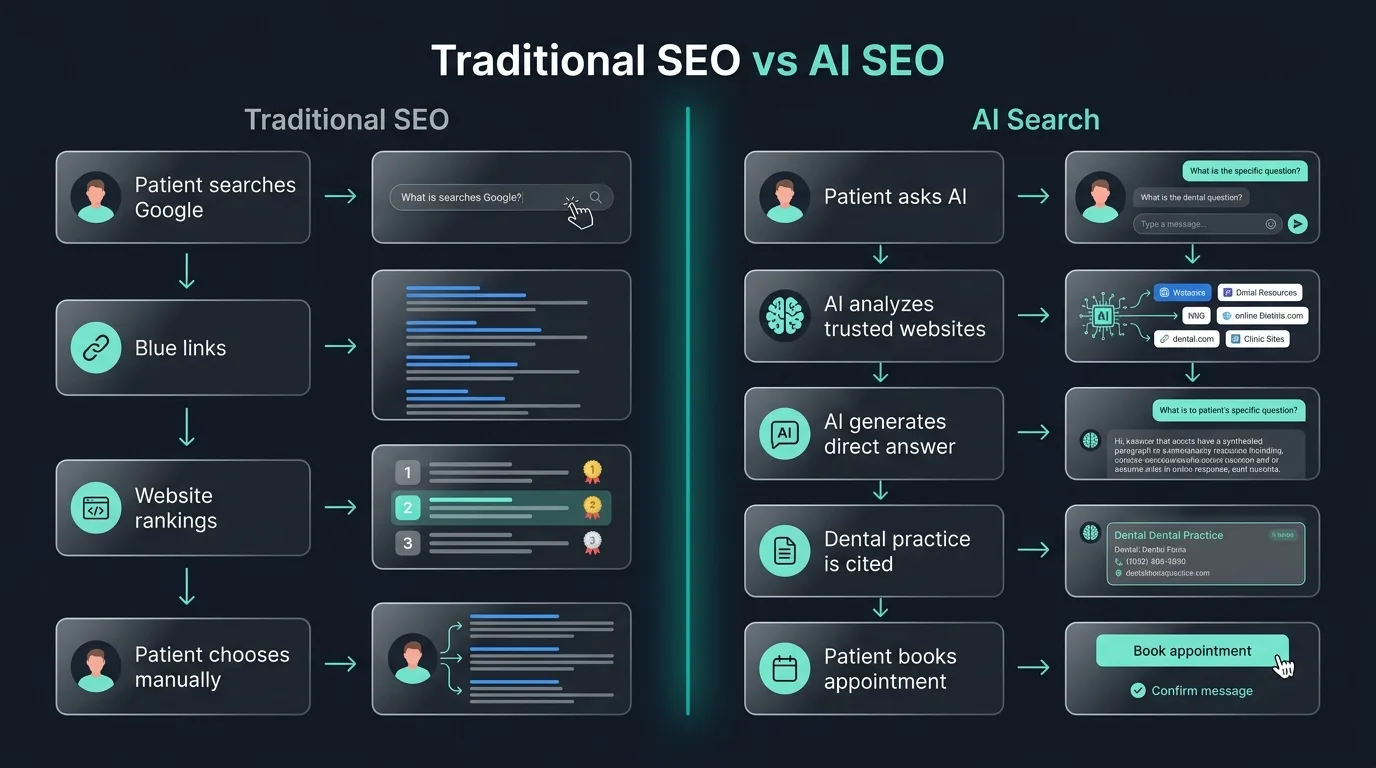 Figure 6: Combining traditional domain authority with GEO structured markup is key to modern visibility.
 A Simple Action Plan for Dental Practices Starting Today
Here is a practical action plan to prepare your practice for Google AI Overviews:
- Rewrite Service Page Introductions: Start by reviewing your top five service pages. Does each one answer patient questions directly in the first paragraph? If not, rewrite the opening of each page to lead with a clear direct answer.
- Integrate FAQ Modules: Add FAQ sections to every major service page using real questions your patients ask. Write clear and specific answers to each question. Reference our schema markup guide to configure FAQ tags.
- Target Common Dental Queries: Publish at least two educational blog posts per month that target common patient questions about dental procedures, costs, and oral health topics.
- Maximize GBP Active Signals: Make sure your Google Business Profile is fully complete, recently updated, and actively collecting new patient reviews. Learn to optimize GBP reviews in our review responses guide.
- Audit Search Indices: Submit your dental website to both Google Search Console and Bing Webmaster Tools. Ensure your sitemap is current and all pages are indexed. Access setup steps in our Search Console instructions.
- Earn High-Trust Backlinks: Build authority by earning links from local community websites, dental industry publications, and local news sources. Each trusted link you earn makes your dental website more likely to be cited in AI Overviews and AI-generated recommendations.
Final Thoughts on Google AI Overviews for Dental Practices
Google AI Overviews are reshaping how patients find dental information and choose dental providers. Dental practices that understand how to appear in these AI-generated answers will attract more new patients, build stronger online visibility, and stay ahead of competitors who are still optimizing for a search landscape that is rapidly changing.
Traditional dental SEO is the foundation. GEO and AEO are the future. Combining all three is the complete dental SEO strategy that every dental practice needs right now. Start optimizing for Google AI Overviews today and make sure your practice is positioned to be cited across every major AI search platform where your next patient is already searching.

Ready to Dominate Local & AI Search?
Navigating the complexity of Local Map Packs, traditional search rankings, and emerging AI engine visibility can be difficult. Schedule a practice growth audit with our dental SEO specialists today. We will analyze your practice listings, audit your competitor strategies, and layout the exact plan needed to capture high-value cases.
Schedule Growth AssessmentFrequently Asked Questions
Google AI Overviews are AI-synthesized answer boxes displayed at the top of Google search results for informational, cost, or comparison queries.
By creating content that directly answers patient questions in the first paragraph, using structured heading tags, providing factual data, and maintaining a high-authority website.
No. Traditional local SEO, directory citations, backlinks, and reviews provide the credibility signals that Google's AI needs to trust and cite your website.
FAQ sections formatted with clear question headings and direct answers are prime targets for AI scrapers and increase the likelihood of getting featured in AI Overviews.
Traditional SEO focuses on keyword rankings. GEO (Generative Engine Optimization) focuses on structuring data and building authority so conversational AI tools recommend your practice.