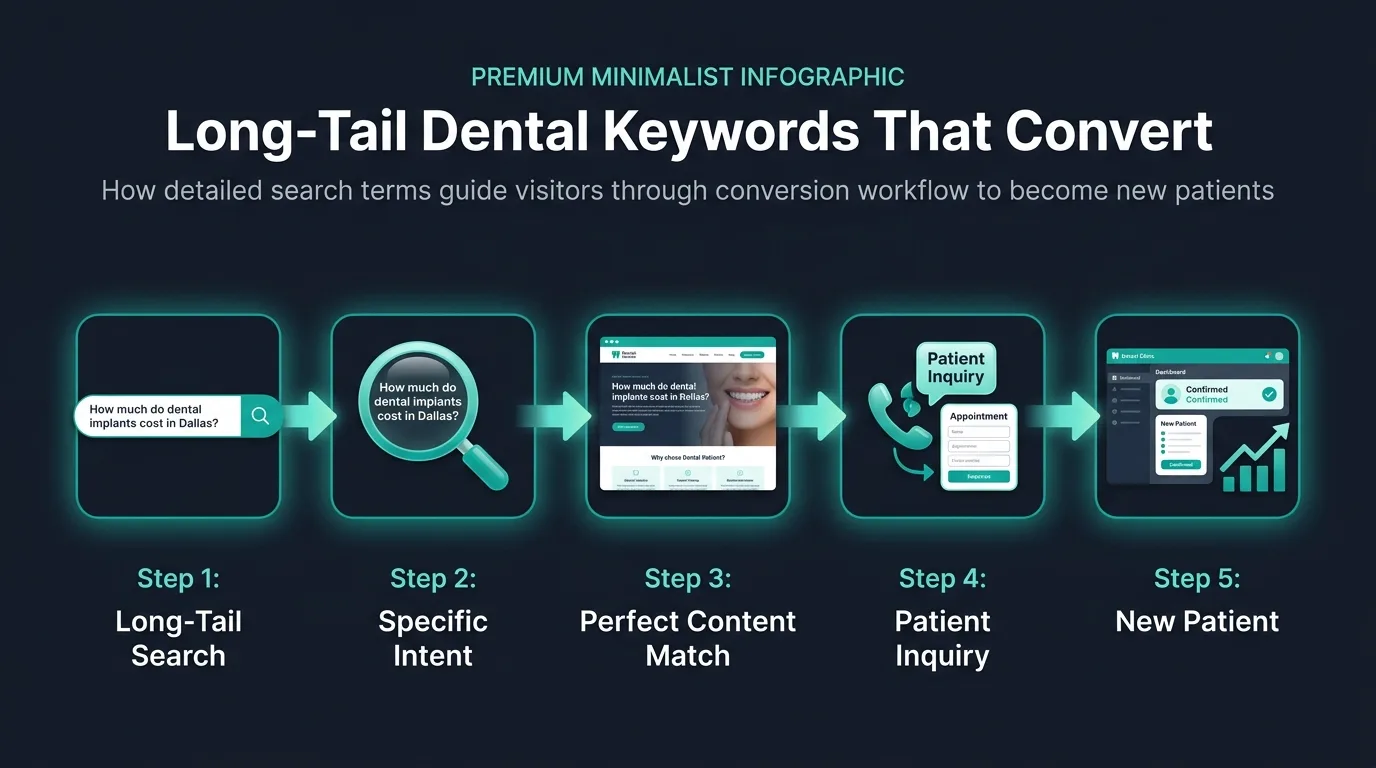
Key Takeaways
This guide explains what long-tail dental keywords are and why they convert better than short, broad search terms. You will learn which types of long-tail keywords matter most for dental SEO, how to find them, where to use them on your dental website, and how to build content around them that attracts high-value patients. The guide also covers how AI search engines like ChatGPT, Perplexity AI, Google Gemini, and Microsoft Copilot are changing the way patients find dentists, and why every dental practice must invest in Generative Engine Optimization and Answer Engine Optimization to stay competitive.
- Higher Conversion Rates: Long-tail searchers are further along in their decision process and ready to book an appointment.
- Less Competition: Specific, multi-word phrases are far easier to rank for than broad one or two word terms.
- Multiple Entry Points: Targeting dozens of long-tail keywords creates many pathways for new patients to find your practice.
- AI Engine Alignment: Long-tail content matches the conversational way ChatGPT, Perplexity, and Gemini answer patient questions.
- Long-Tail Dental Keywords That Convert: The Complete Guide for Dentists
- What Are Long-Tail Dental Keywords
- Why Long-Tail Keywords Convert Better Than Short Keywords
- Types of Long-Tail Dental Keywords That Drive New Patients
- How to Find Long-Tail Dental Keywords for Your Practice
- Where to Use Long-Tail Keywords on Your Dental Website
- Long-Tail Keywords and Dental Implant Marketing
- How Long-Tail Keywords Connect to AI Search Visibility
- Generative Engine Optimization and Answer Engine Optimization
- Measuring Which Long-Tail Keywords Are Converting
- Final Thoughts
- Frequently Asked Questions
Long-Tail Dental Keywords That Convert: The Complete Guide for Dentists
Most dental practices try to rank for short, broad terms like "dentist" or "dental implants." The problem is that those keywords are incredibly competitive. Every dental office in the country is targeting the same short phrases. Most single-location practices and solo practitioners will never rank for them.
Long-tail keywords are the solution. They are longer, more specific search phrases that fewer websites compete for but that bring in patients who are much closer to booking an appointment. In dental SEO, long-tail keywords are one of the most effective and underused tools available.
This guide will show you what long-tail dental keywords are, why they convert so well, which ones to target, and how to build a dental SEO strategy around them that delivers real new patient growth.
What Are Long-Tail Dental Keywords
A long-tail keyword is a search phrase that is three or more words long and targets a specific topic, service, or question. The name comes from the idea that if you chart all possible search terms by search volume, short broad terms sit at the top of the chart with high volume, and specific long phrases form a long tail stretching out below them with lower individual volume but enormous combined traffic.
For dental search engine optimization, a short keyword might be "dentist" or "dental implants." Long-tail versions of those same terms look like this.
- "How much do dental implants cost in Houston" is a long-tail keyword targeting a specific cost question about implants.
- "Best dentist for anxious patients in Chicago" is a long-tail keyword targeting a specific patient type seeking sedation dentistry.
- "Affordable teeth whitening for sensitive teeth near me" is a long-tail keyword combining a service with a near me modifier.
- "What is the recovery time for dental implants" is a long-tail keyword addressing a common patient question about dental implant treatment.
Each of these phrases tells you something very specific about what the searcher wants. They are not casually browsing. They have a clear need, a clear question, or a clear location in mind. That specificity is exactly what makes long-tail dental keywords convert so well into actual new patient appointments.
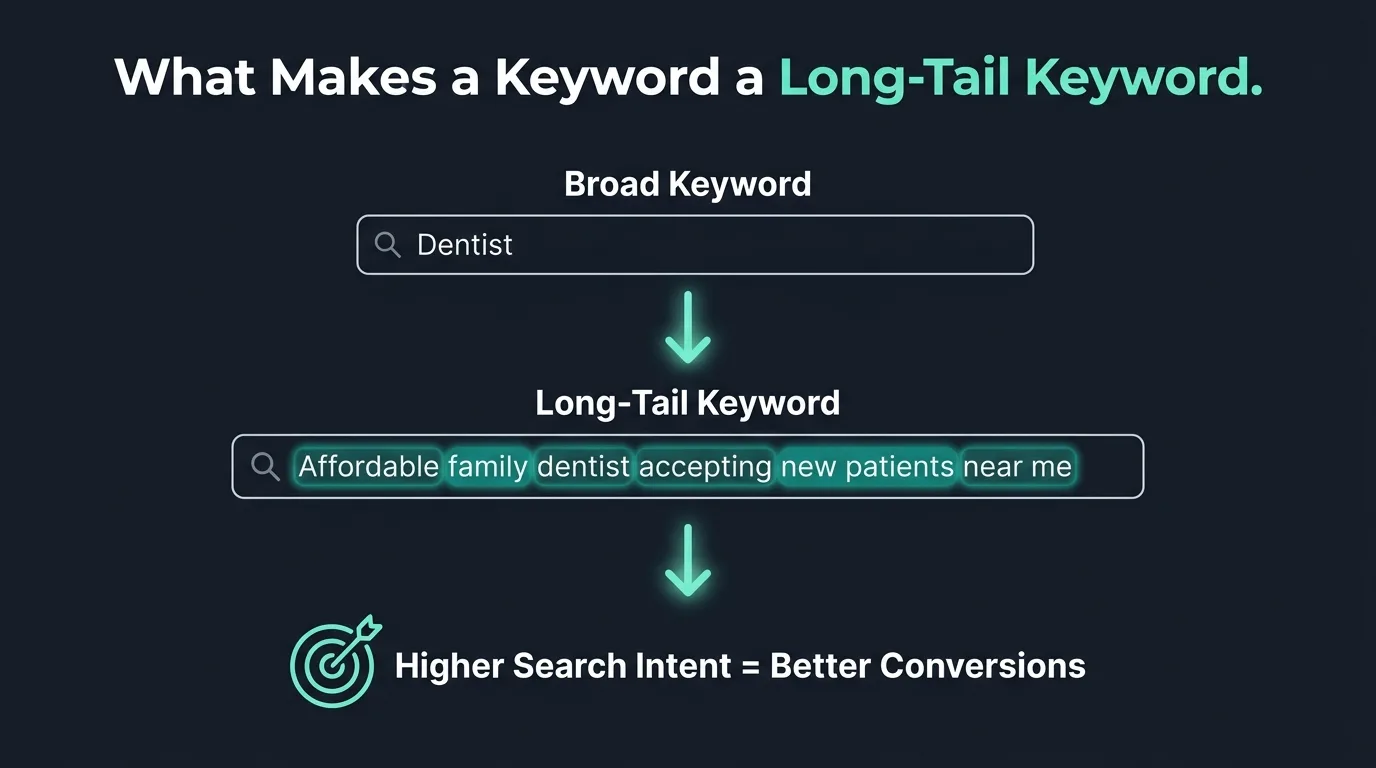 Figure 1: Long-tail keywords are more specific, carry higher search intent, and lead to better patient conversions.
 Why Long-Tail Keywords Convert Better Than Short Keywords
Conversion in dental SEO means turning a website visitor into a patient who calls, books, or submits a contact form. Long-tail keywords consistently outperform short keywords at this stage for several important reasons.
- Further Along in Decision Process: Someone who types "dentist" into Google might just be exploring options. Someone who types "dental implant consultation in Raleigh accepting new patients" has already decided they want implants and is looking for a specific provider. That second person is much more likely to become a patient.
- Precise Content Match: Long-tail keywords attract patients who already know what they want. When your dental website answers exactly what they are searching for, the match is precise. There is no mismatch between what they expected and what they found. This reduces bounce rates and increases the chance they take the next step.
- Less Competition: Ranking for "dentist" is nearly impossible for most practices. Ranking for "family dentist in Naperville Illinois accepting Medicaid" is much more achievable. A smart dental SEO strategy targets dozens or hundreds of these specific phrases across different service pages and blog posts, building up traffic from many sources simultaneously.
- Natural Search Language: Long-tail keywords are directly aligned with how people actually search. Real people do not type single words into Google. They type questions and phrases. Dental website SEO built around natural, conversational language matches the way real patients search, which leads to better rankings and better conversions. This is especially relevant for voice search optimization.
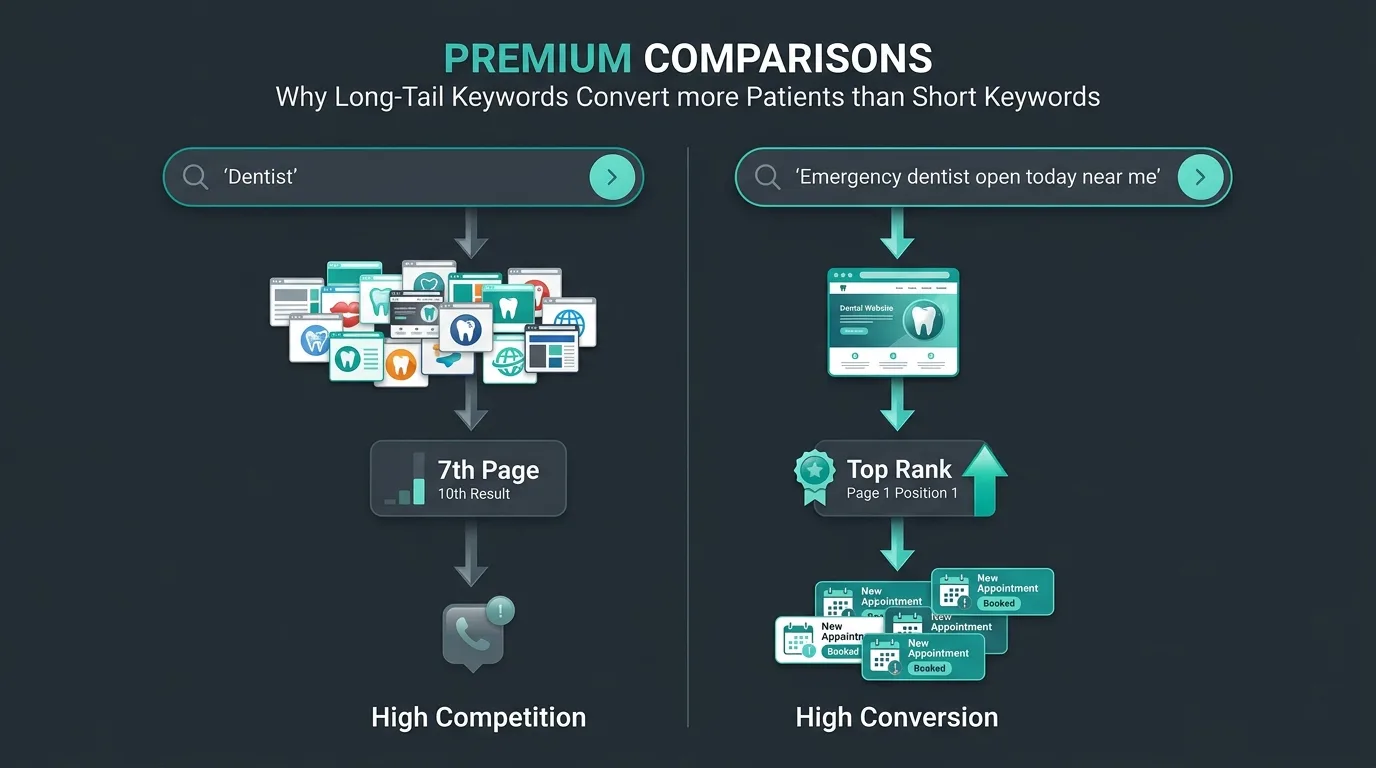 Figure 2: Short keywords create high competition with low conversion, while long-tail keywords deliver top rankings and high conversion rates.
 Types of Long-Tail Dental Keywords That Drive New Patients
Not all long-tail keywords are equally valuable. Here are the main categories that dental practices should focus on when building their keyword research strategy.
- Service Specific Long-Tail Keywords: These combine a dental treatment with extra details. Examples include "porcelain veneers for discolored teeth," "same day dental crowns in my area," "clear aligners for adults near me," and "dental bonding for chipped front tooth." These target patients who know exactly what treatment they are looking for.
- Cost and Pricing Long-Tail Keywords: These are among the most frequently searched. Keywords like "how much does a dental implant cost in Dallas," "average price for Invisalign treatment," "dental crown cost without insurance," and "affordable dental cleaning for uninsured patients" attract patients in the research and comparison phase. See our dental implant cost page SEO guide for optimization strategies.
- Problem and Symptom Long-Tail Keywords: These target patients experiencing something but who do not yet know the solution. Searches like "why does my tooth hurt when I bite down," "what to do about a cracked molar," "my gums are bleeding every morning," and "tooth sensitivity to cold that won't go away" bring patients to your website at the very start of their patient journey.
- Comparison Long-Tail Keywords: These attract patients weighing their options. Searches like "dental implants vs dentures which is better," "Invisalign vs braces for adults," "composite vs porcelain veneers," and "dental crown vs filling for cracked tooth" show that the patient is actively making a decision. See our Invisalign vs braces content strategy guide.
- Urgency Long-Tail Keywords: These come from patients in immediate need. Searches like "emergency dentist open on weekends near me," "broken tooth pain relief tonight," "dentist accepting walk-ins today in my city," and "tooth infection treatment as soon as possible" signal a patient who will act immediately. Learn how to rank for emergency dentist near me.
- Audience Specific Long-Tail Keywords: These target a defined patient group. Examples include "pediatric dentist for children with dental anxiety," "dentist experienced with elderly patients," "cosmetic dentist for wedding smile makeover," and "dental implants for seniors on fixed income." These phrases help you attract your most ideal patients by speaking directly to their unique situation.
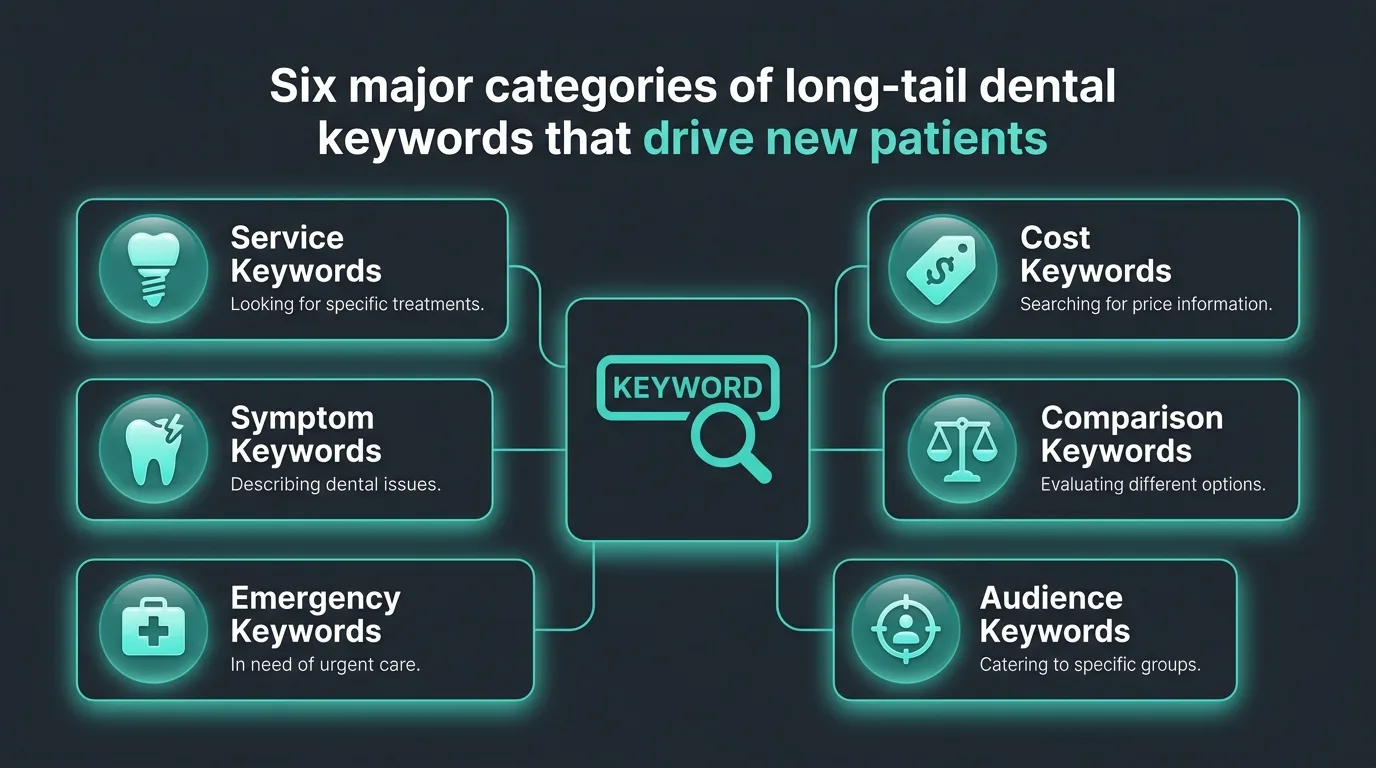 Figure 3: The six major categories of long-tail dental keywords cover service, cost, symptom, comparison, emergency, and audience searches.
 How to Find Long-Tail Dental Keywords for Your Practice
Finding the right long-tail keywords does not require expensive tools, though tools can help. Here are practical ways to discover them for your dental keyword research strategy.
- Patient Questions: Think about the questions patients ask your front desk team and your hygienists every day. Every question a patient asks out loud is a potential long-tail keyword. If patients regularly ask "how long does it take to get dental implants" or "is teeth whitening safe for sensitive teeth," those are real search queries you should be targeting.
- Google Autocomplete: Type a dental service into Google and see what phrases Google suggests to complete your search. These suggestions are pulled from real search data and give you an instant list of long-tail keyword ideas. Try starting with "dental implants for," "how to fix," "best dentist for," and similar starter phrases.
- People Also Ask: Check the "People Also Ask" boxes in Google search results. When you search a dental term, Google often displays a box with related questions other people have searched. Each of those questions is a long-tail keyword opportunity. Questions like "does dental insurance cover implants" or "how painful is a root canal" are real searches your future patients are making.
- Google Search Console: Look at what searches are already bringing visitors to your dental website using Google Search Console. You may discover that patients are finding you through long-tail phrases you never specifically targeted. Those existing queries tell you where to create more dedicated content to capture even more of that traffic.
- Competitor Analysis: Review your competitors' websites to see what questions and topics they cover. If a competing dental practice has a blog post answering "what foods can I eat after getting dental implants," that topic is worth covering on your own dental website in a more thorough and better-optimized way.
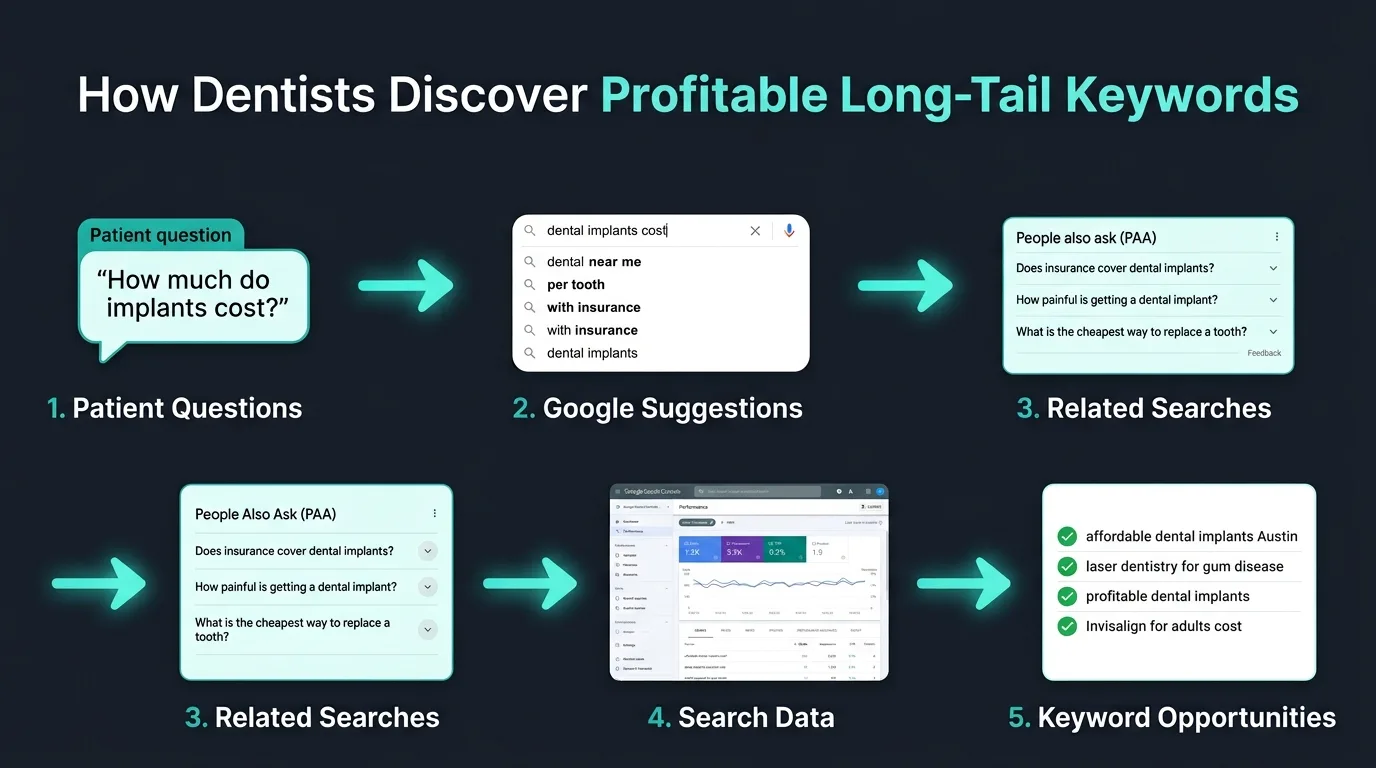 Figure 4: Five practical methods for discovering profitable long-tail dental keywords from patient questions to keyword opportunities.
 Where to Use Long-Tail Keywords on Your Dental Website
Finding the keywords is step one. Using them correctly on your dental website is step two. Here is where to place your long-tail keywords for maximum impact.
- Service Pages: Every service page on your dental website should target a set of related long-tail keywords. A dental implants page should answer the cost question, the process question, the candidacy question, and the recovery question. Each of these answers naturally incorporates long-tail keywords while giving patients genuinely helpful information.
- Blog Posts: Blog posts are the most powerful place to target long-tail dental SEO keywords at scale. A single blog post can target one specific long-tail question or topic in depth. Over time, publishing regular blog posts targeting different long-tail keywords builds your dental website's authority and attracts a wide range of new patient searches. Use strategic internal linking to connect related content.
- FAQ Pages: FAQ pages are highly effective for long-tail keyword targeting. Structure your FAQ page so that each question is a real long-tail phrase patients search, and answer it directly and clearly below. This format is also ideal for AI search visibility. Add FAQ schema to maximize search engine understanding.
- Landing Pages: Landing pages built for specific services and audiences can target hyper-specific long-tail terms. A landing page titled "Dental Implants for Seniors in Phoenix Arizona" targets a very narrow audience but converts extremely well because the match between the search and the page content is nearly perfect. Build neighborhood SEO pages and multi-location pages for geographic targeting.
- Page Titles and Headings: Page titles and headings should incorporate your target long-tail keywords naturally. If you are writing a page about dental anxiety, use a heading like "How We Help Nervous Patients Feel Comfortable During Dental Visits" rather than a generic heading like "Our Approach." The specific heading targets a real long-tail search while also being more compelling to the patient reading it.
Long-Tail Keywords and Dental Implant Marketing
Dental implant marketing deserves special attention when it comes to long-tail keyword strategy. Implant cases are among the highest value treatments in dentistry. The patient journey for implants is longer than for routine care, which means patients search extensively before making a decision.
Long-tail keywords are perfect for capturing dental implant patients at every stage of their research.
- Early Stage Searches: Queries like "am I a good candidate for dental implants" and "how do I know if I need a dental implant" capture patients just beginning to explore their options.
- Mid Stage Searches: Queries like "how long does the dental implant process take" and "what is the difference between implants and bridges" target patients actively comparing solutions.
- Late Stage Searches: Queries like "dental implant consultation near me" and "best dental implant specialist in my city" reach patients ready to book. Optimize with geo-modifier keywords for your area.
- Full Arch Cases: Searches like "full mouth dental implants cost in Texas," "all on 4 dental implants recovery time," and "full arch implant candidates near me" represent patients looking at life-changing treatment with a high treatment value. See our implant cost page SEO guide for targeting these keywords.
A dental SEO strategy built around dental implant long-tail keywords creates multiple entry points for implant patients at every stage. Each piece of content builds trust, answers a real question, and guides the patient closer to booking a consultation.
How Long-Tail Keywords Connect to AI Search Visibility
Long-tail dental keywords and AI search optimization are deeply connected. Understanding this connection is essential for any dental practice or dental marketing agency planning for the future.
AI tools like ChatGPT, Perplexity AI, Google Gemini, SearchGPT, and Microsoft Copilot answer patient questions in conversational, detailed responses. When a patient asks one of these tools a specific dental question, the AI looks for web pages that directly address that exact question with a clear, authoritative answer.
Long-tail keyword content is exactly what AI tools are looking for. A blog post that thoroughly answers "how much do dental implants cost in Nashville" is the kind of content that ChatGPT may pull from when a user asks that same question. A FAQ page that answers "is Invisalign covered by dental insurance" is the type of structured content that Perplexity AI can extract and present as a featured answer.
- ChatGPT and SearchGPT: To get your dental practice cited as a verified source in ChatGPT browsing results, your long-tail keyword content needs to be written in a clear, direct, factual style. Avoid vague language. Give real answers with specific information. Use headings that match the question being answered.
- Google AI Overviews: To dominate Google's AI Overviews, your long-tail content must rank well organically and be structured with proper schema markup. Learn how to appear in AI overviews with our dedicated guide.
- Perplexity AI: Perplexity's answer engine favors content that is structured so it can extract a clean, direct answer. Write in plain language, answer questions at the start of each section, and build a strong backlink profile to increase authority.
- Microsoft Copilot: Microsoft Copilot draws from Bing search results, so having your long-tail dental content indexed on Bing and your practice listed on Bing Places strengthens your visibility on that platform as well.
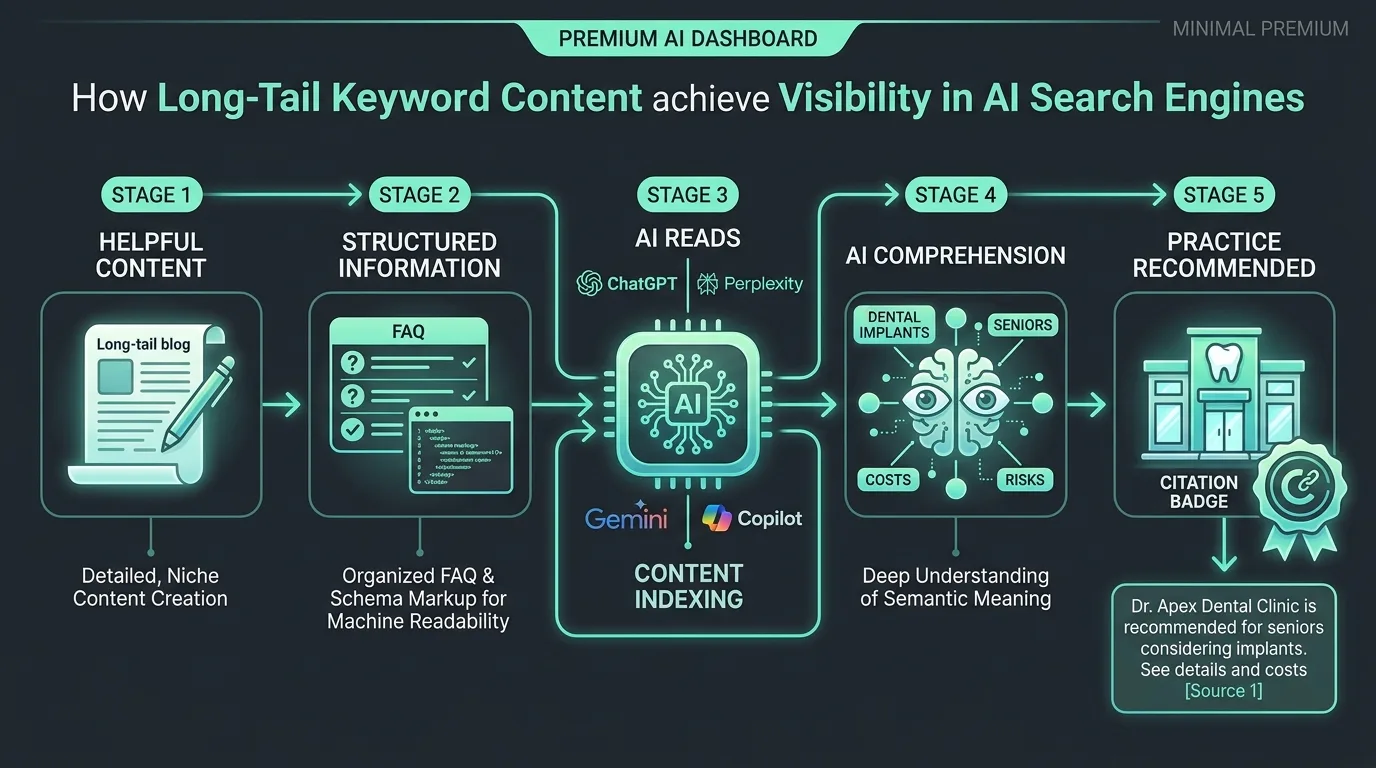 Figure 5: Long-tail keyword content flows through five stages to achieve AI search engine citation and practice recommendation.
 Generative Engine Optimization and Answer Engine Optimization
Here is the most important point in this guide for every dental practice and dental marketing agency reading it. Traditional dental SEO is no longer enough. The search landscape has fundamentally changed, and the practices that adapt now will capture far more new patients than those that do not.
Generative Engine Optimization, or GEO, means optimizing your dental content so that AI tools generate answers that reference and recommend your practice. Long-tail keyword content is a core part of GEO because it mirrors the conversational, question-based way that AI tools respond to user queries. When your dental website has dozens of well-written long-tail keyword pages that directly answer patient questions, it becomes a resource that AI tools recognize as authoritative and trustworthy.
Answer Engine Optimization, or AEO, means structuring content so that AI tools and voice assistants can extract precise, direct answers from it. For dental practices, AEO means writing in a question-and-answer format, using clear headings that state the question, and providing complete answers in the first few sentences of each section. This structure makes it easy for AI engines to pull your content and present it as the answer to a patient's query.
Together, GEO and AEO extend the reach of your dental SEO strategy into the rapidly growing world of AI-generated search. They are not replacements for traditional dental search engine optimization. They are additions that make your entire marketing strategy more durable and more effective as search behavior continues to evolve.
- Schema Markup: Schema markup is a key technical component of both GEO and AEO. Adding local business schema, FAQ schema, and medical practice schema gives AI tools a structured way to read your practice information. Follow our schema implementation guide for step-by-step setup.
- Authoritative Backlinks: Build credibility through local link building including community backlinks, sponsorship links, press release PR links, and guest posting.
- Technical Performance: Ensure your website meets Core Web Vitals standards, has fast page speed, and is fully mobile optimized.
- E-E-A-T Signals: Strengthen your E-E-A-T signals across your entire dental website to build the trust and authority that AI tools prioritize when selecting sources to cite.
- Zero-Click Strategy: Build a comprehensive zero-click strategy so your practice captures visibility even when users never click through to a website.
Measuring Which Long-Tail Keywords Are Converting
Tracking conversion performance is essential in any dental SEO and marketing strategy. For long-tail keywords, you want to know not just which phrases bring traffic, but which ones turn visitors into patients.
- Google Search Console: Use Google Search Console to see which long-tail queries are driving clicks to your dental website. Then compare that data with your website analytics to see which pages have the highest engagement, the longest visit times, and the most form submissions or calls.
- Call Tracking: Set up call tracking so you can see which pages and which keywords are leading to phone calls. Many dental marketing services and dental SEO companies offer this as part of their analytics dashboard.
- Patient Intake Data: Track which patient inquiries mention finding you through a specific search or topic. Simple intake questions like "how did you hear about us" can give you qualitative data about which content is driving real new patients.
- Regular Content Updates: Review and update your long-tail keyword content regularly. Search trends change, patient questions evolve, and new services create new keyword opportunities. A dental SEO strategy that treats content as a living, evolving asset will consistently outperform one that publishes content once and ignores it.
- Analytics Setup: Set up GA4 for comprehensive website tracking, monitor local SEO KPIs regularly, use rank tracking tools for automated keyword monitoring, and build SEO reporting dashboards with the best dental SEO tools.
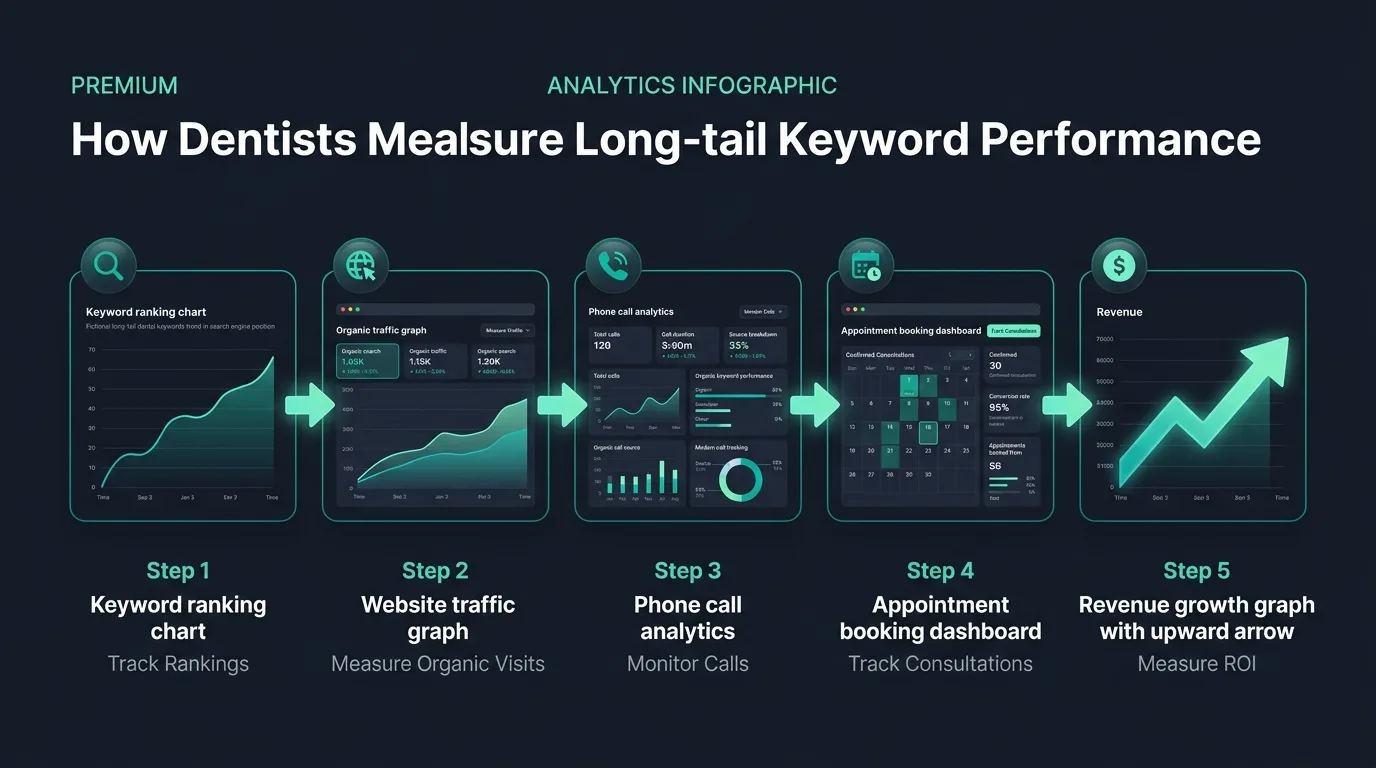 Figure 6: Track keyword rankings, website traffic, phone calls, appointments, and revenue to measure long-tail keyword ROI.
 Final Thoughts
Long-tail dental keywords that convert are one of the most powerful and most underutilized tools in dental SEO. Short, broad keywords are overcrowded and expensive to compete for. Long-tail keywords are specific, targeted, and aligned with the way real patients actually search.
Build your dental website content around the specific questions patients ask at every stage of their journey. Target service specific phrases, cost questions, symptom searches, comparison queries, urgency terms, and audience specific phrases. Create blog posts, FAQ pages, service pages, and landing pages that each target a distinct set of long-tail dental SEO keywords.
Structure all of your long-tail content to be recognized and cited by AI tools including ChatGPT, Perplexity AI, Google Gemini, SearchGPT, and Microsoft Copilot. Invest in Generative Engine Optimization and Answer Engine Optimization alongside your traditional dental search engine optimization efforts.
Traditional dental SEO gets you into the search results. Long-tail keyword content gets the right patients to click. GEO and AEO get your practice recommended by AI tools. Together, these three pillars build a dental marketing strategy that converts consistently, grows practice revenue, and remains effective as search continues to change.
Use our complete dental local SEO checklist to self-audit your practice and run a full local SEO audit to identify gaps. Whether you are a new dental practice starting from scratch or a multi-location dental group, a strong long-tail keyword strategy is the bridge between your services and the patients searching for them right now. Compare your investment options in our local SEO vs Google Ads guide and review the full dental local SEO cost breakdown.

Ready to Dominate Local & AI Search?
Navigating the complexity of Local Map Packs, traditional search rankings, and emerging AI engine visibility can be difficult. Schedule a practice growth audit with our dental SEO specialists today. We will analyze your practice listings, audit your competitor strategies, and layout the exact plan needed to capture high-value cases.
Schedule Growth Assessment