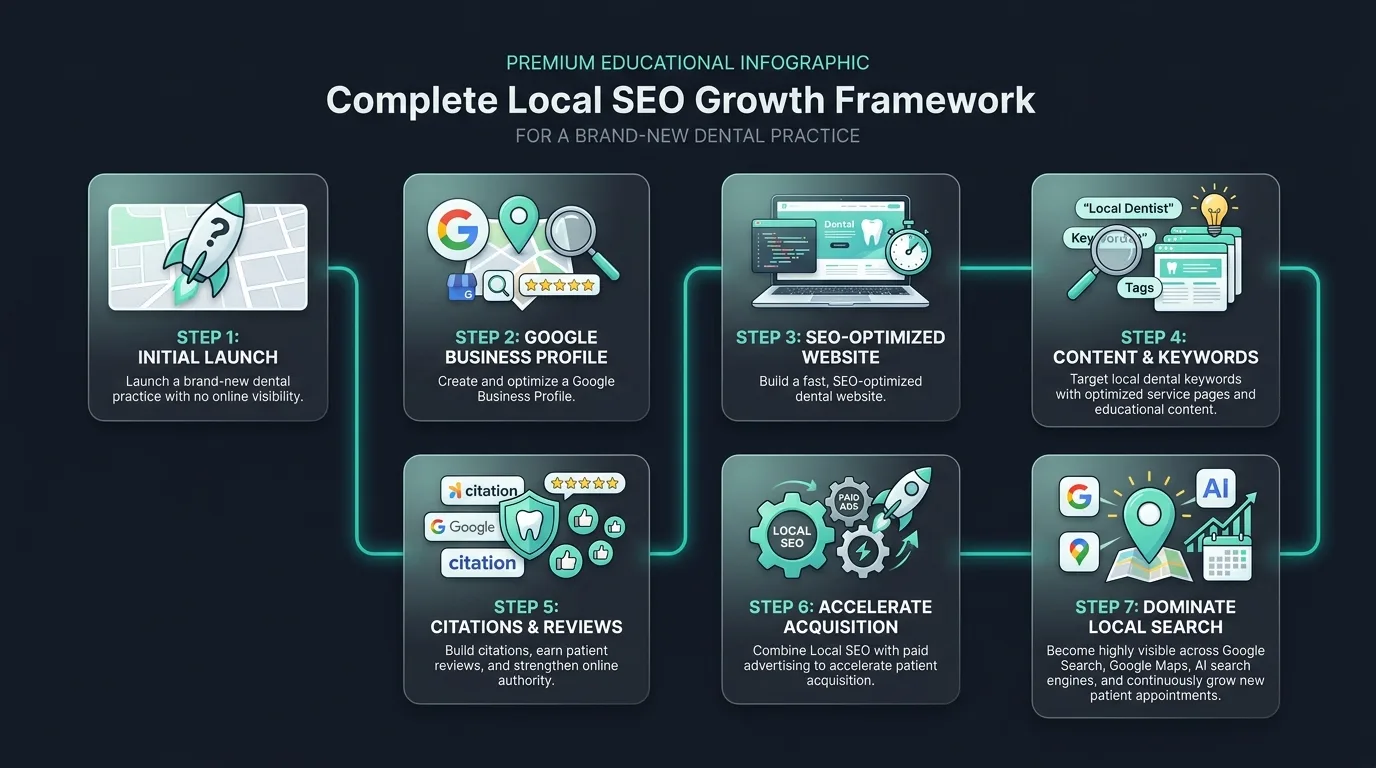
Key Takeaways
This guide covers everything a new dental practice needs to know about local SEO. You will learn how dental SEO works, why it matters for new patient acquisition, and what steps to take right now to rank on Google. The guide also covers how AI tools like ChatGPT and Google Gemini are changing search, and why your practice needs to show up in those results too. Read our guide to local SEO for new dental practices.
- Immediate Pipelines: Start-ups must rely on map rankings to generate initial leads prior to word-of-mouth growth.
- Verifiable Entities: Google Business Profile is the primary tool to establish clinical authority.
- Website Compliance: Sites must load in under 2 seconds, be fully responsive, and feature clear checkout CTAs.
- Generative Readiness: Schema markups and structured answer content prepare sites to get recommended in ChatGPT.
- What Is Local SEO for Dentists and Why Does It Matter
- Set Up Your Google Business Profile First
- Build a Strong Dental Website
- Use Dental SEO Keywords the Right Way
- List Your Practice in Online Directories
- Paid Ads Work Alongside Dental SEO
- AI Search Is Changing Everything
- Track Your Results with Marketing Analytics
- Final Thoughts on Dental SEO for New Practices
- Frequently Asked Questions
What Is Local SEO for Dentists and Why Does It Matter
Local SEO for dentists is the process of helping your dental practice show up when people search for a dentist nearby. When someone types "dentist near me" or "dental implants in my city," local SEO determines whether your practice appears or not (see Google Map Pack). Start with a complete dental local SEO checklist.
For a new dental practice, this matters more than almost anything else. You do not have years of word of mouth behind you. You do not have a long list of reviews yet. Local SEO gives you a way to be found right away by people who are already looking for what you offer. Compare local SEO vs Google ads for dentists to optimize your overall budget, and evaluate the dental local SEO cost.
Dental SEO marketing focuses on your Google Business Profile, your website, your online reviews, and the content you publish. When all of these work together, your practice climbs up in local search rankings and attracts more new patients every month (learn how to troubleshoot a dental practice not showing on Google Maps).
The goal of dental search engine optimization is not just traffic. It is qualified leads. You want people who are ready to book an appointment, not just people browsing.
Set Up Your Google Business Profile First
Your Google Business Profile is the most important tool in local dental SEO. It is the listing that shows up in Google Maps and in the local pack at the top of search results. Follow our GBP setup guide. For a new dental practice, here is what you must do right away:
- Claim and verify your Google Business Profile: Fill in every field including your practice name, address, phone number, website, business hours, and category. Choose "Dentist" as your primary category (best GBP categories for dentists). Add photos of your office, your team, and your equipment (GBP photos guide).
- Write a full description using dental SEO keywords: Use terms like "dental implants" (and dental implants cost page SEO), "family dentistry," "cosmetic dentistry" (such as teeth whitening and veneers), and your city name. This tells Google exactly who you serve and where you are located.
- Post updates to your profile regularly: Google rewards active profiles. Share news, offers, and helpful tips at least once a week (see how to post GBP posts).
- Ask every patient for a review: Five star reviews are one of the strongest signals for local search rankings. The more verified reviews you have, the more Google trusts your practice (read dental practice reviews and get get more Google reviews).
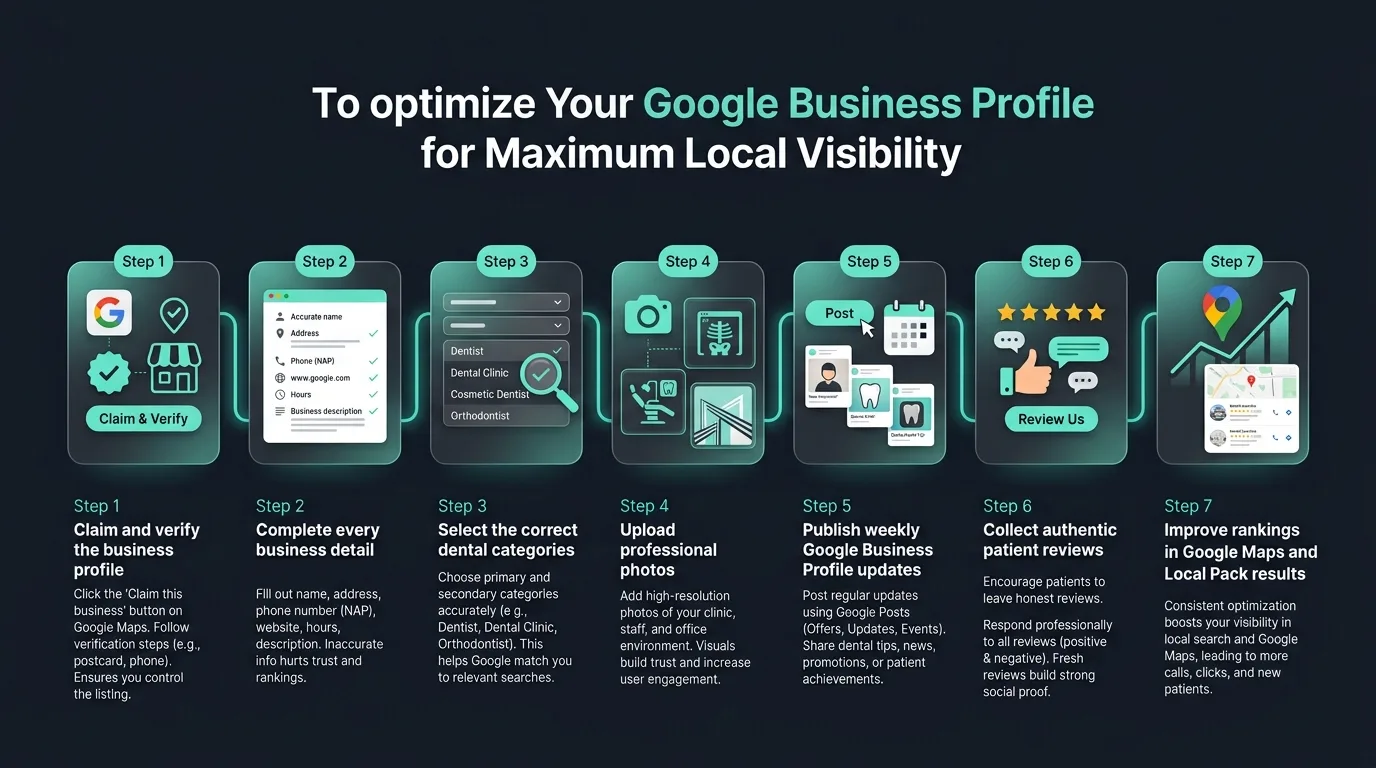 Figure 1: Claiming and verifying your primary Google map entity immediately at launch.
 Build a Strong Dental Website
Your dental website is your home base. Everything in your dental SEO strategy points back to it. A weak website hurts your chances of ranking, no matter how much work you do elsewhere (read about dental service page SEO). For new practices, your website needs to do three things well:
- Load fast: Keep file sizes small and clean up site code so pages load in under 2 seconds.
- Look good on mobile phones: Use responsive layout rules because over 60% of local patient searches happen on mobile devices.
- Clearly tell visitors what to do next: Position a clear appointment booking form, link, or click-to-call button prominently above the fold.
Every page of your site should target specific dental SEO keywords. Your homepage should include your city name and your core services. Create separate pages for each service such as dental implants, teeth cleaning, cosmetic dentistry, and emergency dental care.
Use your full business name, address, and phone number on every page. This is called NAP consistency and it is critical for local SEO for dentists. Google checks that your name, address, and phone number match across your website, your Google Business Profile, and every directory where your practice is listed. Maintain NAP consistency and how to maintain NAP consistency across DSO locations.
Your dental website design matters too. Pages that are slow or hard to use cause people to leave quickly. That signals to Google that your site is not helpful, which pushes your rankings down. Website conversion optimization means making it easy for visitors to call you, fill out a form, or book online. If you're building a new clinic, check our guides on building local visibility from scratch, configuring GBP setup for a new practice, building citations with no history, collecting first reviews for a new practice, and using a website SEO checklist.
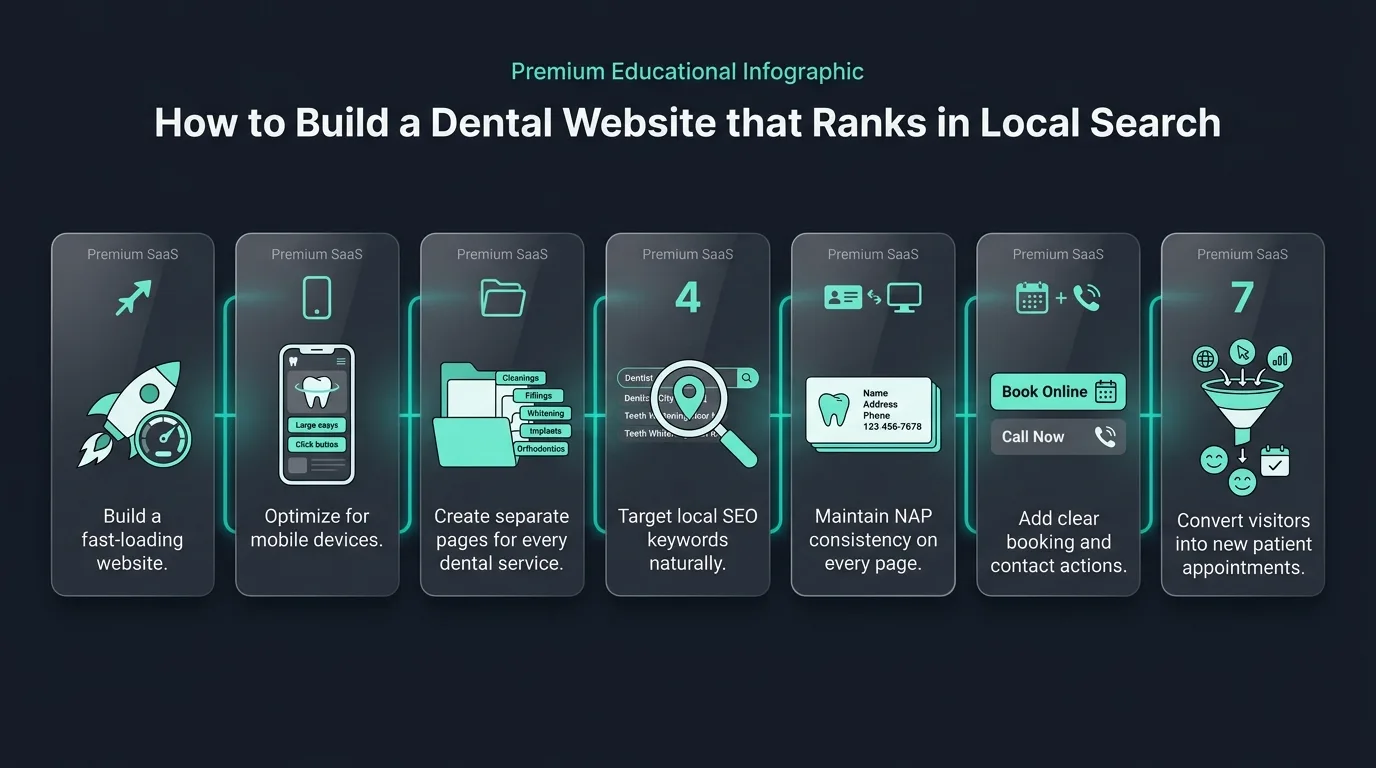 Figure 2: Formulating a responsive, high-performance website design structure for conversion.
 Use Dental SEO Keywords the Right Way
Dental SEO keywords are the words and phrases people type into Google when they are looking for a dentist. To rank well, your content needs to match what people are actually searching for. Check our guide on dental keyword research.
For a new practice, start with local keywords. These are phrases that include your city, neighborhood, or region. Examples include "dentist in Austin" (read about near me keywords, geo modifier keywords, and neighborhood-specific pages).
Use keywords naturally in your page titles, headings, and body text. Do not stuff them in where they do not fit. Google is smart enough to understand context, and keyword stuffing can actually hurt your rankings. Optimize for target services like dental implants, Invisalign (and Invisalign vs braces), cosmetic dentistry, pediatric dentist SEO, sedation dentistry, root canal SEO, and orthodontist SEO, and emergency dentist keywords (emergency dentist SEO and emergency dentist near me).
Create blog posts that answer common questions your patients ask. Topics like "How much do dental implants cost," "What to expect at your first dental visit," and "How to choose a dentist in your area" attract new visitors and show Google that your site is a helpful resource (read about long-tail keywords, search intent, and multi-location pages).
Dental SEO strategies also include building links from other trusted websites to yours. When a local business directory, a dental association, or a news site links to your practice website, it adds authority and helps you rank higher. Read more about local link building for dentists, community backlinks, sponsorship links, guest posting, and press PR links.
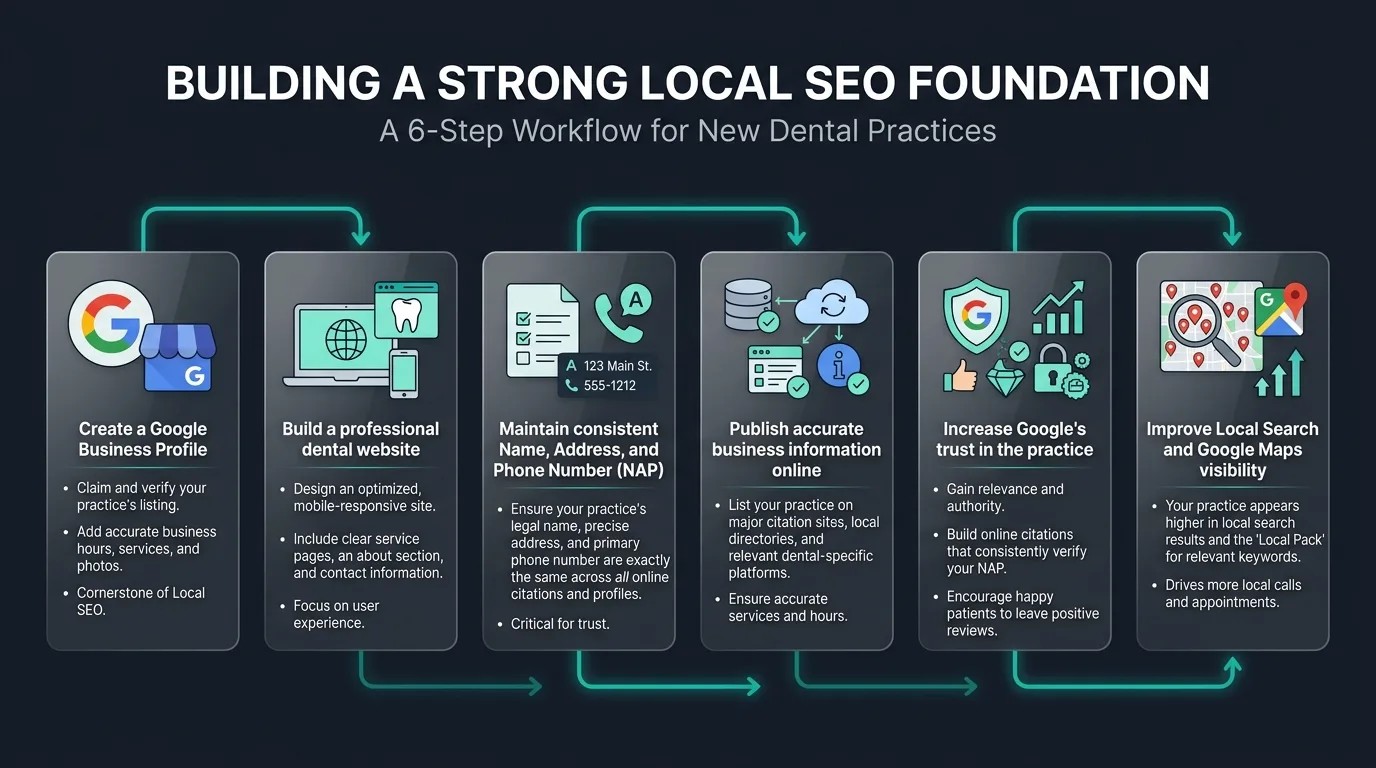 Figure 3: Mapping keywords based on local intent and specific clinical categories.
 List Your Practice in Online Directories
Online directories are websites that list local businesses. Getting your dental practice listed in these directories helps with local SEO and also makes it easier for new patients to find you.
Start with the big ones. Yelp, Healthgrades, Zocdoc, WebMD, and the American Dental Association directory are all important for dentist SEO. Make sure your name, address, and phone number are exactly the same on every listing. Optimize profiles for Healthgrades optimization and Zocdoc SEO. Build citations using the best dental directories, maintaining dental local citations and resolving errors via how to fix inconsistent citations.
These listings are called citations and they are a key part of local dental SEO marketing. Google checks citations to confirm that your practice information is accurate. The more consistent your citations are, the more Google trusts your listing.
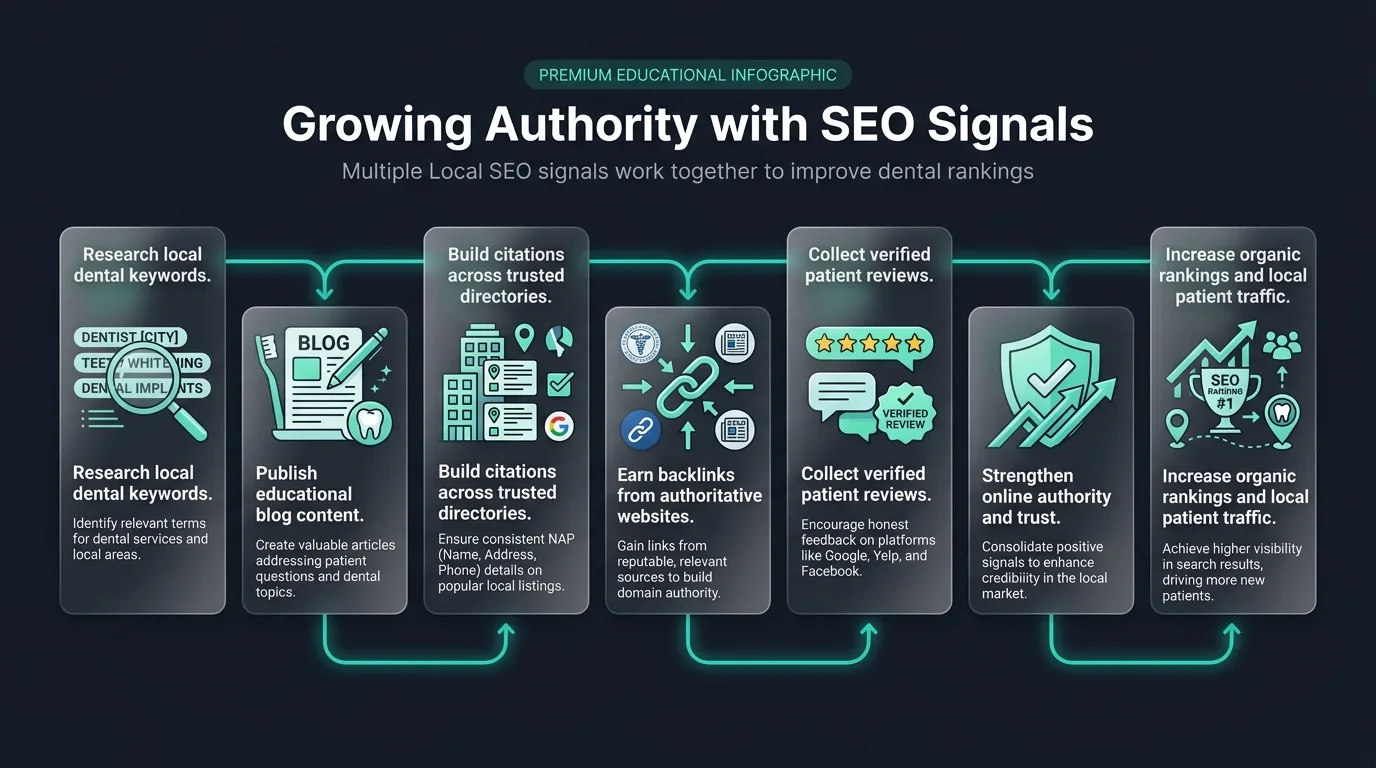 Figure 4: Distributing consistent name, address, and phone citations across dental platforms.
 Paid Ads Work Alongside Dental SEO
While you are building your organic rankings, Google Ads and Facebook Ads can bring in patients right away. Dental PPC (pay per click) puts your practice at the top of search results instantly.
Google Ads for dental practices work best when they target high value services like dental implants, Invisalign, and teeth whitening. These services have a high return on investment because the revenue from one patient can cover weeks of ad spend.
Facebook Ads help you reach people in your area who may not be searching yet but would be interested in cosmetic dentistry or dental implants. These ads work well for generating leads and filling your schedule.
Using both dental SEO and paid advertising together is the fastest way to grow a new practice.
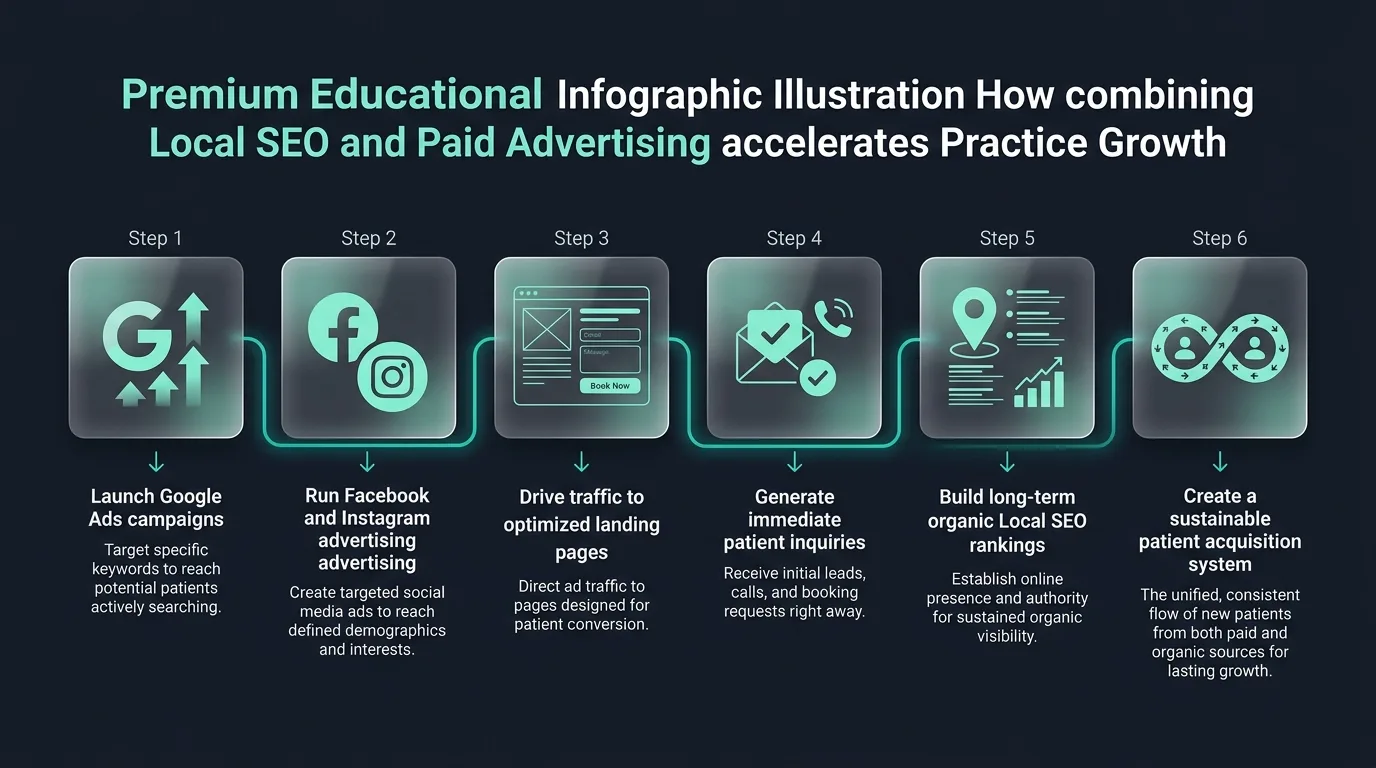 Figure 5: Deploying search ads in parallel with organic dental ranking strategies.
 AI Search Is Changing Everything
Here is something most dental marketing guides do not talk about yet. AI tools like ChatGPT, Perplexity AI, Google Gemini, Microsoft Copilot, and SearchGPT are changing the way people find information including how they find dentists. Take a look at our AI search optimization for dentists guide.
More patients are now asking AI tools questions like "Who is the best dentist for implants in my area?" or "What should I look for in a new dental practice?" If your practice is not set up to appear in these AI generated answers, you are missing a growing number of potential patients.
This is where Generative Engine Optimization (GEO) and Answer Engine Optimization (AEO) come in. These are newer strategies that go beyond traditional dental SEO. They focus on structuring your content and your online presence so that AI tools can find, trust, and cite your practice as a verified source (see Generative Engine Optimization and zero-click strategies). Ensure pages follow E-E-A-T guidelines (E-E-A-T for dental websites) and implement correct schema markup (specifically LocalBusiness and Dentist schema and FAQPage schema).
To get cited by AI tools, your website needs clear, factual, well organized content. AI tools prefer content that directly answers questions, uses plain language, and is supported by trust signals like reviews, credentials, and consistent business information. You can learn more about Google AI Overviews, how to appear in Google AI Overviews, and how to get recommended by ChatGPT.
Traditional dental SEO is no longer enough on its own. If your dental SEO strategy does not include GEO and AEO, you will fall behind practices that do. Future proofing your online presence means making sure your practice shows up not just on Google but in every place patients are looking for answers.
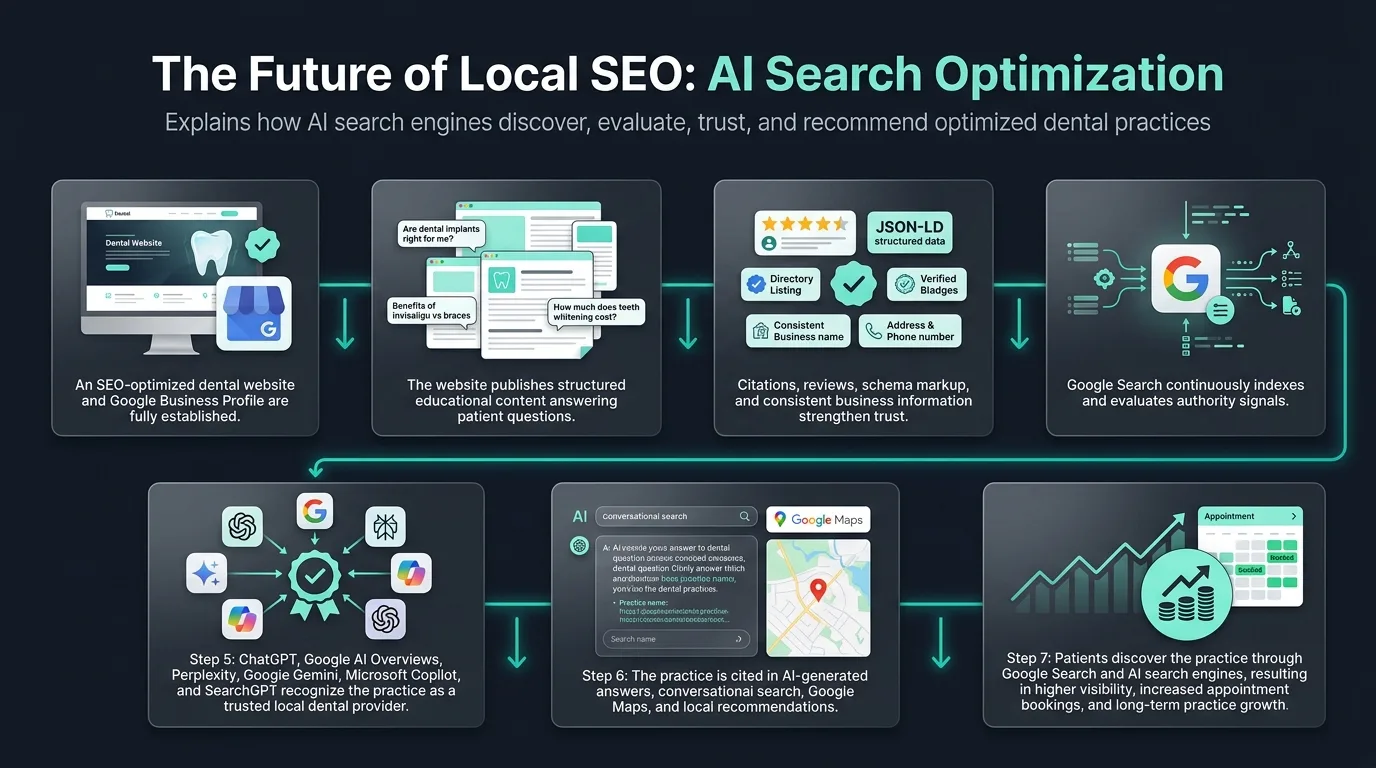 Figure 6: Structuring data to drive citations inside AI search engine queries.
 Track Your Results with Marketing Analytics
You cannot improve what you do not measure. Marketing analytics for your dental practice tells you what is working and what is not. Track your performance using a local SEO audit, optimize pages for speed and user experience (mobile SEO, Core Web Vitals, and page speed optimization).
Track your Google search rankings every month. Watch how many new patients call or fill out a form from your website. Pay attention to which pages get the most traffic and which keywords send the most visitors. Track your progress with SEO reporting, configure GA4 setup for dental websites, implement call tracking, monitor rankings using rank tracking tools, and check search performance via Google Search Console and the best dental SEO tools, general tracking dental SEO results.
A data driven approach to dental SEO marketing means you make decisions based on real numbers, not guesses. Over time, this helps you spend your marketing budget on what actually grows your practice.
Final Thoughts on Dental SEO for New Practices
Local SEO for new dental practices is not a one time task. It is an ongoing process that builds over time. The practices that commit to dental SEO early will have a major advantage over those that wait.
Start with your Google Business Profile. Build a strong website. Use the right dental SEO keywords. Get listed in directories. Collect reviews from every patient. Run Google Ads while your organic rankings grow. And make sure your content is ready for AI search tools that are quickly becoming part of how patients find care. If you run multiple offices, read our guide to managing multiple GBP listings, establishing local landing pages, and executing review management for DSOs. Track your progress with DSO SEO reporting. Update listings using GBP insights, how to read GBP insights, and responding to reviews, and manage clinical reviews via a review generation system. Optimize for voice search.
Working with a dental SEO agency or dental SEO expert can speed up this process. A good dental marketing SEO partner knows what Google and AI tools are looking for and can build a strategy that gets results faster than going it alone.
The practices growing fastest right now are the ones investing in both traditional dental SEO and the newer world of AI search optimization. Now is the time to start.

Ready to Dominate Local & AI Search?
Navigating the complexity of Local Map Packs, traditional search rankings, and emerging AI engine visibility can be difficult. Schedule a practice growth audit with our dental SEO specialists today. We will analyze your practice listings, audit your competitor strategies, and layout the exact plan needed to capture high-value cases.
Schedule Growth Assessment