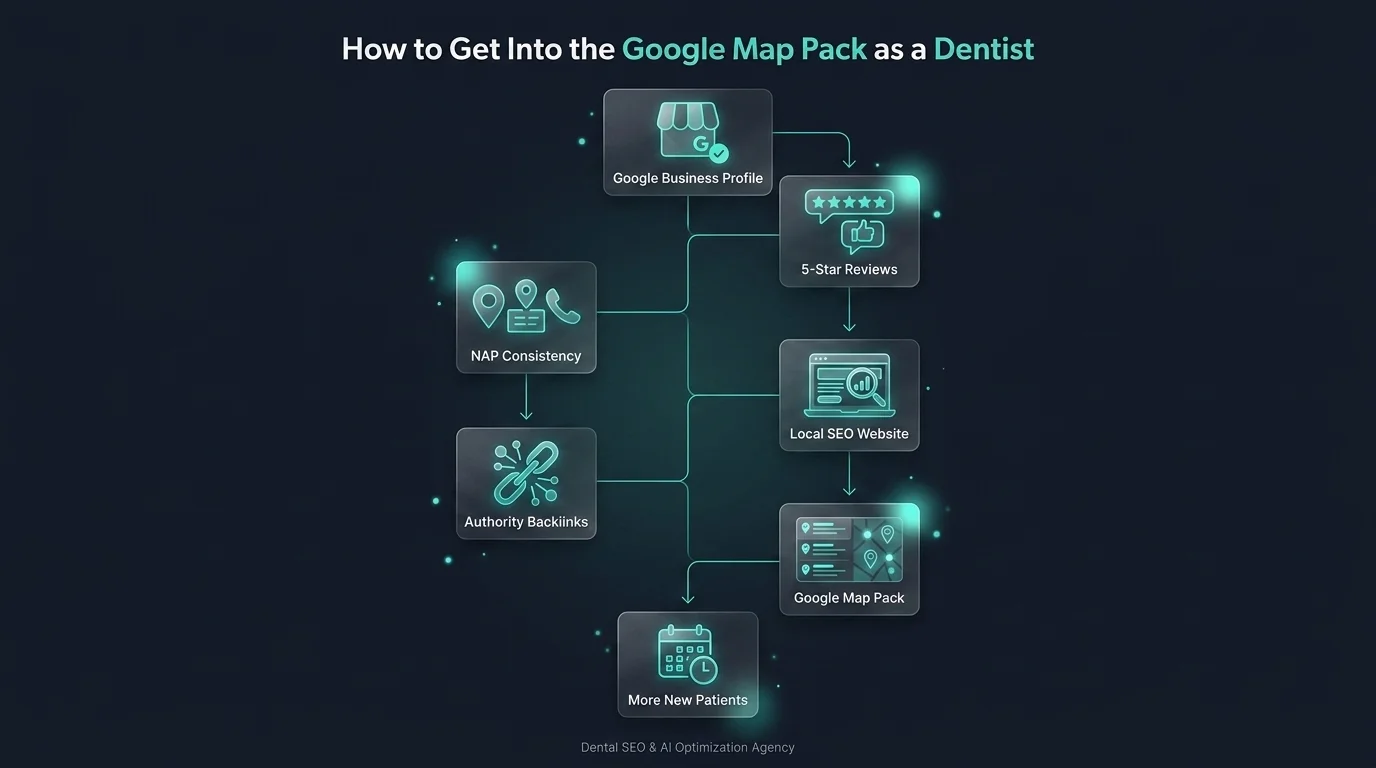
Key Takeaways
Dominating the Google Map Pack is the most high-leverage way to drive direct phone calls and appointments for your dental clinic.
- GBP Foundation: Claiming and fully filling out every field in your Google Business Profile is a mandatory first step.
- Prominence & Trust: Accumulating high-rating patient reviews and maintaining absolute NAP consistency builds critical search authority.
- AI Future-Proofing: GEO and AEO techniques ensure your dental practice is cited by search engines and AI assistants like ChatGPT and Google Gemini.
- 1. What Is the Google Map Pack and Why Every Dentist Needs to Be In It
- How Google Decides Who Gets Into the Map Pack
- Step 1: Claim and Fully Optimize Your Google Business Profile
- Step 2: Build a Consistent Flow of 5-Star Google Reviews
- Step 3: Nail NAP Consistency Across Every Platform
- Step 4: Optimize Your Dental Website for Local SEO
- Step 5: Build Local Backlinks That Strengthen Your Authority
- Step 6: Post Consistently on Your Google Business Profile
- Step 7: Use Your Q&A Section to Add Keyword-Rich Content
- Step 8: Add Dental Photos and Videos That Drive Engagement
- Step 9: Make Sure Your Website Converts the Traffic You Earn
- Traditional SEO Is No Longer Enough: Why Dentists Need GEO and AEO
- What Is GEO and How It Helps Dentists Get Found by AI Platforms
- What Is AEO and How It Gets Your Practice Featured in AI Answers
- How to Get Your Dental Practice Cited by ChatGPT, Perplexity AI, Google Gemini, Microsoft Copilot, and SearchGPT
- Tracking Your Map Pack Performance With Dental Marketing Analytics
- Choosing a Dental SEO Agency to Help You Win the Map Pack
- Conclusion: Getting Into the Google Map Pack Is the Highest-Leverage Move in Dental SEO
- Frequently Asked Questions
1. What Is the Google Map Pack and Why Every Dentist Needs to Be In It
When someone opens Google and types "dentist near me" or "dental implants in [city]," they usually see a map with three business listings right at the top of the results page. Those three listings make up the Google Map Pack, also called the Local 3-Pack.
This section sits above almost everything else on the page. It shows before the regular website search results. It shows before paid ads in many cases. It is the first thing most patients see and the first thing most patients click.
Studies of local search behavior show that patients almost always choose from the top three listings they see. If your practice is not in that Map Pack, most patients will never even know you exist, no matter how good your dental website is or how long you have been in business.
For dental SEO, getting into the Google Map Pack is not a bonus goal. It is a primary goal. It is where new patient acquisition begins for the majority of dental practices today. Everything else in your dental marketing strategy builds toward or supports your Map Pack position.
This guide gives you every step you need to get there.
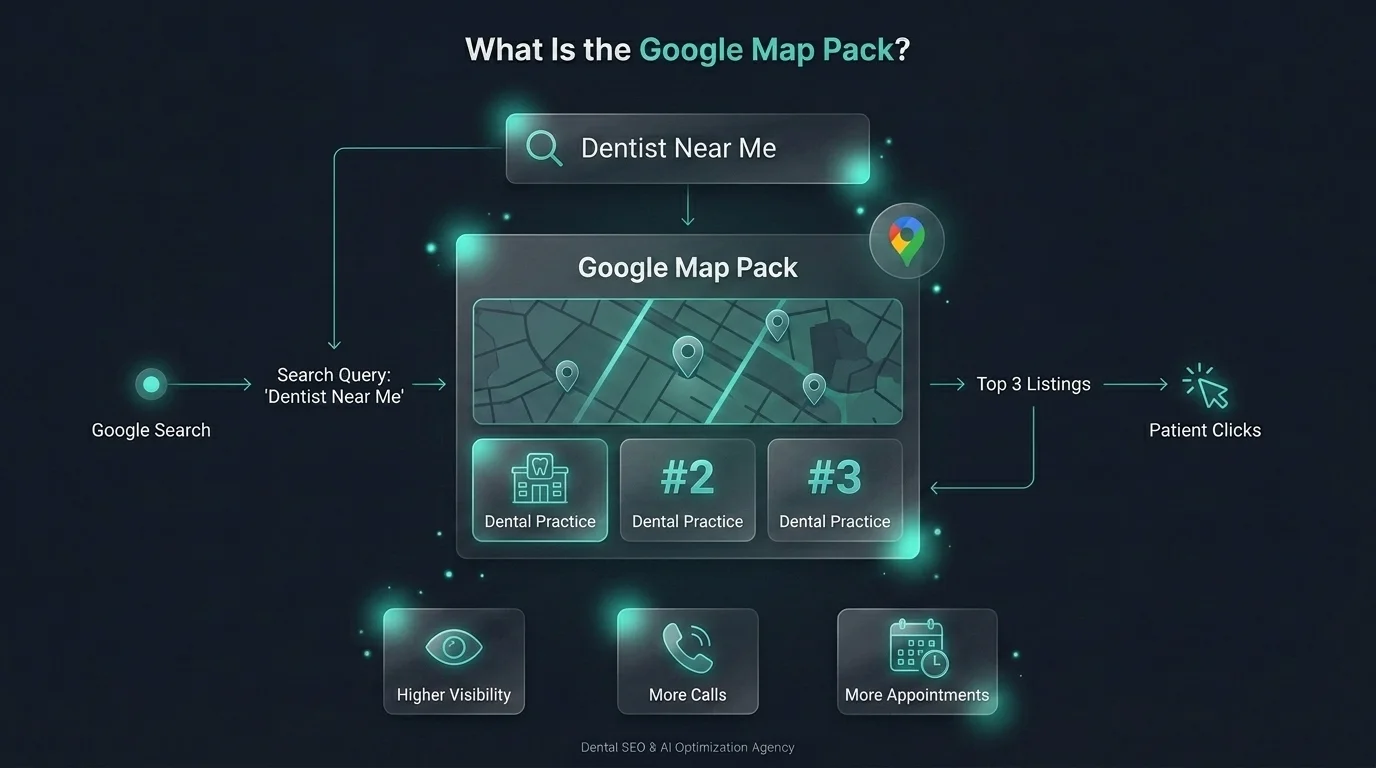 Figure 2: The Google Map Pack sits prominently at the top of local search results, capturing the vast majority of patient clicks.
 How Google Decides Who Gets Into the Map Pack
Before you can win the Map Pack, you need to understand how Google decides which three practices to show. Google uses three core factors to rank local businesses.
The first factor is relevance. How closely does your practice match what the patient is searching for? If someone searches for "cosmetic dentist" and your Google Business Profile and website both clearly show that you offer cosmetic dentistry, Google sees you as relevant to that search.
The second factor is distance. How close is your practice to the person searching? Google uses the searcher's location at the time of the search. If your practice is in the geographic area the patient is searching from or near, you become eligible to appear.
The third factor is prominence. How well-known and trusted is your practice online? Google measures this through the number and quality of your reviews, the authority of your website, your backlinks from other websites, how complete and active your Google Business Profile is, and how consistently your business information appears across the web.
Your dental SEO strategy needs to address all three of these factors. Focusing on only one will not get you into the Map Pack in a competitive market. Addressing all three together is what separates the practices that rank from the ones that do not.
Step 1: Claim and Fully Optimize Your Google Business Profile
Your Google Business Profile is the single most important asset for getting into the Google Map Pack. Without a verified and fully optimized GBP listing, you have almost no chance of ranking in the Local 3-Pack regardless of how strong the rest of your dental SEO work is.
Claim your listing at business.google.com if you have not already done so. Complete the verification process through the postcard, phone, or email method Google offers. Once verified, fill in every single field inside your profile. Refer to our Google Business Profile setup guide for detailed step-by-step instructions.
Your business name must match exactly what appears on your signage and website. Your address must be precise and consistent. Your phone number should be a local number. Your website URL should point to your homepage or your highest-converting service page.
Choose Dentist as your primary category. Add secondary categories for every specialty or service you offer such as Cosmetic Dentist, Dental Implants Periodontist, Orthodontist, Pediatric Dentist, or Emergency Dental Service (refer to our study of the best GBP categories for dentists). Your categories directly affect which patient searches trigger your listing.
Write a strong business description that uses your top dental SEO keywords naturally and clearly describes your services and location, which you can determine through dedicated dental keyword research. Add every service you offer in the Services section with individual descriptions for each one.
Upload high-quality photos of your exterior, interior, team, and patient results (see our recommendations for GBP photos for dentists). Add new photos at least twice a month. Enable your appointment link so patients can book directly from your listing.
A complete, accurate, and active GBP is the foundation that every other Map Pack ranking strategy is built on.
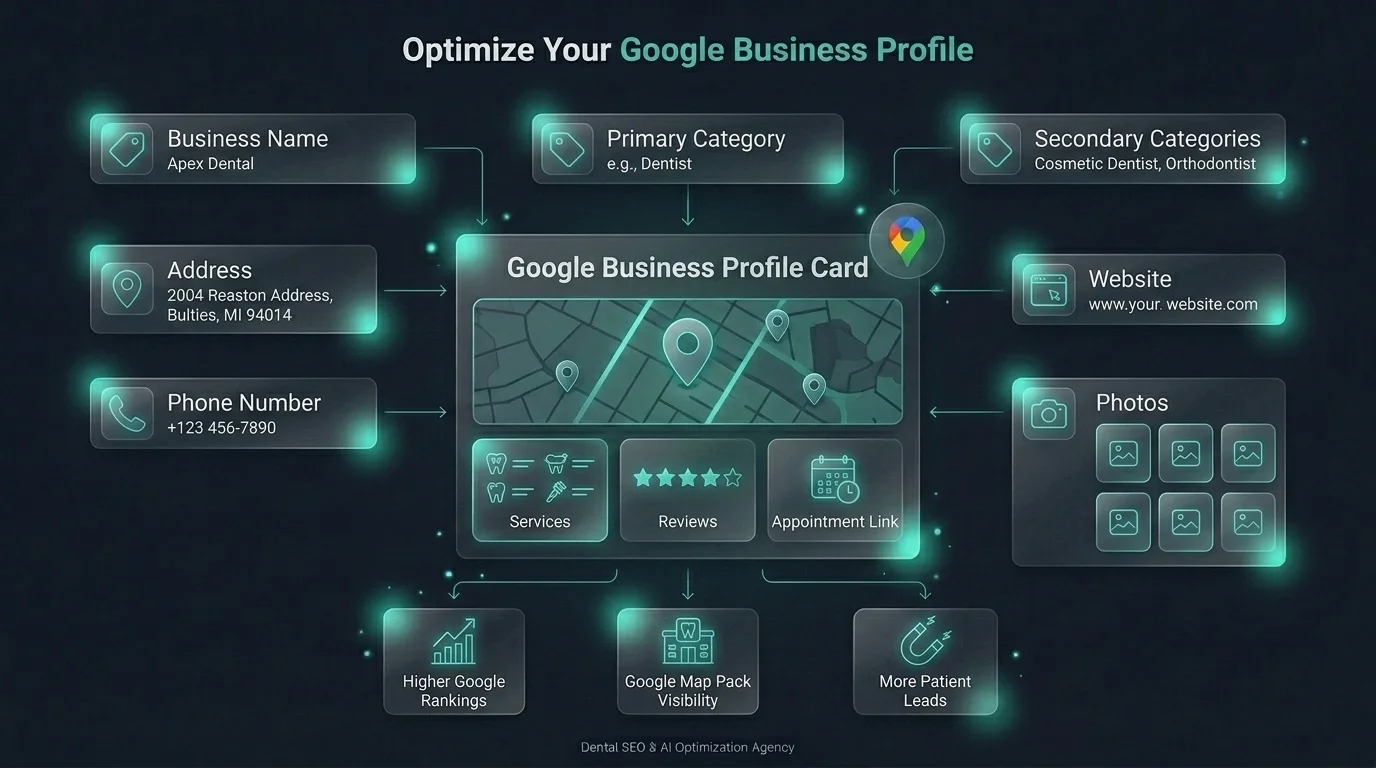 Figure 3: Optimizing every field on your Google Business Profile listing builds the relevance Google requires to rank you.
 Step 2: Build a Consistent Flow of 5-Star Google Reviews
Reviews are one of the most powerful ranking signals for the Google Map Pack. Practices with more reviews, higher ratings, and more recent reviews consistently rank above those with fewer reviews, even when the other practice has a better website or older listing.
This is not just about impressing patients. It is a direct dental SEO ranking factor. Google treats reviews as a measure of your practice's prominence and trustworthiness. The more positive dental practice reviews you accumulate over time, the stronger your Map Pack position becomes.
To build reviews consistently, make asking for a review a standard part of every patient visit. Train your front desk team to invite patients to share their experience online before they leave. Send an automated text message or email after each appointment to help you get more Google reviews. Use marketing automation tools that connect with your practice management software such as Dentrix, Eaglesoft, or Open Dental to handle this automatically through a dedicated review generation system so nothing falls through the cracks.
Respond to every single review within 48 hours. When you respond to reviews (both positive and negative), mention your services or location naturally. When you need to handle negative reviews, stay calm and professional, acknowledge the concern, and invite the patient to contact you directly to resolve it. Your responses are indexed by Google and contribute to your dental search engine optimization as well as your online reputation. Always maintain strict HIPAA compliance when communicating.
Aim for a minimum of 50 reviews with a rating of 4.8 stars or higher. In highly competitive markets, the top-ranking practices often have 200 or more reviews. Review generation is not a one-time effort. It is an ongoing part of your local SEO for dentists strategy that compounds over time.
Step 3: Nail NAP Consistency Across Every Platform
NAP stands for Name, Address, and Phone Number. It is one of the foundational requirements of local dental SEO and one of the most commonly overlooked issues that keeps dental practices out of the Map Pack.
Google cross-references your practice information across dozens of websites and online directories to verify that your business is real, stable, and trustworthy. If your name, address, or phone number appears differently on different platforms, Google loses confidence in your listing and your Map Pack ranking drops. Managing dental local citations requires meticulous attention.
Your NAP information must be exactly the same on your Google Business Profile, your dental website, Yelp, Healthgrades, Zocdoc, WebMD, Facebook, Instagram, and every local directory where your practice appears. Maintaining perfect NAP consistency means exact matches. Not similar. Exact.
Common inconsistencies that hurt practices include using "Street" on one platform and "St" on another, listing a suite number on your website but leaving it off your GBP, using an old phone number that is still showing on an outdated directory listing, or having a slight variation in your practice name across platforms.
Do a full citation audit of your online presence. Learn how to fix inconsistent citations across platforms. Check listings on key health databases, ensuring proper Healthgrades optimization and professional Zocdoc SEO.
Consistent NAP data across the web tells Google that your practice is legitimate, established, and trustworthy. That trust translates directly into stronger Google Maps visibility and a better chance of ranking in the Map Pack.
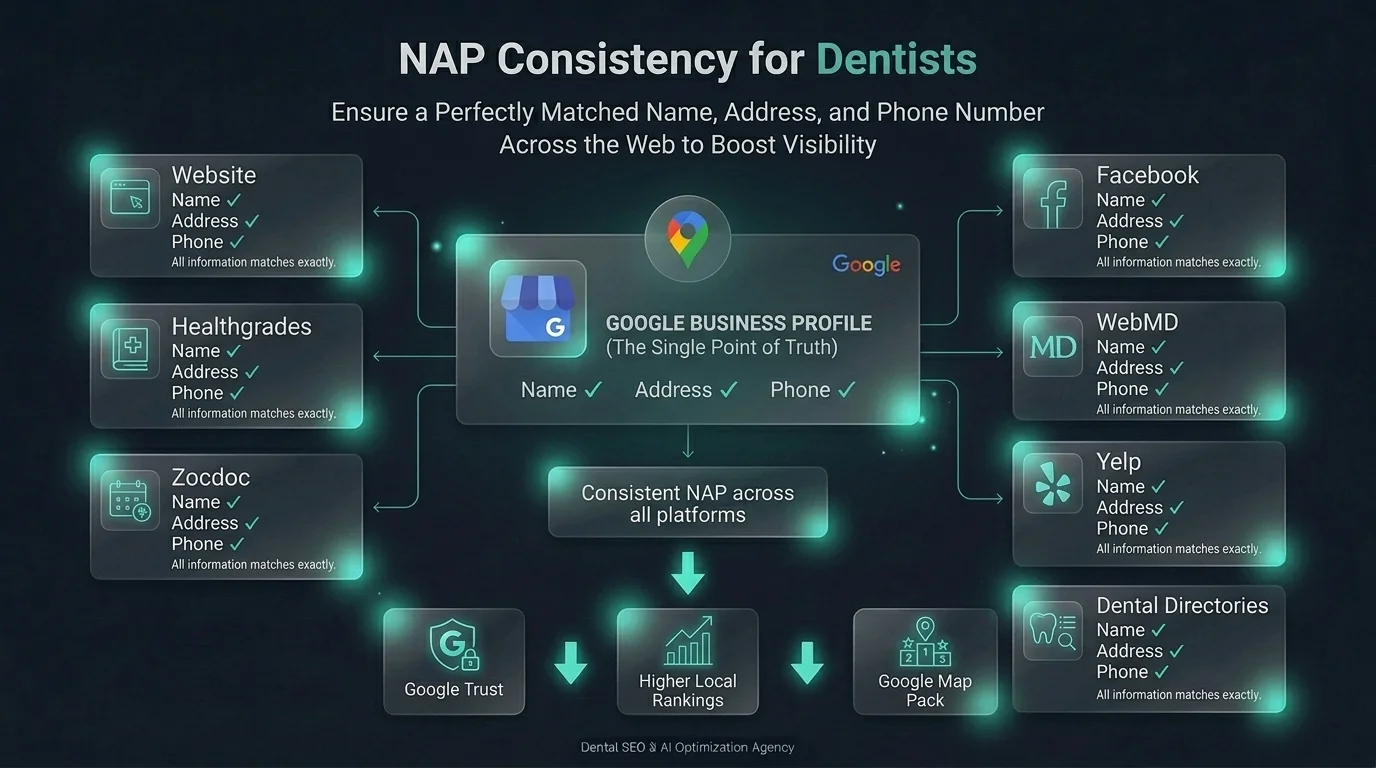 Figure 4: Enforcing uniform Name, Address, and Phone Number (NAP) listings across directory citations removes ranking friction.
 Step 4: Optimize Your Dental Website for Local SEO
Your dental website and your Google Business Profile work together to support your Map Pack ranking. Google looks at your website as a signal of who you are, what you offer, and how authoritative your practice is online. A weak or poorly optimized website holds your Map Pack ranking back even when your GBP is strong.
For dental service page SEO that supports Map Pack rankings, your website needs several things.
Your homepage and service pages should include your city and geographic area naturally in the content, headings, and page titles, utilizing targeted geo-modifier keywords. This tells Google where you are located and which local searches you are relevant for.
Every major service you offer should have its own dedicated page. If you offer dental implants, your implants page should be thorough, clear, and optimized for implant-related search terms. The same applies to cosmetic dentistry, orthodontics, pediatric dentist care, sedation dentistry, root canal treatments, and emergency dentist services to help you rank near me.
Your website needs to load fast on mobile devices. Most patients searching for a local dentist are on their phone. A slow mobile website sends a negative signal to Google and reduces your patient conversion rate at the same time. Prioritize mobile SEO, checking your Core Web Vitals and focusing on page speed optimization.
Add schema markup to your website using the Dentist and LocalBusiness structured data types. Schema markup tells Google and AI engines exactly what your practice is, where it is located, what services you offer, and other key details in a structured format they can easily read. Refer to our schema markup guides, including our schema implementation guide and the setup for FAQ schema.
Make sure your NAP information on your website matches your GBP exactly. Put your name, address, and phone number in the footer so it appears on every page.
Step 5: Build Local Backlinks That Strengthen Your Authority
Backlinks are links from other websites that point to your dental website. They are one of the oldest and most consistent ranking factors in dental SEO and they play a direct role in your Map Pack prominence score.
Not all backlinks are equal. A link from a well-known local news website, a hospital directory, a dental association, or a community organization is far more valuable than a link from a generic directory. Google gives much more weight to backlinks from authoritative and relevant sources.
For local link building for dentists, focus your backlink building efforts in the following areas:
- Get listed in the best dental directories and major healthcare databases including Healthgrades (refer to our comparison of Healthgrades vs Google), Zocdoc, and WebMD.
- Connect with your local dental society, state dental association, or the American Dental Association and make sure your practice is listed in their member directories. These association backlinks signal to Google that you are a credible, legitimate dental provider.
- Reach out to local community organizations, schools, charities, or events your practice sponsors and ask for a link back to your website. Earning local community backlinks and strategic sponsorship links is a great way to boost relevance.
- Publish press releases and earn high-quality press release & PR links or write articles for dental guest posting.
Publish content on your website that other websites want to reference and link to. Informative blog posts about dental topics, local oral health resources, or detailed explainers about procedures like clear aligners like Invisalign (and comparison guides like Invisalign vs braces) are the kinds of content that earn natural backlinks over time.
Every strong backlink you earn adds to your prominence score in Google's algorithm, which directly supports your dental local SEO Map Pack ranking.
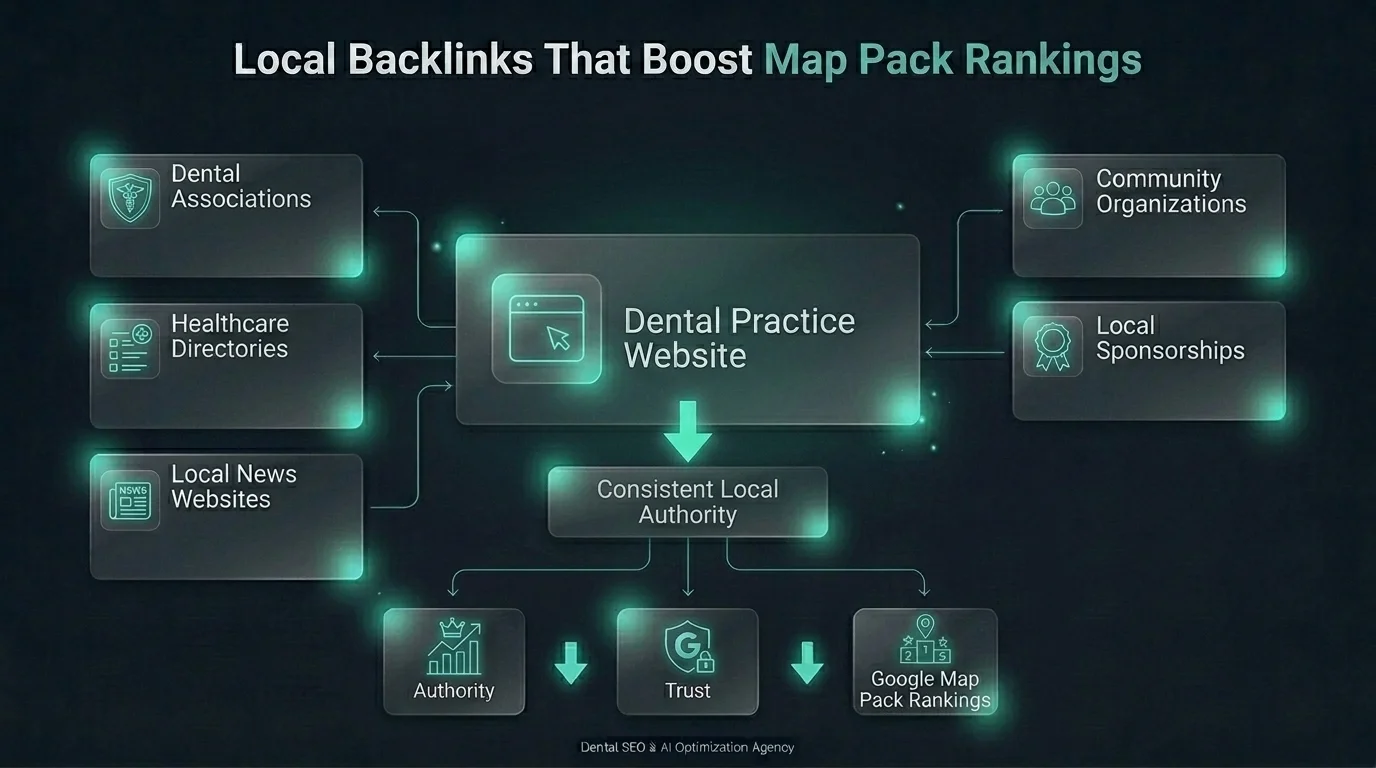 Figure 5: Earning links from trusted local and industry authorities boosts the prominence metrics Google uses for Maps ranking.
 Step 6: Post Consistently on Your Google Business Profile
Most dental practices set up their Google Business Profile and then never touch it again. That is a significant mistake for local SEO for dentists.
Google rewards active listings. An active listing is one that posts regular updates, adds new photos, responds to reviews, and stays current with accurate information. A listing that has not been updated in months signals to Google that the practice may not be engaged or may not be a strong candidate for the Map Pack.
Use Google Posts to publish updates at least once per week. Your posts can include new patient specials, information about specific treatments like dental implants or teeth whitening, links to new blog posts on your website, seasonal promotions, and patient education content. Read our guide on how to create high-performing GBP posts for dentists.
Each post you publish keeps your listing active and gives Google another signal that your practice is operating, engaged, and relevant. Over time, consistent posting contributes to your dental SEO strategy by reinforcing your relevance for the searches you want to rank for.
Step 7: Use Your Q&A Section to Add Keyword-Rich Content
The Questions and Answers section on your Google Business Profile is a frequently missed opportunity in dental SEO marketing. Anyone can post a question to your listing and if you do not manage this section, unanswered questions or inaccurate information can sit there and affect patient decisions.
Take control of your Q&A section by posting your own questions and answering them yourself. Think about what your ideal patients want to know before booking.
Good questions to add and answer include things like whether you accept new patients, whether you offer dental implants, what payment and financing options you provide, whether you see children, whether you offer same-day emergency appointments, and whether you accept insurance.
When you write your answers, use your dental SEO keywords naturally within the responses. The content in your Q&A section is indexed by Google and contributes to your overall dental search engine optimization. It also gives AI engines structured question-and-answer content that can be used to cite your practice when patients ask similar questions to ChatGPT or Perplexity AI.
Step 8: Add Dental Photos and Videos That Drive Engagement
Patient engagement on your Google Business Profile listing is a signal Google uses to measure how attractive and relevant your listing is. More engagement means better Map Pack performance.
Photos and videos are the highest-engagement content types on GBP. Practices with more photos and videos get more views and more clicks than those without, and higher engagement feeds back into better rankings.
Upload exterior and interior photos so patients know exactly what to expect when they visit. Add team photos to make your listing feel personal and welcoming. Post before and after photos for cosmetic dentistry, dental implants, and teeth whitening to show the quality of your work. Add a short practice tour video that gives patients a feel for your environment and your team.
This is where dental photography and video marketing become active dental SEO tools. Add new photos regularly and track your photo views and performance using your GBP Insights dashboard, making sure you know how to read GBP insights correctly.
Step 9: Make Sure Your Website Converts the Traffic You Earn
Getting into the Map Pack is only half the job. The other half is making sure that when patients click on your listing and visit your website, they take action.
Website conversion rate optimization is an essential part of a complete dental SEO and dental marketing strategy. A patient who clicks through from the Map Pack but cannot figure out how to book an appointment is a lost opportunity that your ranking work paid for but did not benefit from.
Your website needs clear and prominent call-to-action buttons on every page including Book an Appointment, Call Us Now, and Request a Consultation. It needs to load fast on mobile devices. It needs to show trust signals like patient reviews, before and after photos, and credentials. It needs an online booking option that connects directly to your scheduling system in Dentrix, Eaglesoft, or Open Dental.
The stronger your website conversion rate, the more value every Map Pack position delivers. Treating your website as a separate project from your local SEO for dentists work is one of the most common and most costly mistakes dental practices make.
Traditional SEO Is No Longer Enough: Why Dentists Need GEO and AEO
Here is something that most dental practices and even many dental SEO companies have not fully addressed yet: traditional SEO is no longer enough to win every new patient who is looking for you.
The search landscape is changing faster than most people realize. Patients are no longer only using Google to type a query and scroll through results. They are asking questions on ChatGPT. They are getting direct answers from Perplexity AI. They are using Google Gemini, Microsoft Copilot, and SearchGPT to find recommendations for local businesses including dental practices.
These AI platforms do not return a list of ten blue links. They give one direct answer. They name one provider or a small group of providers. They cite their sources. If your practice is not structured to be recognized and cited by those platforms, you are invisible to a large and fast-growing portion of potential new patients.
This is where AI Search Optimization for Dentists, including Generative Engine Optimization (GEO) and Answer Engine Optimization (AEO), becomes an essential part of your dental SEO marketing strategy.
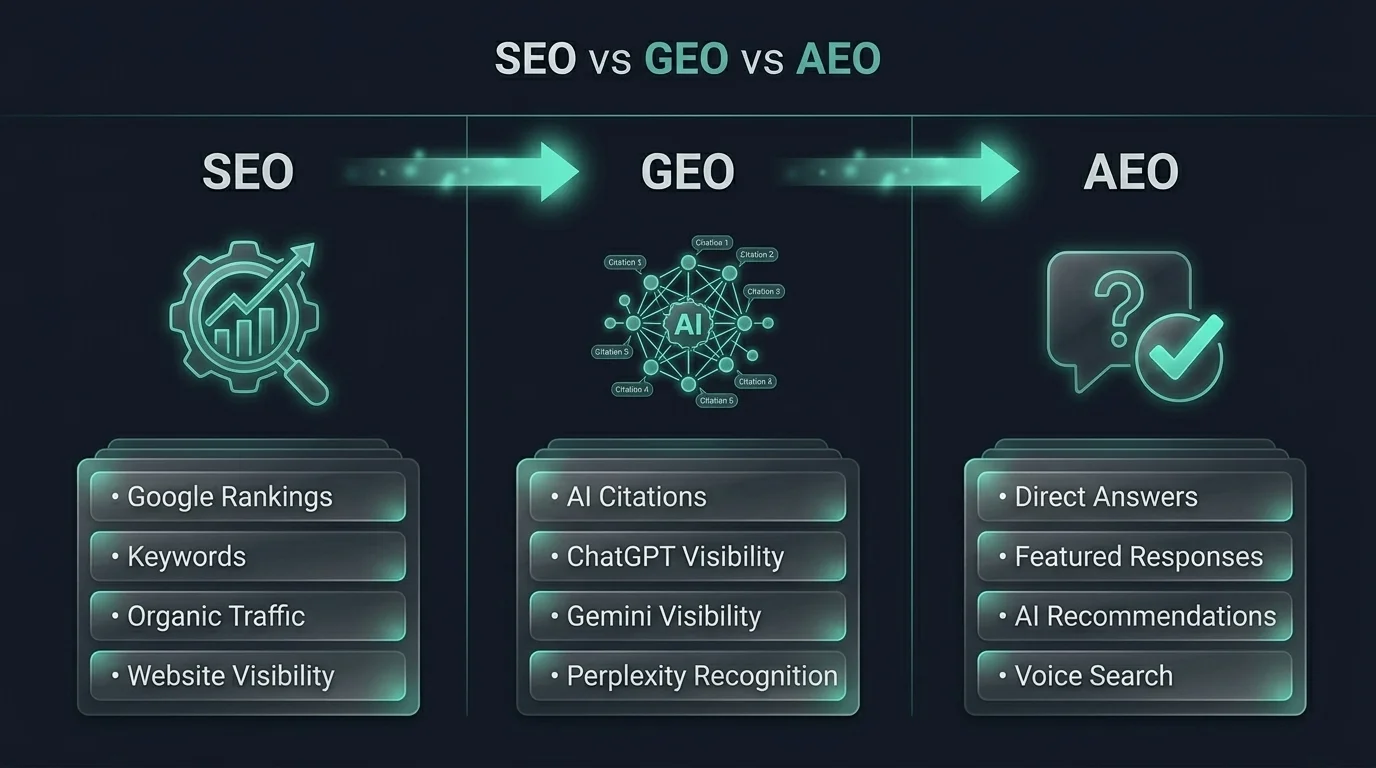 Figure 6: While traditional SEO focuses on rankings, GEO and AEO optimize your content so that AI engines actively cite your clinic.
 What Is GEO and How It Helps Dentists Get Found by AI Platforms
Generative Engine Optimization (GEO) is the strategy of structuring your online presence so that AI language models actively recognize your dental practice as a verified, credible, and authoritative source and cite it in their responses to patient questions.
For a dental practice, GEO means making sure your practice name, specialty, location, services, and credentials appear consistently and accurately across every platform where you exist online. It means having proper schema markup on your website. It means earning backlinks from authoritative sources that confirm your specialty and credibility. It means having a fully optimized GBP that AI engines can read and pull structured data from.
When a patient asks ChatGPT "What is the best dental implant practice near downtown [city]?" the AI pulls from sources it has indexed and trusts. A practice with strong GBP data, consistent citations, authoritative backlinks, and well-structured website content is far more likely to be cited than one that has only done basic local dental SEO work.
GEO does not replace traditional dental SEO. It builds on top of it. Every step you take to optimize your Map Pack position also strengthens your GEO foundation.
What Is AEO and How It Gets Your Practice Featured in AI Answers
Answer Engine Optimization (AEO) is the strategy of writing and structuring your content so that it becomes the direct response AI platforms serve to patients who are asking questions about dental care.
When a patient asks Perplexity AI "How do I find a dentist that specializes in dental implants?" or asks Google Gemini "What should I look for when choosing a cosmetic dentist?" the platform looks for the clearest, most direct, most trustworthy answer available. If your website content answers those questions clearly and your GBP data is structured and complete, your practice can be featured in that answer.
AEO for dental practices means writing FAQ content on your website that answers the specific questions your patients are asking. It means using proper heading structure on every service page. It means keeping your GBP information detailed and current. It means creating content at a reading level patients can easily understand, which is the same grade 6 level that makes your content easy for AI engines to parse and summarize.
The combination of a Map Pack ranking, strong GEO, and solid AEO creates a dental practice that is visible in every search environment patients use today, utilizing a robust zero-click strategy.
How to Get Your Dental Practice Cited by ChatGPT, Perplexity AI, Google Gemini, Microsoft Copilot, and SearchGPT
Getting cited by AI platforms requires the same discipline as traditional dental SEO but applied more completely and with AI visibility in mind.
Make your practice a verified and consistent entity everywhere online. Your GBP, your website, your social media profiles, your healthcare directory listings, and your local citations all need to tell the same story about who you are, what services you offer, and where you are located. The more consistently this information appears across the web, the more AI engines trust your practice as a real, verified source.
Publish content that AI engines want to cite. Blog posts that explain dental procedures clearly, FAQ pages that answer common patient questions directly, and service pages that describe your specialties in plain language are all types of content that Perplexity AI, SearchGPT, and Google Gemini actively pull from when answering patient questions.
Earn authoritative backlinks. AI engines use backlinks from credible sources as trust signals in exactly the same way Google does for traditional rankings. Links from dental associations, hospital networks, local news websites, and healthcare directories tell AI engines that your practice is credible and worth citing.
Optimize for Google AI Overviews. Google now places an AI-generated answer at the very top of many search results pages. To learn how to appear in AI Overviews for dental searches, focus on strong on-page dental website SEO, schema markup, and content that directly and concisely answers common patient questions, while keeping up with voice search trends.
Collect reviews that mention specific services. A patient review that says "this practice is incredible for dental implants" gives AI engines a third-party signal that confirms your specialty. Reviews are not just for patients and Google Maps anymore. They are data points that AI engines use to understand what your practice is known for.
Tracking Your Map Pack Performance With Dental Marketing Analytics
Getting into the Map Pack is a milestone. Staying there and improving your position requires ongoing measurement and adjustment. Data-driven marketing is what separates dental practices that consistently grow from those that plateau.
Make sure you are tracking dental SEO results by measuring critical local SEO KPIs. Set up call tracking, configure your search console with our search console guide, complete a proper GA4 setup, utilize professional rank tracking tools, build custom SEO reporting dashboards, and choose the best dental SEO tools.
Use your GBP Insights dashboard to track how many patients searched for your practice by name versus how many found you through category or keyword searches. Monitor how many patients clicked to call, requested directions, or visited your website directly from your listing. Track which photos are getting the most views. Review your search query data to understand exactly which search terms are triggering your listing.
Beyond GBP, work with a dental SEO expert or dental marketing agency that provides a complete marketing dashboard with cloud-based reporting. Your Map Pack performance should be tracked alongside your organic keyword rankings, your Google Ads results, your Facebook Ads performance, and your overall practice revenue.
The best dental SEO companies offer closed-loop attribution, meaning they can show you exactly how a patient who found you in the Map Pack turned into a booked appointment, a completed treatment, and collected revenue. Understanding standard dental local SEO costs and metrics is what makes your marketing budget decisions clear and your dental practice growth strategy truly data-driven.
Choosing a Dental SEO Agency to Help You Win the Map Pack
If everything in this guide sounds like a lot to manage while running a dental practice, that is because it is. Most of the fastest-growing dental practices work with a dental SEO agency or dental marketing agency that specializes in exactly this kind of work.
When choosing a dental SEO company or dental SEO consultant to help you get into and stay in the Map Pack, ask the right questions.
Do they specialize specifically in dental SEO services or do they serve every type of business? Can they show you dental case studies with documented Map Pack ranking improvements and new patient growth? Do they manage your GBP as an active channel or just set it up once? Do they build GEO and AEO strategies into their approach or focus only on traditional local search? Are they a Google Premier Partner with certified expertise in Google Ads management? Do they offer transparent reporting through a live marketing dashboard?
The best dental SEO companies understand that Map Pack ranking is not the end goal. The end goal is more new patients, higher treatment acceptance, stronger practice production, and long-term practice profitability. Map Pack visibility is the engine that powers all of those outcomes when it is managed correctly.
Conclusion: Getting Into the Google Map Pack Is the Highest-Leverage Move in Dental SEO
The Google Map Pack is where most dental patients make their decision about which practice to call. If your practice is not in that top three, you are handing patients to competitors every single day.
Getting there is achievable for any dental practice that applies the right dental SEO strategy consistently. Start with a fully optimized Google Business Profile. Build your reviews steadily and respond to every one. Fix your NAP consistency across every platform. Strengthen your dental website with local SEO and schema markup. Earn authoritative backlinks from trusted sources. Post consistently on your GBP and keep your listing active.
If you are launching a new clinic, refer to our guide on local SEO for a new dental practice. You will need to build from scratch, follow our GBP setup for a new practice, secure citations with no prior history, get your first reviews, and tick off all items on your website SEO checklist.
For larger brands, explore local SEO for dental groups and DSOs. This involves managing multiple GBP listings, enforcing strict NAP consistency for DSOs, deploying local landing pages, setting up automated review management for DSOs, and compiling results with specialized DSO SEO reporting.
Compare organic and paid marketing in our local SEO vs Google ads for dentists comparison, and follow our comprehensive dental local SEO checklist. If you are struggling with a dental practice not showing on Google Maps, we can help troubleshoot your issues.
Traditional SEO is no longer enough. The dental practices winning the most new patients today are the ones combining strong local SEO for dentists with forward-thinking AI search optimization.
Start with the Map Pack. Then build outward until your practice is the most visible, most trusted, and most recommended dental provider in your market.
If you want expert help getting into the Google Map Pack and building a complete dental marketing strategy around it, connect with a dental SEO agency that specializes in dental practice growth and new patient acquisition. A practice growth assessment is the first step toward finding out exactly what it will take for your practice to rank where it deserves.
Frequently Asked Questions
The Google Map Pack, also called the Local 3-Pack, is the top section of Google search results that displays a map and three local business listings. It appears for searches with local intent, such as 'dentist near me' or 'emergency dentist in [city]'.
For most dental practices, it takes between 3 to 6 months of consistent optimization (Google Business Profile updates, review generation, local citation fixing, and local backlinks) to break into the Map Pack in competitive local markets.
Yes, online reviews are one of the most critical prominence signals. Google uses the quantity, quality, and recency of reviews, as well as keywords within reviews, to determine Map Pack positioning.
Your practice might not be showing due to a suspended listing, incorrect NAP info, lack of reviews, poor website SEO, or close proximity to a competitor listing that has stronger prominence signals.
Traditional SEO focuses on ranking in standard search results. Generative Engine Optimization (GEO) ensures your practice is cited by AI engines like ChatGPT and Gemini. Answer Engine Optimization (AEO) structures your content to serve as the direct response to conversational questions.

Ready to Dominate Local & AI Search?
Navigating the complexity of Local Map Packs, traditional search rankings, and emerging AI engine visibility can be difficult. Schedule a practice growth audit with our dental SEO specialists today. We will analyze your practice listings, audit your competitor strategies, and layout the exact plan needed to capture high-value cases.
Schedule Growth Assessment