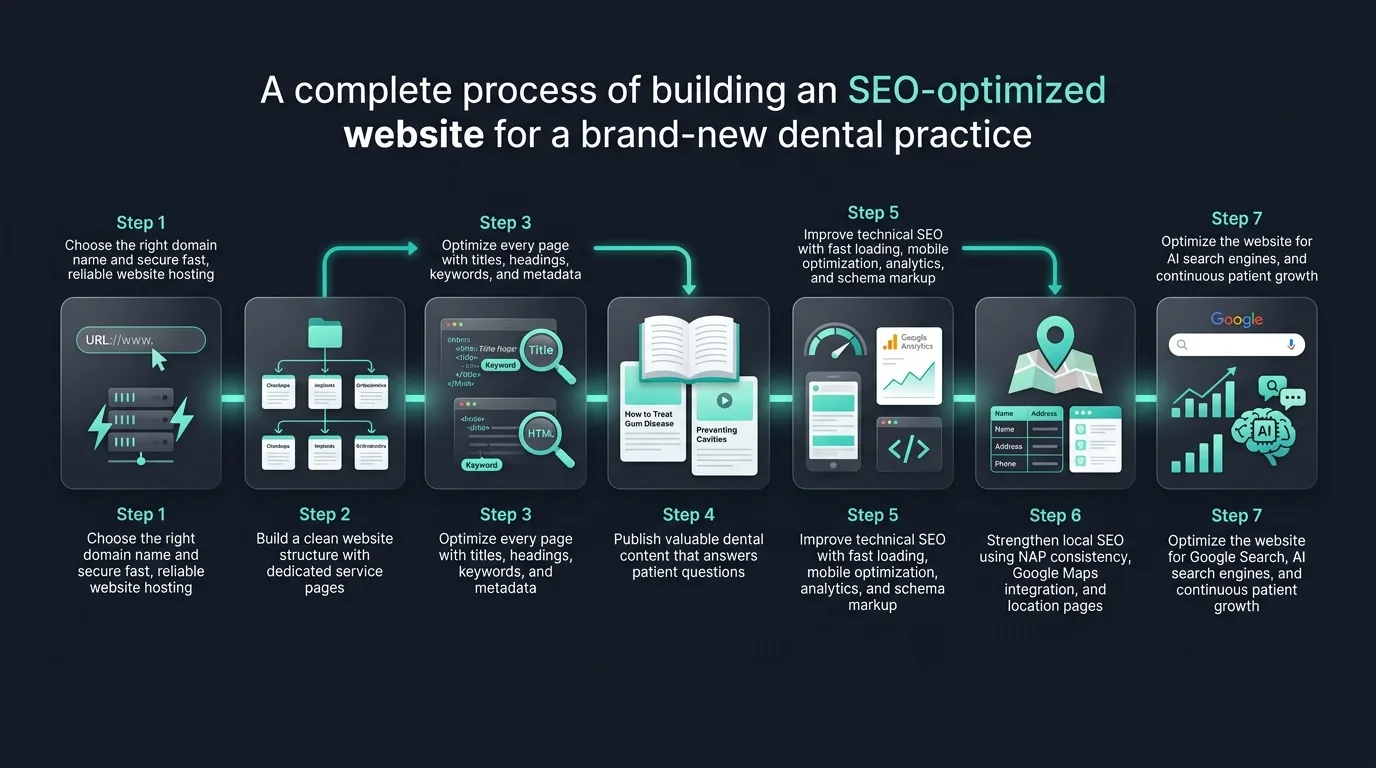
Key Takeaways
Your dental website is the center of your entire online presence. If it is not set up correctly from the start, all of your other dental SEO efforts will produce weaker results. This checklist covers every important part of dental website SEO for a new practice, from page structure and keywords to technical setup and AI search optimization. Work through each item and your site will be built for both Google rankings and the growing world of AI search tools like ChatGPT, Google Gemini, and Perplexity AI. Read our guide to local SEO for new dental practices.
- Clean Launch: Setting up correct directory targets and local host servers at launch prevents index delays.
- Treatment Silos: Splitting up dental content into service-specific urls improves search keyword visibility.
- Metadata Precision: Structuring page titles, headings, and NAP values matches local map signals.
- Machine Indexing: Schema implementations make site data easily readable for ChatGPT conversational engine optimization.
- Why Your Dental Website SEO Setup Matters From Day One
- Checklist Section One: Domain and Hosting
- Checklist Section Two: Site Structure and Navigation
- Checklist Section Three: On Page SEO for Every Page
- Checklist Section Four: Dental SEO Keywords and Content
- Checklist Section Five: Technical SEO for Dental Websites
- Checklist Section Six: Local SEO Elements on Your Website
- Checklist Section Seven: Optimize for AI Search Tools
- Final Thoughts: Use This Checklist Before You Launch
- Frequently Asked Questions
Why Your Dental Website SEO Setup Matters From Day One
A new dental practice cannot afford to launch a website and then fix it later. Every week your site is live without proper dental search engine optimization is a week your competitors are pulling ahead in local search rankings (see Google Map Pack). Start with a complete dental local SEO checklist.
Dental website SEO is not just about adding keywords to a page. It covers how your site is built, how fast it loads, how it communicates with Google and AI tools, and how well it converts visitors into booked patients. Compare local SEO vs Google ads for dentists to optimize your overall budget, and evaluate the dental local SEO cost.
This checklist is built for new dental practices that want to do things correctly the first time. Go through each section in order. Each item directly supports your dental SEO strategy and your ability to attract new patients through search (learn how to troubleshoot a dental practice not showing on Google Maps).
Checklist Section One: Domain and Hosting
Your domain name is the first SEO decision you make for your dental website. Choose a domain that includes your practice name or a relevant keyword combined with your city if possible. A domain like citynamedental.com or drsmithdentistrycltyname.com is clear, local, and easy for patients to remember.
- Secure, Reliable Hosting: Use a reliable hosting provider that offers fast server speeds and strong uptime. Choose a host that offers SSL certificates, which are the security certificates that give your site the padlock icon in browsers. Google requires SSL for ranking and patients trust sites that show as secure.
- Standardized Canonical URLs: Make sure your website is set to a single preferred URL format. Either use www or do not use it, but be consistent. Set up a redirect so that one version always points to the other.
If you're building a new clinic, check our guides on building local visibility from scratch, configuring GBP setup for a new practice, building citations with no history, and collecting first reviews for a new practice.
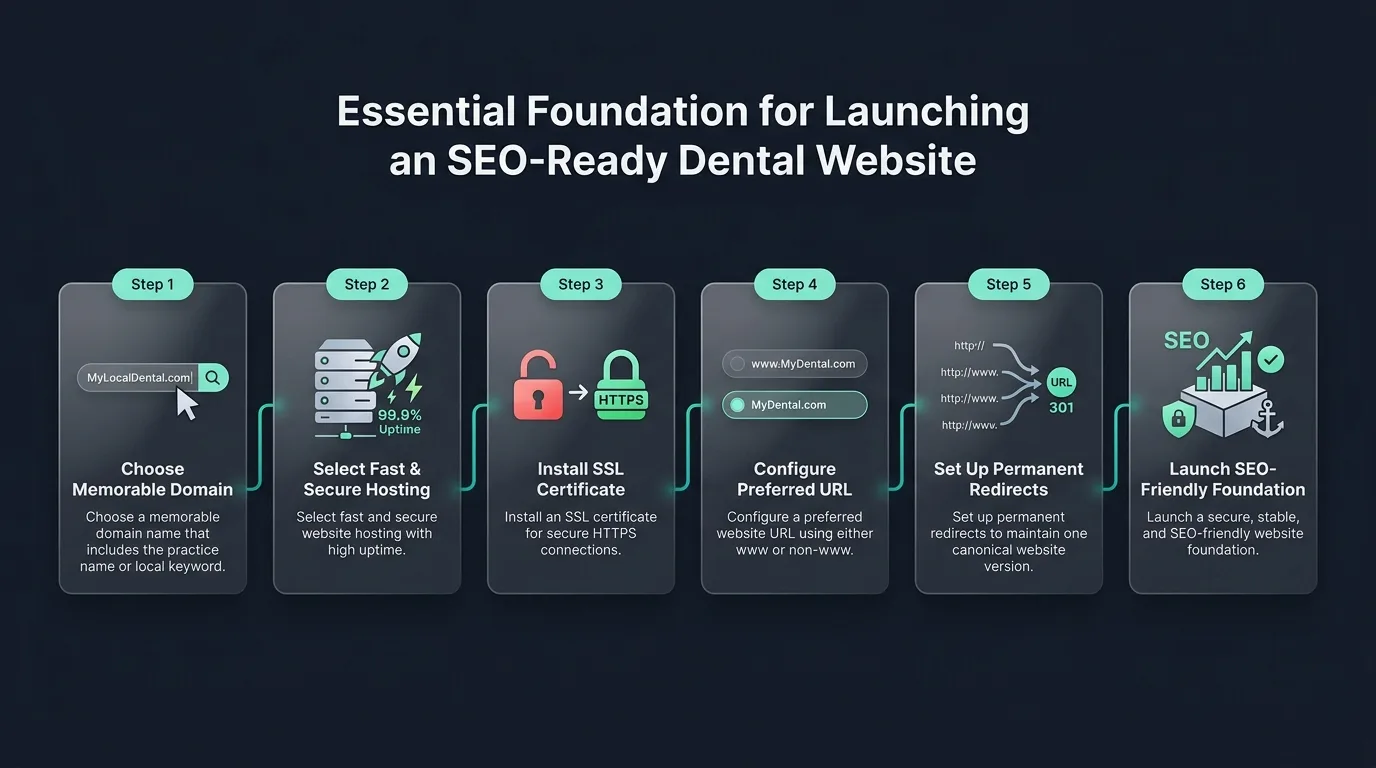 Figure 1: Choosing fast servers and canonical URLs to support page speed scores.
 Checklist Section Two: Site Structure and Navigation
Your dental website structure should be simple and logical. Every important page should be reachable within two clicks from the homepage. Google needs to be able to crawl and index all of your pages easily, and patients need to find what they are looking for without confusion (read about dental service page SEO).
- Service Page Silos: Create separate pages for key services like dental implants (and dental implants cost page SEO), Invisalign (and Invisalign vs braces), cosmetic dentistry (such as teeth whitening and veneers), pediatric dentist SEO, sedation dentistry, root canal SEO, and orthodontist SEO, and emergency dentist keywords (emergency dentist SEO and how to rank for emergency dentist near me).
- Logical Navigation Hierarchy: Navigation menu should include your main services, an about page, a contact page, and a blog or resources section. A clear navigation structure helps both patients and Google understand what your site is about.
- Submit Sitemap to GSC: Create a sitemap and submit it to Google Search Console. A sitemap is a file that lists all the pages on your site. Submitting it tells Google to crawl and index your site faster.
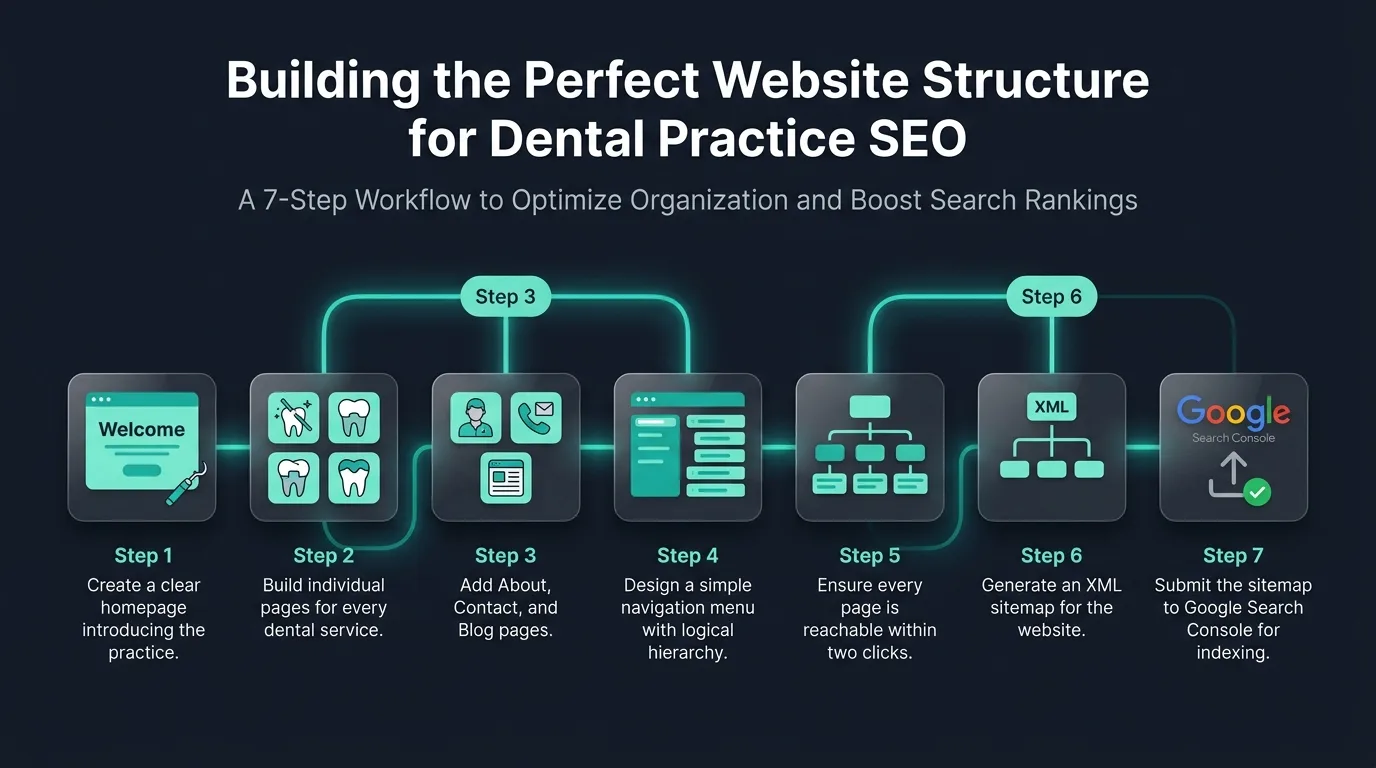 Figure 2: Formulating clean folder navigation rules that search engine crawlers can traverse.
 Checklist Section Three: On Page SEO for Every Page
On page SEO refers to the elements on each individual page that tell Google what that page is about. For dental website SEO, every page needs the following items properly set up:
- Title Tags: Your page title, also called the title tag, should include your primary dental SEO keyword and your city name. Keep it under sixty characters so it displays fully in search results.
- Meta Description: Your meta description should be a clear, compelling summary of what the page covers. Include your main keyword and a call to action. Keep it under 160 characters.
- Heading Tags: Your H1 heading is the main headline on the page. There should be only one H1 per page and it should contain your primary keyword. Use H2 and H3 headings to organize the rest of the content.
- NAP Consistency Footer: Add your practice name, address, and phone number to the footer of every page. This NAP information must match exactly what appears on your Google Business Profile and all of your online directory listings. NAP consistency is a core requirement of local dental SEO (maintain NAP consistency and how to maintain NAP consistency across DSO locations).
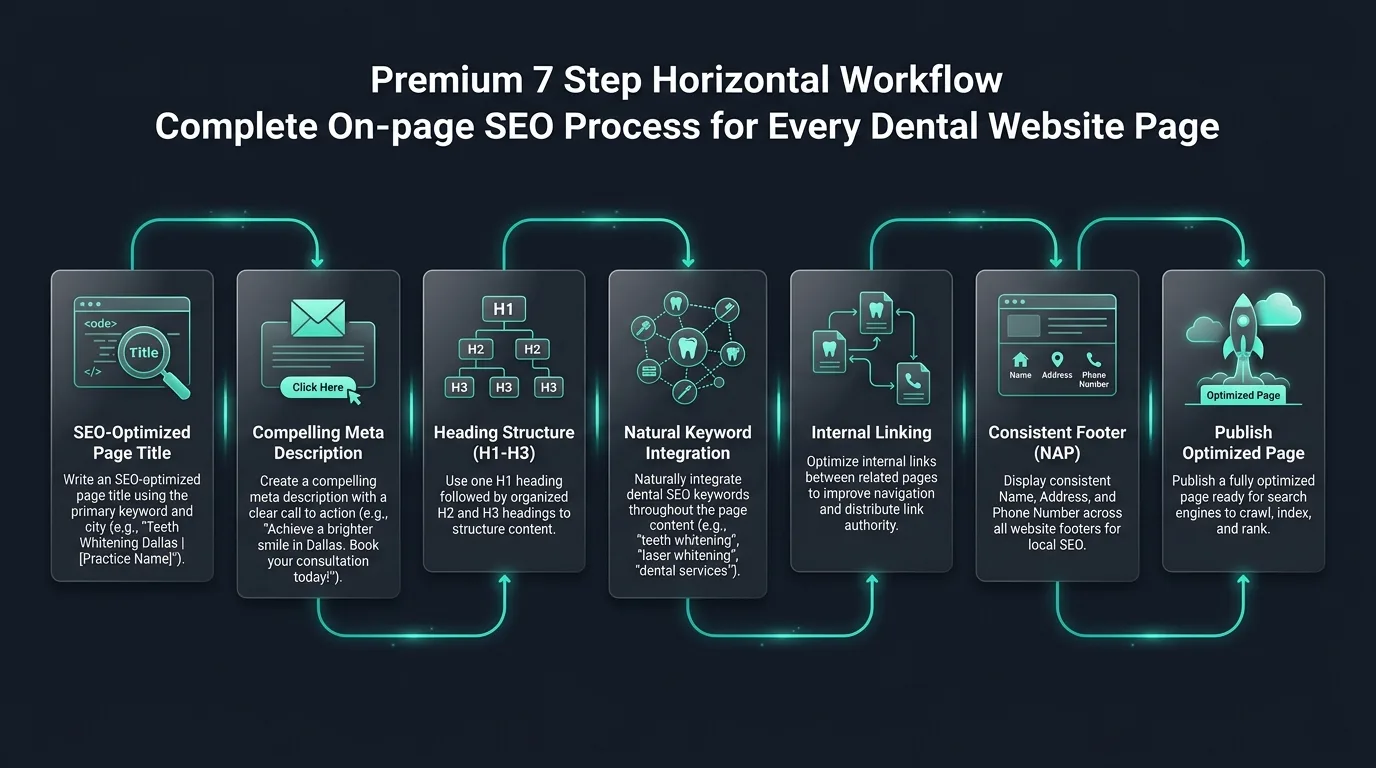 Figure 3: Configuring title tags, meta descriptions, H1 titles, and footer parameters.
 Checklist Section Four: Dental SEO Keywords and Content
Keyword research is the foundation of dental search engine optimization. Before you write a single page, you need to know what your target patients are actually searching for. Check our guide on dental keyword research.
Start with your core services combined with your city name. Then research longer questions that patients ask, such as "how long do dental implants last," "what does a dental cleaning include," and "how to find a dentist accepting new patients." These question based keywords are valuable for blog content and FAQ sections (read about near me keywords, geo modifier keywords, and neighborhood-specific pages).
Create a blog on your dental website and publish new posts at least twice a month. Blog content gives you more opportunities to rank for dental SEO keywords, answers patient questions, and signals to Google that your site is active and regularly updated (read about long-tail keywords, search intent, and multi-location pages).
Each blog post should target one main keyword or question. Answer the question clearly and directly in the first paragraph. Use simple language that a patient with no dental background can understand. This kind of content also positions your practice well for AI search tools, which we will cover in detail shortly.
Write a strong FAQ section on your service pages. FAQs directly address the questions patients type into Google and ask AI tools. They are one of the most effective dental SEO strategies for capturing featured snippets in Google search results.
Checklist Section Five: Technical SEO for Dental Websites
Technical SEO covers the behind the scenes elements that affect how well Google can crawl, index, and rank your dental website. These items are often overlooked by new practices but they matter a great deal (see local SEO audit, mobile SEO, Core Web Vitals, and page speed optimization):
- Page Speed Scores: Page speed is critical. Google measures how fast your pages load and uses that as a ranking factor. Use PageSpeed Insights to test your site. Compress images.
- Mobile-First Indexing: Mobile optimization is not optional. Most patients search for dentists on their smartphones. Your dental website must look clean, load fast, and function perfectly on a mobile screen.
- GSC and GA4 Setup: Set up Google Search Console and Google Analytics for your practice website. Search Console shows keywords. Analytics shows behavior. Configure GA4 setup for dental websites and call tracking.
- Schema Markup: Install schema markup on your dental website. Schema is a type of structured data code that tells Google and AI tools exactly what kind of business you are. For dental practices, local business schema and medical organization schema are the most important.
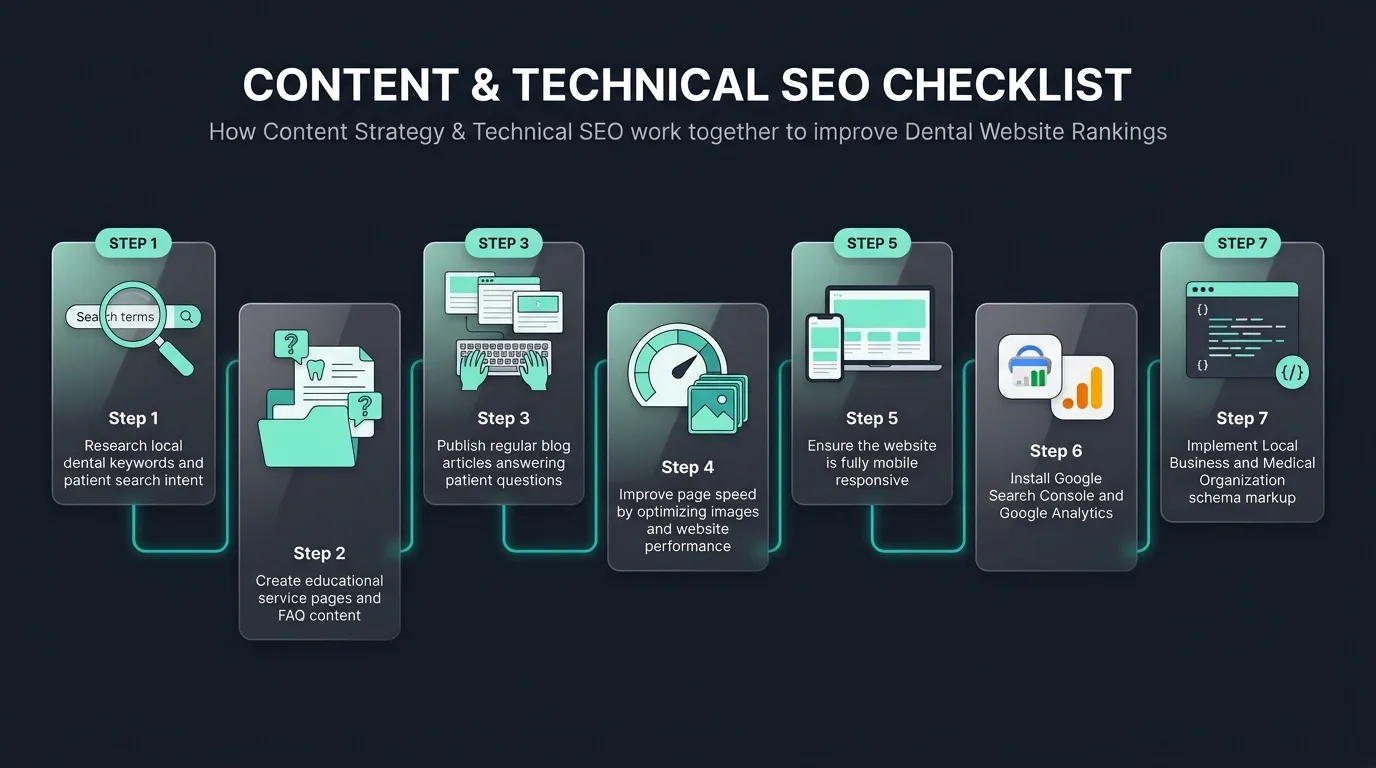 Figure 4: Tracking keyword configurations and technical core metrics inside GSC.
 Checklist Section Six: Local SEO Elements on Your Website
Local dental SEO is about making sure Google connects your website to your specific geographic area. Several on site elements support this.
Include your city and neighborhood in your page titles, headings, and body text where it fits naturally. Do not force location references into every sentence, but make sure your service pages clearly communicate where your practice is located. Optimize profiles for Healthgrades optimization and Zocdoc SEO. Build citations using the best dental directories, maintaining dental local citations and resolving errors via how to fix inconsistent citations.
Create a dedicated contact page that includes your full address, phone number, business hours, and an embedded Google Map. This page is one of the most important local SEO pages on your entire dental website. If you're looking for backlinks, review local link building for dentists, community backlinks, sponsorship links, guest posting, and press PR links.
If your practice serves multiple neighborhoods or suburbs, consider creating individual location pages or area specific content that targets patients in those specific areas. This is a dental SEO strategy used by multi location practices and larger dental groups, but it can help single location practices rank for nearby communities too.
Add patient testimonials and review snippets to your website. Real patient quotes build trust and can also be marked up with review schema so that star ratings appear directly in Google search results next to your listing (read dental practice reviews, get get more Google reviews, use a review generation system, respond with how to respond to reviews, maintain HIPAA compliance when you handle negative reviews, compare reviews on Healthgrades vs Google).
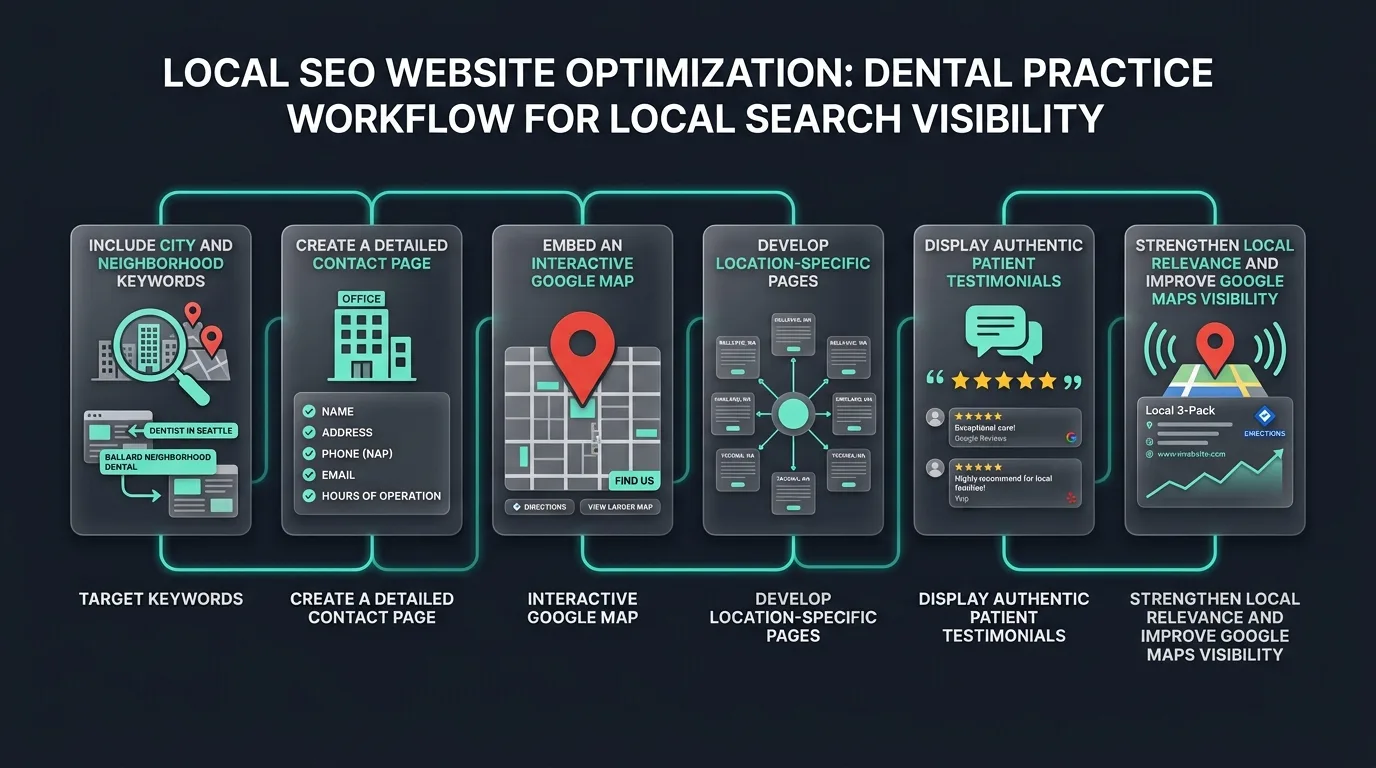 Figure 5: Adding maps frames, testimonials, and neighborhood tags to build geo-authority.
 Checklist Section Seven: Optimize for AI Search Tools
This section is now essential for any complete dental website SEO checklist. AI tools including ChatGPT, Perplexity AI, Google Gemini, Microsoft Copilot, and SearchGPT are changing how patients find dental practices. Your website needs to be built with these tools in mind. Take a look at our AI search optimization for dentists guide.
AI tools prefer content that is clear, factual, and structured to answer specific questions directly. Pages that open with a direct answer to a patient question, followed by supporting detail, are the kind of content AI tools cite as trusted sources. This is the foundation of Answer Engine Optimization, or AEO.
Generative Engine Optimization, or GEO, goes a step further. It is the practice of structuring your entire online presence, including your website, your directory listings, your reviews, and your schema markup, so that AI engines recognize your practice as a verified and credible source worthy of being recommended to patients (see Generative Engine Optimization and zero-click strategies). Ensure pages follow E-E-A-T guidelines (E-E-A-T for dental websites) and implement correct schema markup (specifically LocalBusiness and Dentist schema and FAQPage schema).
To get cited by AI tools like ChatGPT and Perplexity AI, your dental website needs to clearly state who you are, where you are, what you treat, what your credentials are, and what patients say about you. All of this information needs to be easy for an AI to read, which means using clear headings, short paragraphs, direct answers, and structured data. You can learn more about Google AI Overviews, how to appear in Google AI Overviews, and how to get recommended by ChatGPT.
Ranking in Google AI Overviews, which now appear at the very top of many search results pages, requires the same approach. Google pulls content into AI Overviews from pages that answer questions clearly and come from trusted sources. A dental website with strong dental SEO fundamentals, good reviews, consistent citations, and clear question and answer content is well positioned to appear in these AI generated summaries.
Traditional dental SEO strategies focused only on keyword rankings and backlinks are no longer sufficient on their own. The dental practices winning the most new patients right now are the ones that combine strong dental search engine optimization with GEO, AEO, and a content strategy built for both humans and AI tools.
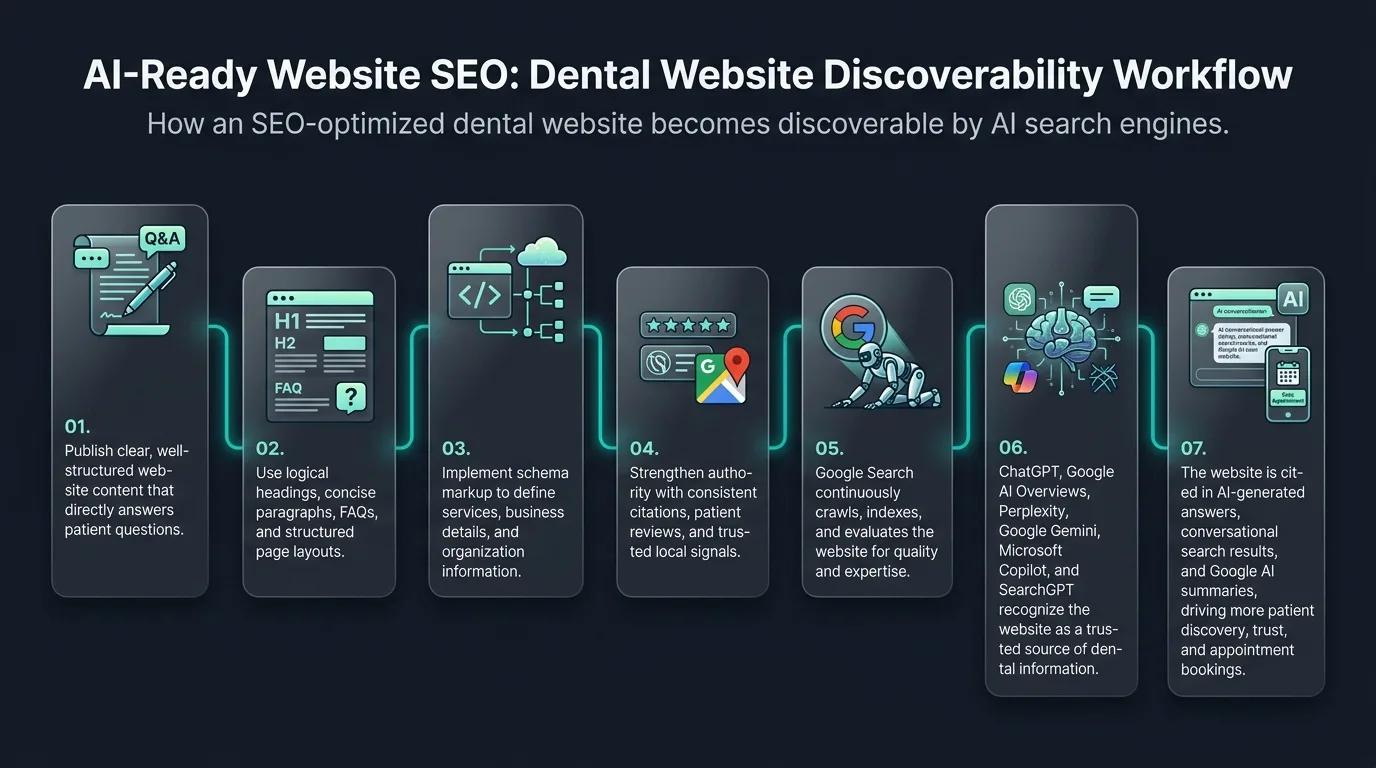 Figure 6: Visualizing the structure needed to serve machine-readable answers to Large Language Models.
 Final Thoughts: Use This Checklist Before You Launch
Every item on this checklist directly affects how well your dental website performs in search. Work through it section by section before your site goes live and revisit it every three months as your practice grows.
Dental website SEO is not a one time task. It is an ongoing investment that compounds over time. If you run multiple offices, read our guide to managing multiple GBP listings, establishing local landing pages, and executing review management for DSOs. Track your progress with DSO SEO reporting. Update listings using GBP insights, and how to read GBP insights. Optimize for voice search. Track performance with SEO reporting, configure GA4 setup for dental websites, implement call tracking, monitor rankings using rank tracking tools, and check search performance via Google Search Console and the best dental SEO tools, general tracking dental SEO results. Post weekly maps updates (see how to post GBP posts).

Ready to Dominate Local & AI Search?
Navigating the complexity of Local Map Packs, traditional search rankings, and emerging AI engine visibility can be difficult. Schedule a practice growth audit with our dental SEO specialists today. We will analyze your practice listings, audit your competitor strategies, and layout the exact plan needed to capture high-value cases.
Schedule Growth Assessment