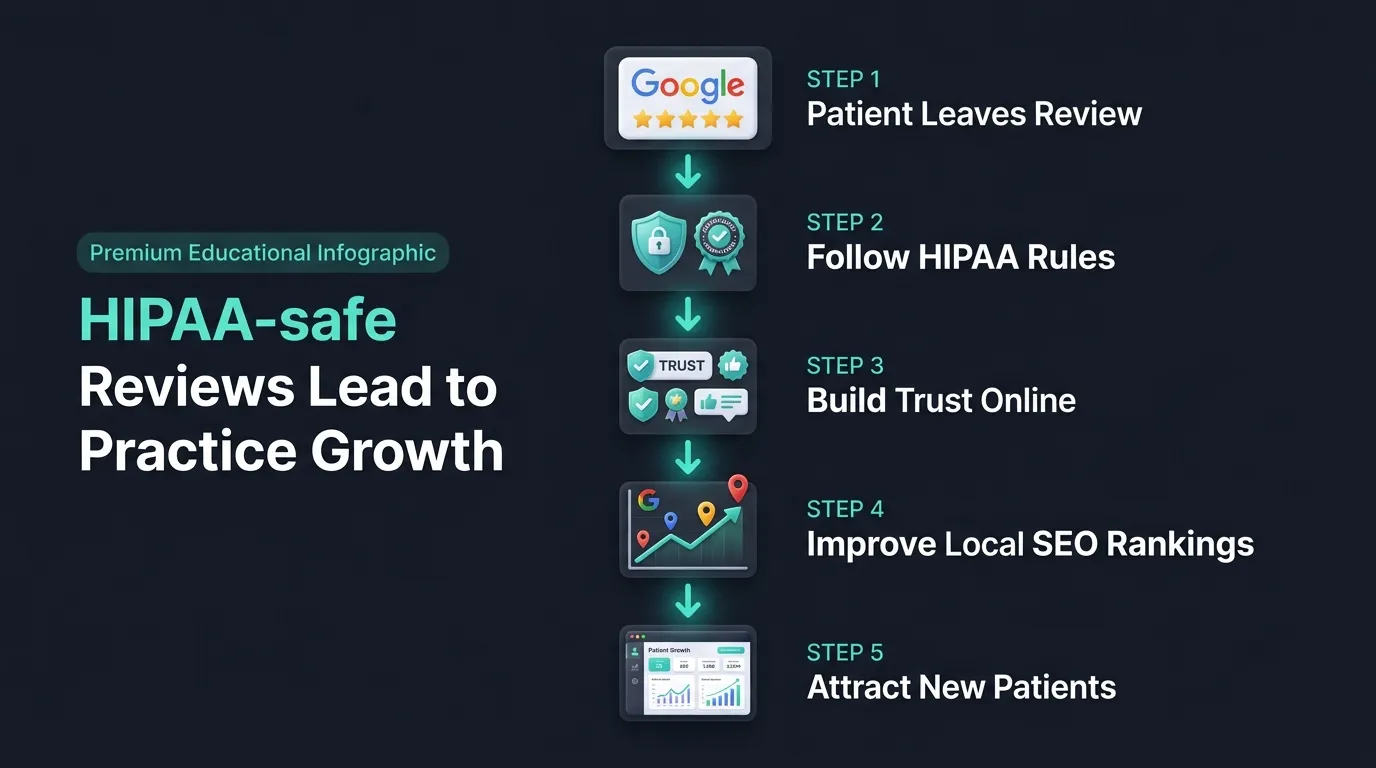
Key Takeaways
Collecting online patient feedback is vital for growth, but maintaining strict healthcare compliance protects your practice from costly legal violations.
- Protected Health Information: Under HIPAA, simply confirming that a reviewer is a patient at your clinic is a violation.
- Safe Responses: Never mention procedures or treatment details publicly. Keep responses warm, general, and invite offline follow-ups.
- Neutral Asking: Ask patients for feedback generally rather than referring to their specific treatment or diagnosis.
- AI Search Optimization: Compliant reviews feed positive sentiment into models like ChatGPT and Gemini for organic recommendations.
- 1. HIPAA Compliance and Patient Reviews: What Every Dental Practice Must Know
- What Is HIPAA and Why Does It Apply to Reviews
- Why Patient Reviews Matter for Dental SEO
- How to Ask for Reviews Without Breaking HIPAA
- How to Respond to Reviews the Right Way
- Dental SEO and Reputation Management Work Together
- What Is AI Search and Why Dentists Need to Pay Attention
- Generative Engine Optimization for Dental Practices
- Dental Implant Marketing and High Value Patient Acquisition
- How Dental SEO Services Help With HIPAA Compliant Review Generation
- Local SEO for Dentists: The Foundation of Practice Growth
- Future Proofing Your Dental Practice in the Age of AI
- Key Takeaways for Dental Practice Owners
- Final Thoughts
- Frequently Asked Questions
Patient reviews are one of the most powerful tools for dental practice growth. But collecting them the wrong way can lead to serious legal trouble. HIPAA rules protect patient privacy, and many dentists do not realize that responding to or asking for reviews can break those rules. This blog explains what HIPAA means for online reviews, how to collect reviews safely, and how smart dental SEO and local seo for dentists can turn your good reputation into a steady stream of new patients. You will also learn why AI search engines like ChatGPT, Perplexity, and Google Gemini are now changing the way patients find dentists, and what your practice needs to do to stay visible in this new world.
1. HIPAA Compliance and Patient Reviews: What Every Dental Practice Must Know
If you run a dental practice, you already know that online reviews matter. A five star rating on Google can bring in new patients every single week. But there is a catch. The same reviews that help your dental SEO can also put you at risk if you handle them the wrong way.
HIPAA, the Health Insurance Portability and Accountability Act, protects patient health information. This includes anything that connects a person to their dental care. When you respond to a review or ask a patient to share their experience online, you have to be very careful. One wrong move can cost your practice thousands of dollars in fines.
This guide is written for dental practice owners, office managers, and anyone working in dental marketing. You do not need a law degree to understand this. You just need to know the rules and follow a clear plan.
What Is HIPAA and Why Does It Apply to Reviews
HIPAA was created to keep patient health information private. It applies to any business that handles health data, including dental offices. Under HIPAA, you cannot share a patient's protected health information without their permission.
Here is where reviews get tricky. When a patient leaves a review, they are choosing to share their own story. That is their right. But when you respond, you have to be very careful. If you confirm that someone is your patient, or mention anything about their treatment, you may be breaking HIPAA rules even if you are just trying to say thank you.
For example, suppose a patient writes: "Dr. Smith fixed my broken tooth and I feel great." If you respond by saying, "We are so glad we could help with your crown procedure," you just confirmed a health detail. That is a HIPAA violation. It does not matter that the patient already talked about their visit. Your response cannot add to or confirm any health information.
This is one of the most common mistakes in dental reputation management. And it is one that can be avoided with a simple strategy.
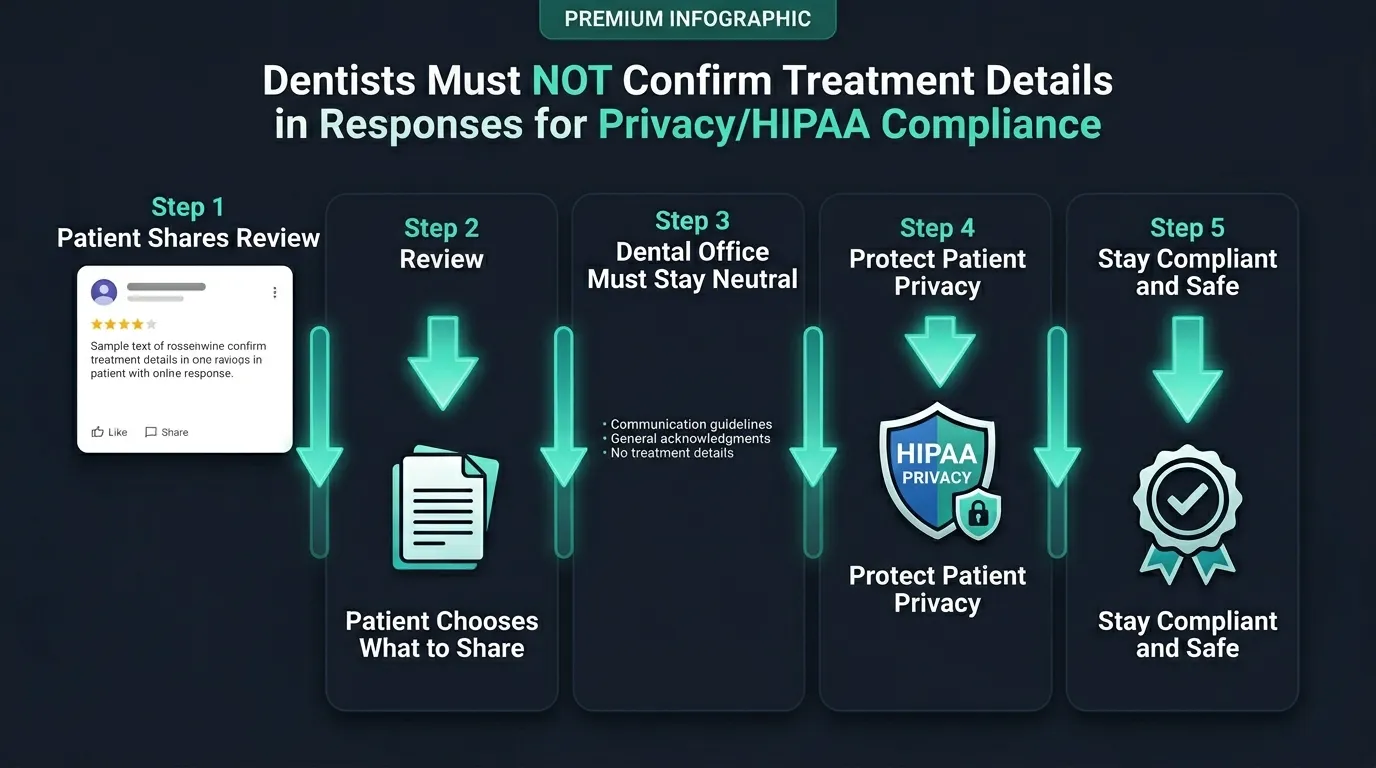 Figure 1: Publicly confirming clinical treatment details or patient status violates health privacy guidelines.
 Why Patient Reviews Matter for Dental SEO
Before we go deeper into the rules, let us talk about why this matters so much for your dental SEO strategy.
Search engine optimization for dentists depends heavily on online reviews. Google uses your review count and rating as part of how it ranks your practice in local search results. More good reviews mean higher rankings. Higher rankings mean more new patients. It is that direct.
When someone searches for a dentist in your city, Google shows a map with the top three results. This is called the local pack. To get into that google map pack, you need strong local SEO for dentists. That means a well set up google business profile, consistent information across the web, a fast dental website, and yes, lots of good reviews.
Dental SEO companies and dental SEO agencies often list review generation as one of the top strategies for local dental SEO. and they are right. But the strategy only works if you follow HIPAA rules while doing it.
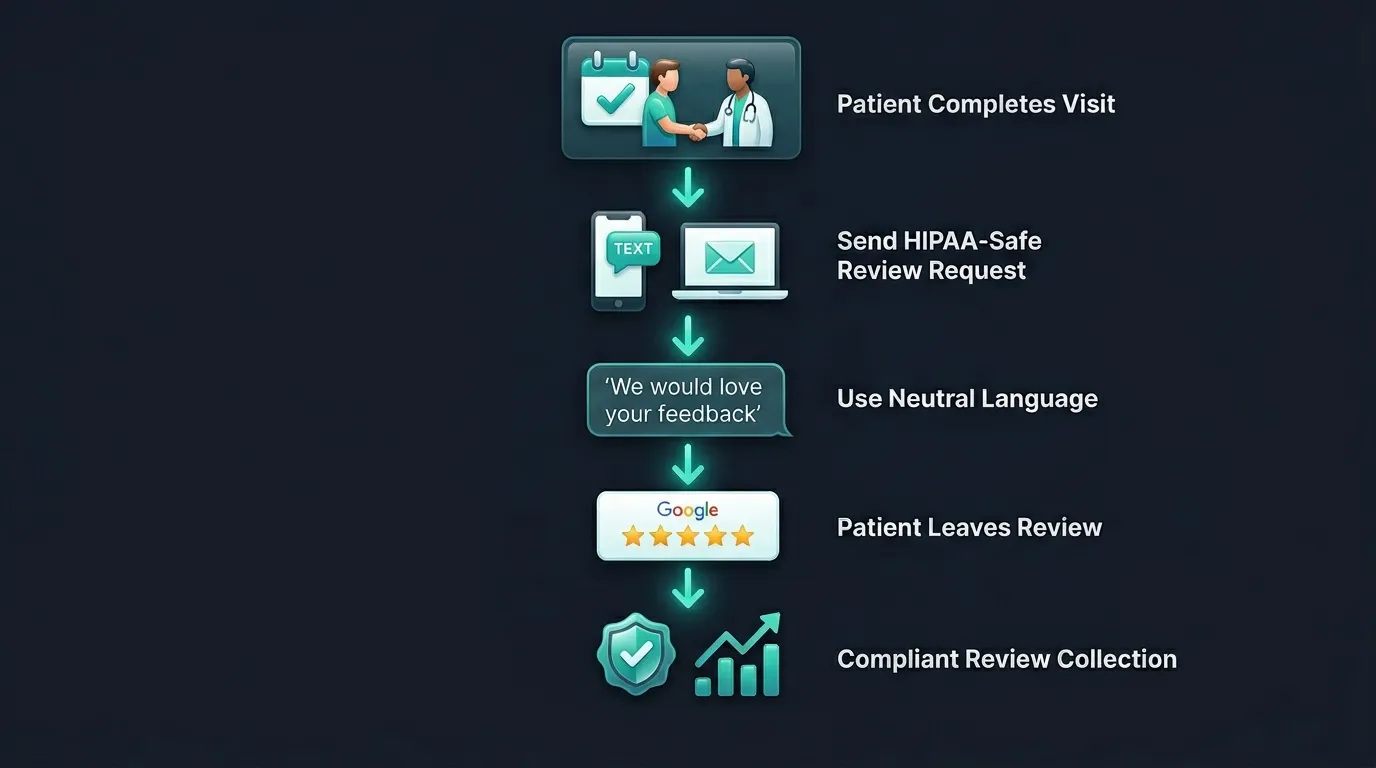 Figure 2: Review count and velocity directly impact your search engine map positioning.
 How to Ask for Reviews Without Breaking HIPAA
The good news is that you can absolutely ask patients for reviews. You just have to do it the right way. Here is what dental SEO experts and healthcare compliance advisors recommend:
- First, get a general consent form signed: This form tells patients that you may ask them to share their experience online. It does not have to be complicated. A simple sentence saying the patient agrees to receive follow up messages about their visit is enough to cover most situations.
- Second, use a HIPAA compliant review request system: Many dental SEO services and dental marketing software tools have built in review request features. These tools send a simple message to the patient, usually by text or email, that asks how their visit went. The message does not mention any health details. It just asks the patient to share their experience. A reliable review generation system automates this.
- Third, keep your review requests neutral: Never say something like "We hope your extraction went well" or "How did your Invisalign appointment go?" That kind of message confirms health information and can cross the line. Instead, say something like "We hope your visit was a great experience. We would love your feedback."
- Fourth, train your whole team: Dental practice management requires everyone, from the front desk to the dentist, to understand these rules. One staff member who does not know better can cause a serious problem.
By following these steps, you can consistently request reviews without creating legal exposure for your clinic.
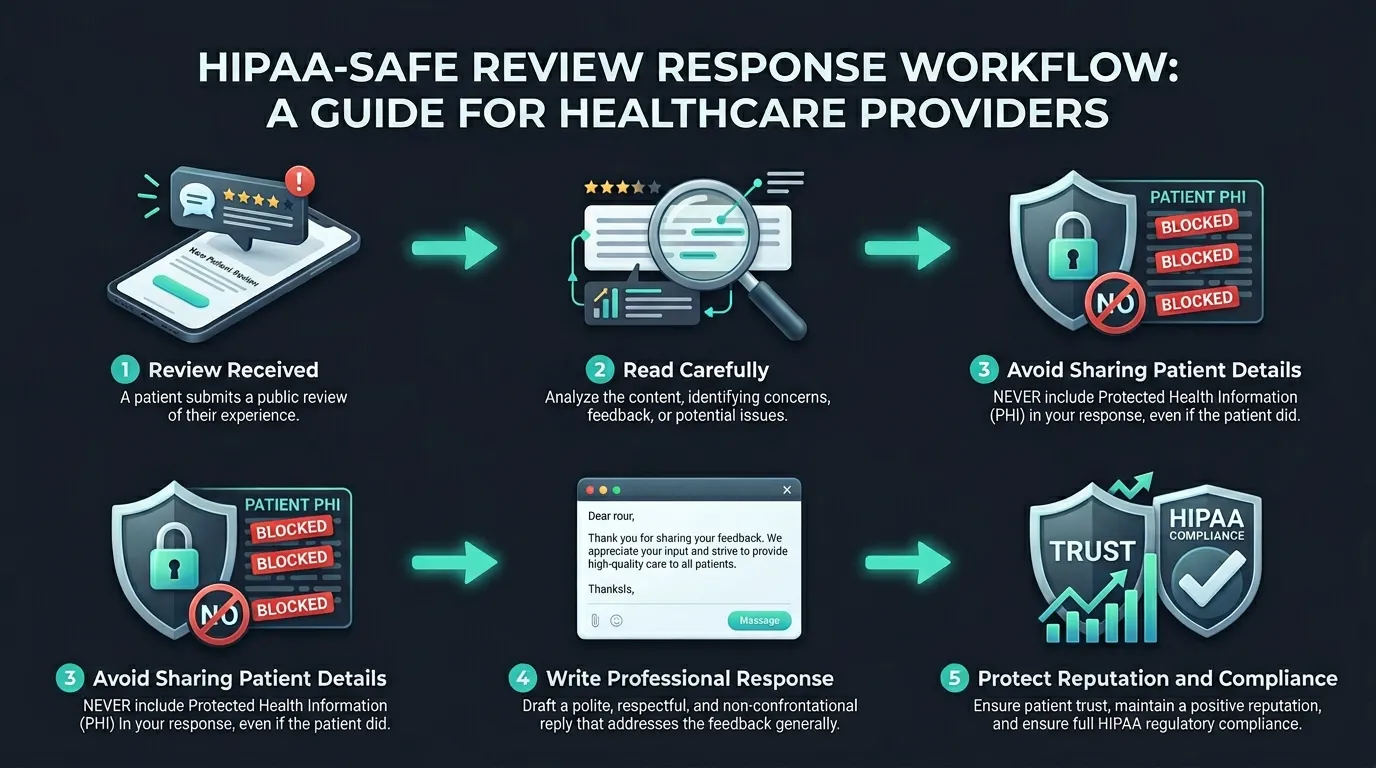 Figure 3: Setting up structured request workflows keeps patient acquisition compliant and predictable.
 How to Respond to Reviews the Right Way
Responding to reviews is important for dental search engine optimization and for showing potential patients that you care. But it must be done carefully.
Here is the golden rule for responding to dental patient reviews: never confirm that someone is a patient.
For positive reviews, keep your response warm but general. Say something like: "Thank you so much for your kind words. We are glad your visit was a positive one. We look forward to seeing you again." Notice that this response does not mention any procedure, treatment, or health detail.
For negative reviews, this becomes even more important. Never get defensive. Never mention the patient's name or any detail about their visit. When learning how to handle negative dental reviews, a safe response sounds like this: "We take all patient experiences very seriously. Please contact our office directly so we can address your concerns." This response shows other readers that you care, without crossing any HIPAA lines, and allows you to resolve the matter offline.
Dental SEO specialists and dental marketing companies often help practices create response templates that are both HIPAA safe and effective for online reputation management.
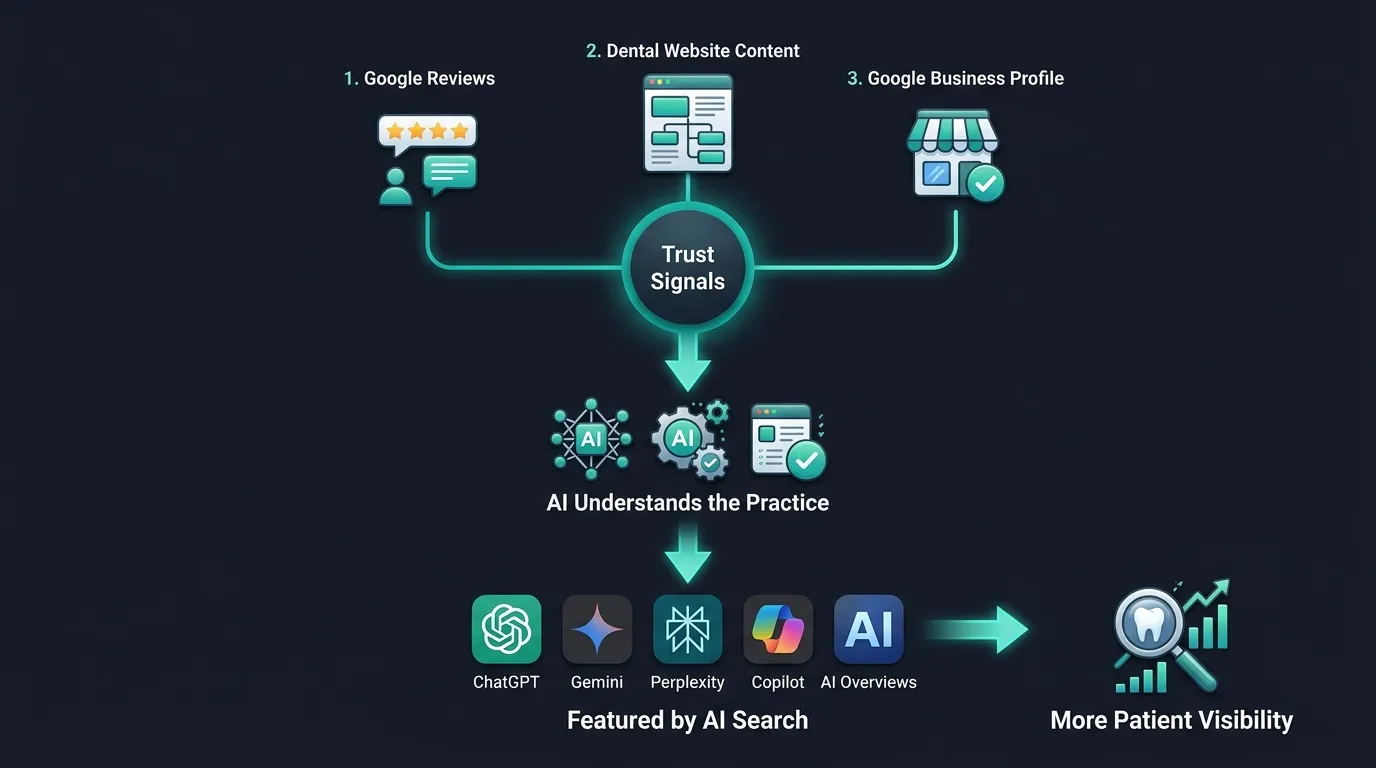 Figure 4: Professional, template-based responses keep the clinic compliant when replying online.
 Dental SEO and Reputation Management Work Together
Your online reputation is not separate from your dental SEO strategy. They are deeply connected. When AI tools like Google Gemini, ChatGPT, and Perplexity AI are looking for information to share with users, they pull from trusted online sources. Reviews are one of those sources.
If your dental practice has dozens of recent five star reviews, you are more likely to be cited as a trusted local provider by AI search engines. This is a new and growing part of what dental SEO experts call Generative Engine Optimization (GEO).
Traditional SEO for dentists focuses on ranking in Google search results. That still matters. But more and more patients are now asking AI tools directly, "Who is the best dentist near me?" or "What should I look for in a dental implant provider?" If your practice is not set up to appear in those answers, you are missing a huge opportunity.
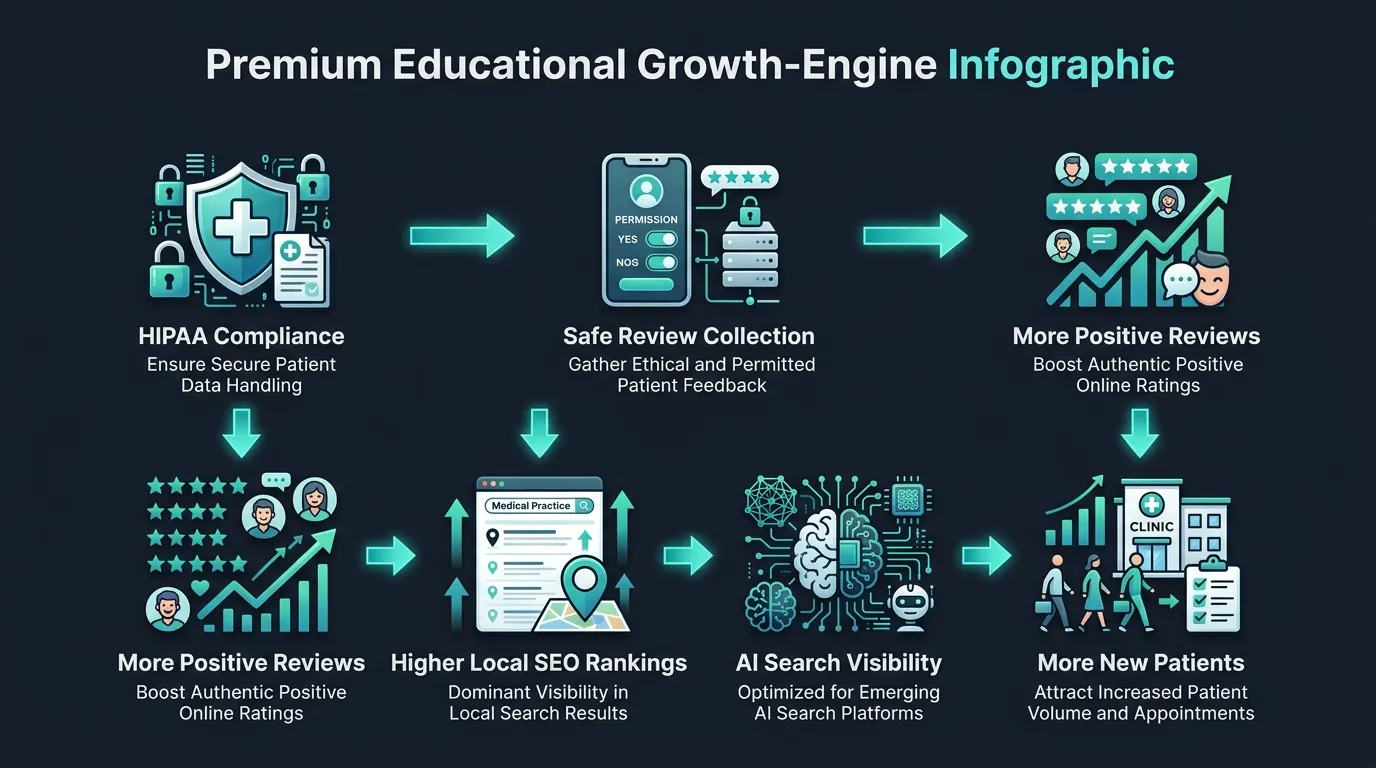 Figure 5: A compliant review profile feeds positive entity signals into Google's algorithms and AI platforms.
 What Is AI Search and Why Dentists Need to Pay Attention
Artificial intelligence is changing how people find information. Tools like ChatGPT, Perplexity AI, Google Gemini, Microsoft Copilot, and SearchGPT do not just show a list of links. They give direct answers. They pull from reviews, articles, websites, and verified data to build those answers.
For dental practices, this means your digital presence has to be structured in a way that AI can read and trust. This is where Answer Engine Optimization (AEO) comes in.
AEO is the process of making sure your dental website and online profiles are set up so that AI engines can find, read, and cite your information. A dental SEO agency that understands AEO will help you create content that answers common patient questions clearly and directly. Things like:
- What is a dental implant and how does it work?
- How long does teeth whitening last?
- What should I expect at my first dental visit?
When your dental website answers these questions in simple, clear language, AI engines are more likely to pull that content and show it to users. This means your practice gets mentioned even when users are not clicking on links. They are just asking questions and getting answers, and your practice is the source.
Generative Engine Optimization for Dental Practices
Traditional SEO for dental practices is about keywords, backlinks, and page speed. All of that still matters. But Generative Engine Optimization, or GEO, takes things a step further.
GEO is about making sure your dental practice is cited as a verified, trusted source by AI systems. Here is how it works in practice:
- Your dental website content: Needs to be written in a clear, structured way. Use simple sentences. Answer questions directly. Use proper headings. Include your location, services, and credentials clearly.
- Your Google Business Profile: Needs to be fully filled out and regularly updated. This includes your hours, photos, services, and responses to reviews. AI engines use this data to verify that your practice is real, active, and trusted.
- Your reviews: Need to be recent, plentiful, and responded to. AI tools look at review volume and recency as signals of trust. A dental practice with 200 reviews that are two years old looks less active than one with 50 reviews from the past three months.
- Your name, address, and phone number: Need to be identical everywhere online. This is called NAP consistency and it is a core part of local SEO for dentists. When your information matches across Google, Yelp, Healthgrades, and your own dental website, AI engines trust your practice more.
Dental Implant Marketing and High Value Patient Acquisition
One of the most competitive areas in dental SEO marketing is dental implant marketing. Implant cases bring in significant revenue, and patients looking for implants do a lot of research before choosing a provider. They read reviews, ask AI tools, and compare websites.
For dental SEO strategies focused on implants, your content needs to go beyond basic keyword stuffing. You need real patient stories, clear explanations of the process, pricing transparency when possible, and strong calls to action. Your dental website should have a dedicated implant page that answers the most common questions patients ask, such as the details on the implant cost page. You can also optimize pages for cosmetic treatments like invisalign (and invisalign vs braces comparisons), cosmetic dentistry, teeth whitening, and veneers.
A dental SEO specialist focused on implant funnels will also set up landing pages that are optimized for conversion. These pages are designed to turn website visitors into actual phone calls and booked appointments. When combined with Google Ads or Facebook Ads, a well built implant funnel can generate consistent high value patient leads month after month.
How Dental SEO Services Help With HIPAA Compliant Review Generation
A quality dental SEO company does more than just keywords and backlinks. The best dental SEO agencies also help with reputation management, review generation, and HIPAA compliance training.
Here is what a full service dental SEO marketing program typically includes. It includes local SEO setup and management, which covers your Google Business Profile, map rankings, and citation building. It includes dental website design and conversion optimization to make sure visitors become patients. It includes dental SEO content writing that answers patient questions and builds trust with both human readers and AI engines. And it includes HIPAA compliant review generation tools that help you collect more five star reviews without putting your practice at risk.
When looking for the best dental SEO company or dental SEO agency for your practice, ask them directly how they handle HIPAA in their review generation process. If they do not have a clear answer, that is a red flag.
Local SEO for Dentists: The Foundation of Practice Growth
No matter how good your services are, patients cannot choose you if they cannot find you. Local SEO for dentists is the foundation of everything else. It determines whether your practice shows up when someone searches for a dentist in your city or neighborhood.
Local dental SEO includes several key elements:
- Google Business Profile: Your Google Business Profile is the most important. It needs to have accurate information, recent photos, a complete list of services, and regular posts.
- Location Specific Pages: Your dental website needs to have location specific pages and content that matches what local patients are searching for.
- Location Context Reviews: Your practice needs reviews that mention your location and services naturally.
Search engine optimization for dentists also includes building local citations, which are mentions of your practice name, address, and phone number on trusted directories. These signals help Google verify that your practice is real and established in your community, utilizing directories such as best dental directories. Dental SEO experts recommend auditing your local SEO at least once every six months to catch any problems and take advantage of new opportunities.
Future Proofing Your Dental Practice in the Age of AI
The world of dental SEO is changing fast. A few years ago, ranking on page one of Google was enough. Today, you also need to think about voice search, AI assistants, and answer engines. Patients are increasingly asking their phones and AI tools to find dentists for them. If your practice is not set up for this shift, you will be left behind.
The dental practices that will grow the fastest over the next five years are those that combine strong traditional SEO for dental offices with GEO and AEO strategies. They will have clean, trustworthy websites. They will have many recent reviews. They will produce content that AI engines can cite as reliable. And they will stay HIPAA compliant at every step, adapting elements like schema markup implementation.
Traditional dental search engine optimization is no longer enough on its own. Every dental practice needs a complete digital strategy that includes AI visibility, review management, HIPAA compliance, and content marketing working together.
Key Takeaways for Dental Practice Owners
Understanding how to build a compliant digital footprint protects your brand while establishing organic visibility. Here are the core items to consider:
Checklist for Practice Owners
- Collecting patient reviews is essential for local SEO for dentists and for new patient acquisition, but every step must be HIPAA compliant.
- Never confirm a patient's treatment or identity in a review response.
- Use simple, general language in both requests and replies.
- Work with a dental SEO company that understands healthcare compliance.
- Build your online presence so that AI engines like ChatGPT, Perplexity, Google Gemini, and Microsoft Copilot can find, trust, and cite your practice.
- Invest in both traditional SEO for dental practices and newer Generative Engine Optimization and Answer Engine Optimization strategies.
- Your reputation online is your most valuable marketing asset. Protect it, grow it, and use it to attract the patients your practice deserves.
Final Thoughts
HIPAA compliance and dental SEO may seem like two very different topics, but they are deeply connected. Every review you collect, every response you write, and every piece of content you publish is part of your digital reputation. When done right, this reputation becomes a powerful engine for dental practice growth.
Whether you are a solo practitioner, a multi location dental group, or an emerging DSO, the rules are the same. Stay compliant. Build trust. Show up where patients are searching. And make sure your dental SEO strategy is ready for the AI driven future that is already here.
If you are not sure where your practice stands, start with a practice growth assessment from a qualified dental SEO expert or dental marketing agency. The sooner you build a strong, compliant online presence, the faster your practice will grow.
Complete Dental SEO & Local Growth Directory
Access our complete knowledge base of step-by-step guides to optimize your search engine visibility, rank in Google Map Packs, and get recommended by ChatGPT, Gemini, and search engines.
Google Business Profile
- Complete GBP Guide
- Step-by-Step Setup Guide
- Best GBP Categories for Dentists
- Google Map Pack Strategy
- GBP Weekly Posting Guide
- How to Respond to Reviews
- Google Map Photos Guide
- GBP Insights & Analytics
- How to Read GBP Insights
Reviews & Reputation
Local Citations
- Local Citations Guide
- Best Dental Directories List
- NAP Consistency Principles
- Fixing Inconsistent Citations
- Healthgrades Profile SEO
- Zocdoc SEO Strategy
Service Page SEO
- Service Page SEO Overview
- Emergency Dentist SEO
- Emergency Near Me Rankings
- Dental Implants Marketing
- Implant Cost Page SEO
- Invisalign SEO Strategy
- Invisalign vs Braces SEO
- Cosmetic Dentistry SEO
- Teeth Whitening Marketing
- Dental Veneers SEO
- Pediatric Dentist SEO
- Sedation Dentistry SEO
- Root Canal Treatment SEO
- Orthodontist SEO Strategy
Keyword Research
- Dental Keyword Research
- Geo-Modifier Keywords
- Near Me Keywords Strategy
- Long-Tail Keywords Guide
- Patient Search Intent
- Neighborhood SEO Pages
- Multi-Location SEO Pages
- Voice Search Optimization
Technical & Mobile SEO
Local Link Building
- Local Link Building Guide
- Community Backlinks Setup
- Local Sponsorship Links
- Press & PR Link Building
- Dental Guest Posting
AI Search & GEO/AEO
Frequently Asked Questions
HIPAA protects patient health information (PHI). This includes any acknowledgment that a person received care at your office. If you confirm a reviewer is your patient or discuss their treatment in a public reply, you violate HIPAA regulations.
Yes, you can ask patients for reviews. However, you must use neutral wording (e.g., asking how their visit went rather than mentioning treatments) and train your team to maintain strict compliance.
Keep responses warm but strictly general. Say something like, 'Thank you for your kind feedback. We are glad your visit was positive.' Never name a procedure or confirm they are an active patient.
Never confirm the details of their visit or verify they are a patient. Use a safe template such as: 'We take all feedback seriously. Please contact our office manager directly so we can address your concerns offline.'
Yes. Conversational search tools prioritize trusted, legitimate businesses. A steady flow of compliant reviews and professional responses signals practice authority and trust, which improves your visibility.

Ready to Dominate Local & AI Search?
Navigating the complexity of Local Map Packs, traditional search rankings, and emerging AI engine visibility can be difficult. Schedule a practice growth audit with our dental SEO specialists today. We will analyze your practice listings, audit your competitor strategies, and layout the exact plan needed to capture high-value cases.
Schedule Growth Assessment