Key Takeaways
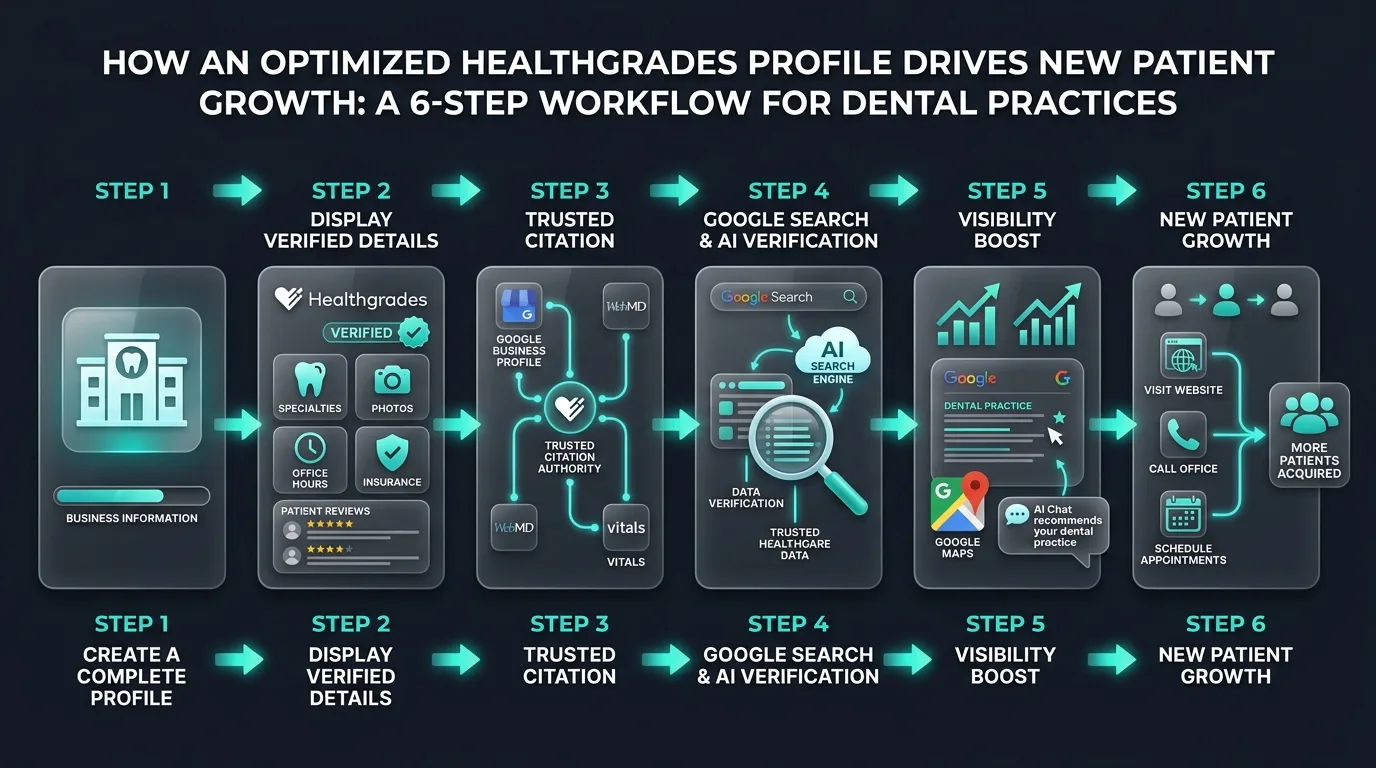
Optimizing your Healthgrades profile builds a high-authority citation, generates patient trust through reviews, and feeds verified data to AI search engines that recommend dental practices.
- High-Authority Citation: Healthgrades is one of the most trusted health directories Google relies on for local search rankings.
- Review Diversity: Patient reviews on Healthgrades complement your Google reviews and strengthen your overall online reputation.
- AI Search Visibility: ChatGPT, Perplexity AI, and Google Gemini use Healthgrades data to verify and recommend dental practices.
- Complete Profile Impact: A fully optimized profile with photos, credentials, insurance, and services maximizes patient conversion rates.
- 1. Why Healthgrades Matters for Dental SEO Marketing
- 2. Step One: Claim Your Healthgrades Profile
- 3. Step Two: Fill Out Your Complete Practice Information
- 4. Step Three: Add a Professional Photo and Practice Photos
- 5. Step Four: Write a Strong Practice Description
- 6. Step Five: Generate More Patient Reviews on Healthgrades
- 7. Step Six: Keep Your Profile Updated
- 8. How Healthgrades Supports Your Full Dental SEO Strategy
- 9. Why Your Healthgrades Profile Matters for AI Search Visibility
- 10. Generative Engine Optimization and Your Healthgrades Profile
- 11. Answer Engine Optimization and Patient Facing Content
- 12. Common Healthgrades Profile Mistakes Dentists Make
- 13. Who Benefits Most From Healthgrades Profile Optimization
- 14. Final Thoughts: Optimize Your Healthgrades Profile and Stay Ahead
- Frequently Asked Questions
1. Why Healthgrades Matters for Dental SEO Marketing
Healthgrades is one of the most powerful directories a dentist can use. It receives millions of visits every month from patients who are actively looking for a doctor or dentist. When someone searches for a dentist on Google, Healthgrades profiles often appear on the first page of results because Healthgrades is a high authority website that Google trusts.
This is exactly why dental SEO experts and dental SEO agencies include Healthgrades as a core part of any dental local SEO marketing strategy.
Your Healthgrades profile does several important things for your dental search engine optimization. It creates a strong citation for your practice, meaning your name, address, and phone number appear on a highly trusted website. It provides a place for patients to leave reviews that influence new patient decisions. It gives AI tools like ChatGPT and Perplexity AI a verified data source they can use to recommend your practice. And it gives your practice a visible presence in Google search results beyond just your own dental website.
If you have never optimized your Healthgrades profile, or if you set it up years ago and forgot about it, this guide will walk you through everything you need to do.
2. Step One: Claim Your Healthgrades Profile
Many dentists already have a Healthgrades profile without realizing it. Healthgrades often creates profiles automatically using public data. The problem is that these auto generated profiles are often incomplete or inaccurate.
The first step is to search for your name on Healthgrades. If a profile exists, claim it. Claiming your profile gives you control over the information displayed. If no profile exists, create one.
Claiming your profile is free. You will need to verify your identity through the process Healthgrades provides. Once you have control of your profile, you can begin optimizing it. This is a step that dental SEO specialists and dental SEO consultants always include when auditing a dentist's online presence as part of a full practice growth assessment.
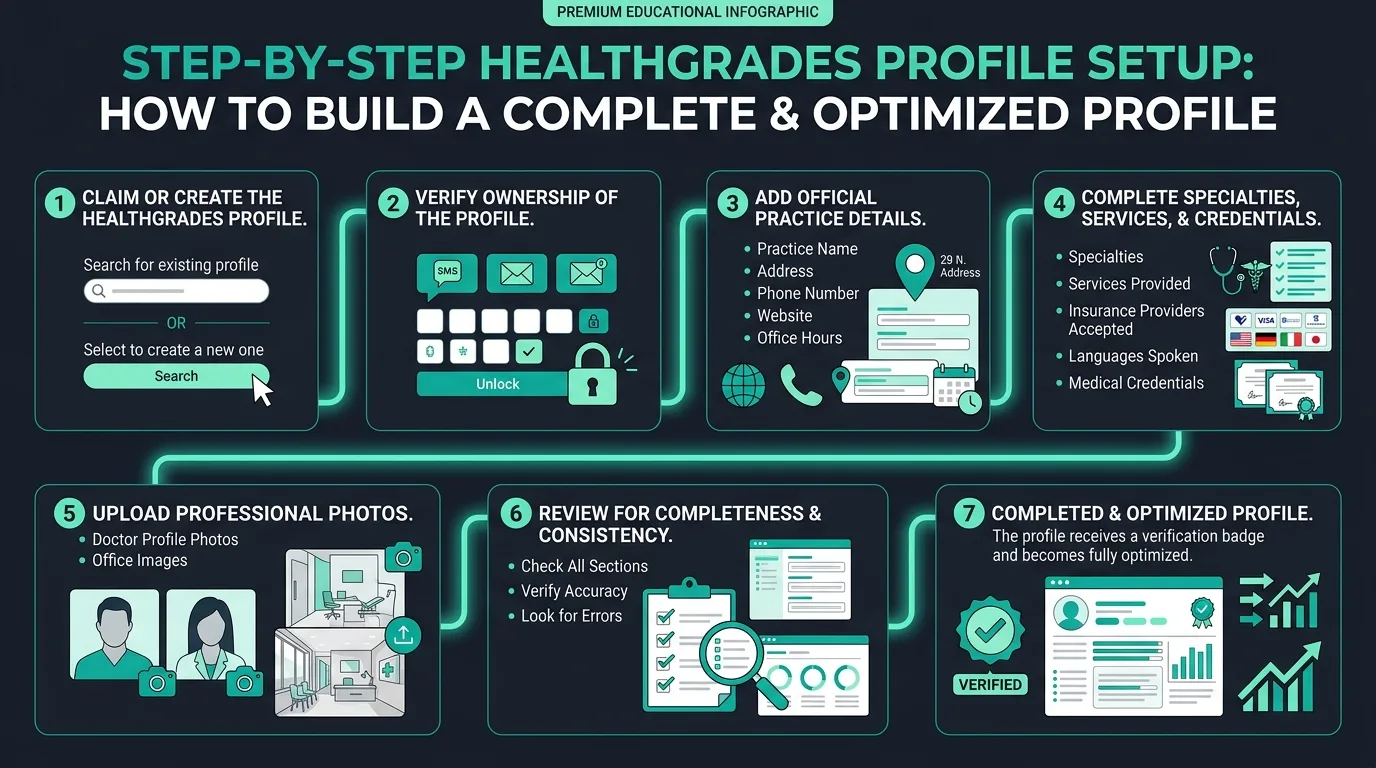 Figure 1: Step-by-step process for claiming and building a complete Healthgrades profile.
 3. Step Two: Fill Out Your Complete Practice Information
The most common mistake dentists make on Healthgrades is leaving their profile incomplete. An incomplete profile misses the opportunity to attract new patients and weakens the citation value the profile provides for your dental local SEO.
Here is what you need to fill out completely.
Your Practice Name
Your practice name must be written exactly the same way it appears on your Google Business Profile, your dental website, and every other directory. This is called NAP consistency. Name, Address, and Phone Number must match everywhere. Inconsistencies confuse Google and weaken your local SEO for dentists.
Your Address and Phone Number
Enter your full address including suite number if applicable. Use the same format you use everywhere else. Your phone number must also match your other listings exactly. These details form the citation that dental SEO services teams rely on to build your local search authority.
Your Specialties and Services
Healthgrades lets you list your dental specialties and the services you offer. Be thorough here. List general dentistry, dental implants, cosmetic dentistry, orthodontics, teeth whitening, emergency dentistry, and any other services your practice provides. The more complete this section is, the more relevant your profile becomes to patients searching for specific dental services.
Dental SEO marketing experts know that detailed service listings on high authority directories improve both your Healthgrades visibility and your overall dental search engine optimization performance.
Your Education and Credentials
Patients trust dentists who show their credentials. Fill out your dental school, year of graduation, residency programs, board certifications, and any advanced training. This builds patient confidence and signals expertise to both patients and AI tools that evaluate professional authority.
Your Office Hours
Make sure your hours are accurate and up to date. Wrong hours frustrate patients and damage your online reputation. Update your Healthgrades hours any time your schedule changes.
Your Languages Spoken
If your practice serves patients who speak languages other than English, list those languages. This is a simple detail that can make a significant difference in reaching a wider patient audience in your local area.
Accepted Insurance
Patients often filter their search on Healthgrades by insurance provider. If you accept certain insurance plans, list all of them. This directly increases how often your profile appears in patient searches on the platform.
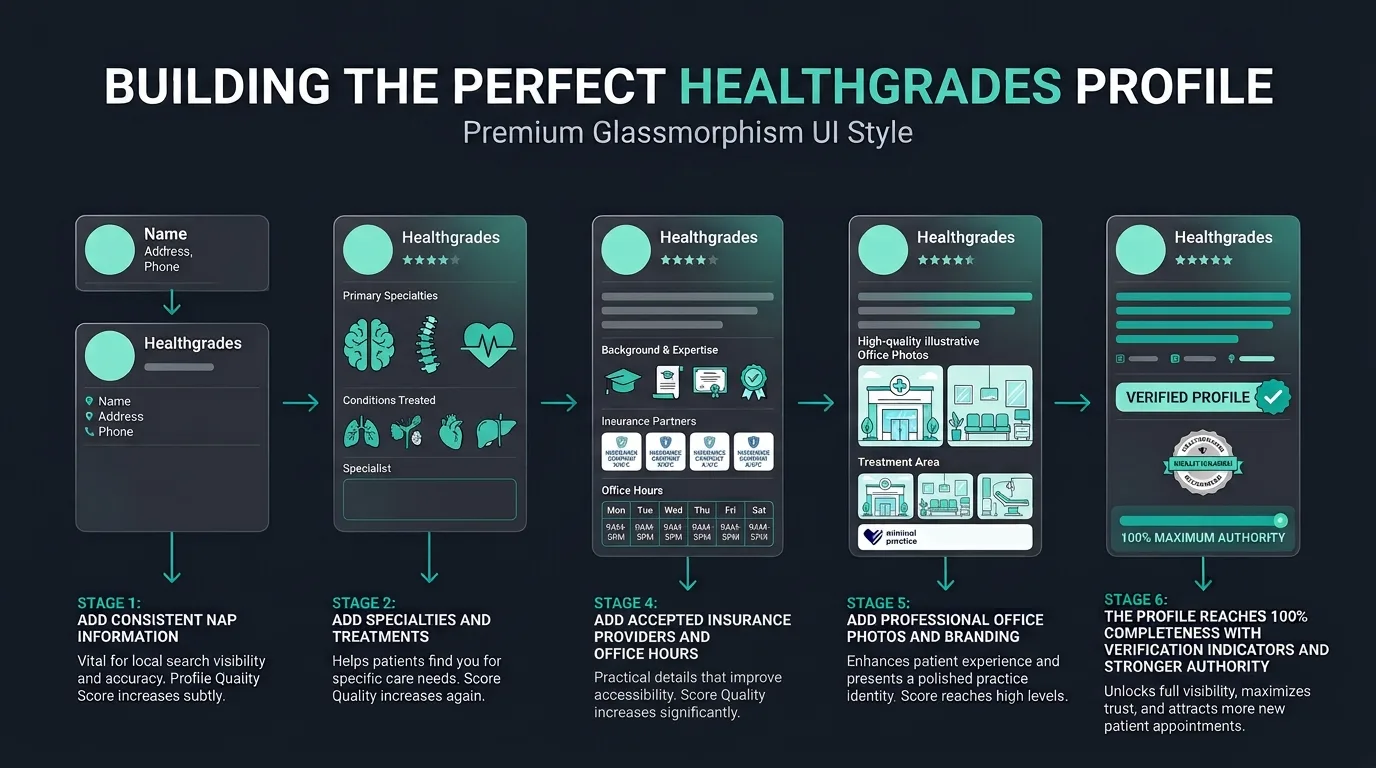 Figure 2: Stages for building a complete and verified Healthgrades profile from consistent NAP to full authority.
 4. Step Three: Add a Professional Photo and Practice Photos
Profiles with photos get significantly more engagement than profiles without them. Add a professional headshot of yourself. If you work in a group practice, add photos of the team. Add photos of your office exterior and interior to help patients feel familiar with your practice before they arrive.
Dental photography is a tool that dental SEO marketing experts recommend for all directory profiles, not just Healthgrades. Patients make judgments quickly based on visuals. High quality images build trust and make your practice look professional and welcoming. For guidance on effective dental practice photography, see our GBP photos guide.
5. Step Four: Write a Strong Practice Description
Healthgrades gives you a space to write about yourself and your practice. Use this space wisely. Write a clear and direct description of who you are, what services you offer, what types of patients you serve, and what makes your practice different.
Write in plain language that is easy to understand. Avoid overly technical dental terms that patients might not know. Focus on the patient experience and the outcomes you help patients achieve.
This description is also an opportunity to include relevant dental SEO keywords naturally. Mentioning your city, your specialty services, and the types of patients you focus on helps make your profile more relevant to local searches on both Healthgrades and Google.
Dental SEO marketing services teams write these descriptions carefully because they know that well written profile content contributes to both directory rankings and dental search engine optimization performance.
6. Step Five: Generate More Patient Reviews on Healthgrades
Reviews are the most powerful part of your Healthgrades profile. Patients read reviews carefully before deciding which dentist to call. More positive reviews and a higher average rating make your profile much more attractive to new patients.
Reviews on Healthgrades also signal to Google that your practice is trusted and active. This contributes to your online reputation and your overall dental local SEO performance.
Here is how to get more Healthgrades reviews.
- Ask patients directly after their appointment. Train your front desk team to mention Healthgrades as one of the places where patients can share their experience. Call coaching is a strategy dental SEO agencies use to help front desk teams do this naturally and effectively.
- Send follow up messages after appointments. An automated text or email that thanks patients for visiting and includes a link to leave a review on Healthgrades makes it easy for patients to follow through. Marketing automation tools can handle this process for you so no patient is missed.
- Make it easy. The fewer steps a patient has to take to leave a review, the more likely they are to do it. Provide a direct link to your Healthgrades review page in any follow up communication.
- Respond to reviews. Responding to both positive and negative reviews shows patients and Healthgrades that you are engaged and care about patient feedback. This improves your online reputation and the overall performance of your profile.
Dental SEO marketing experts include review generation as a core component of dental SEO strategies because the impact on new patient acquisition is direct and measurable.
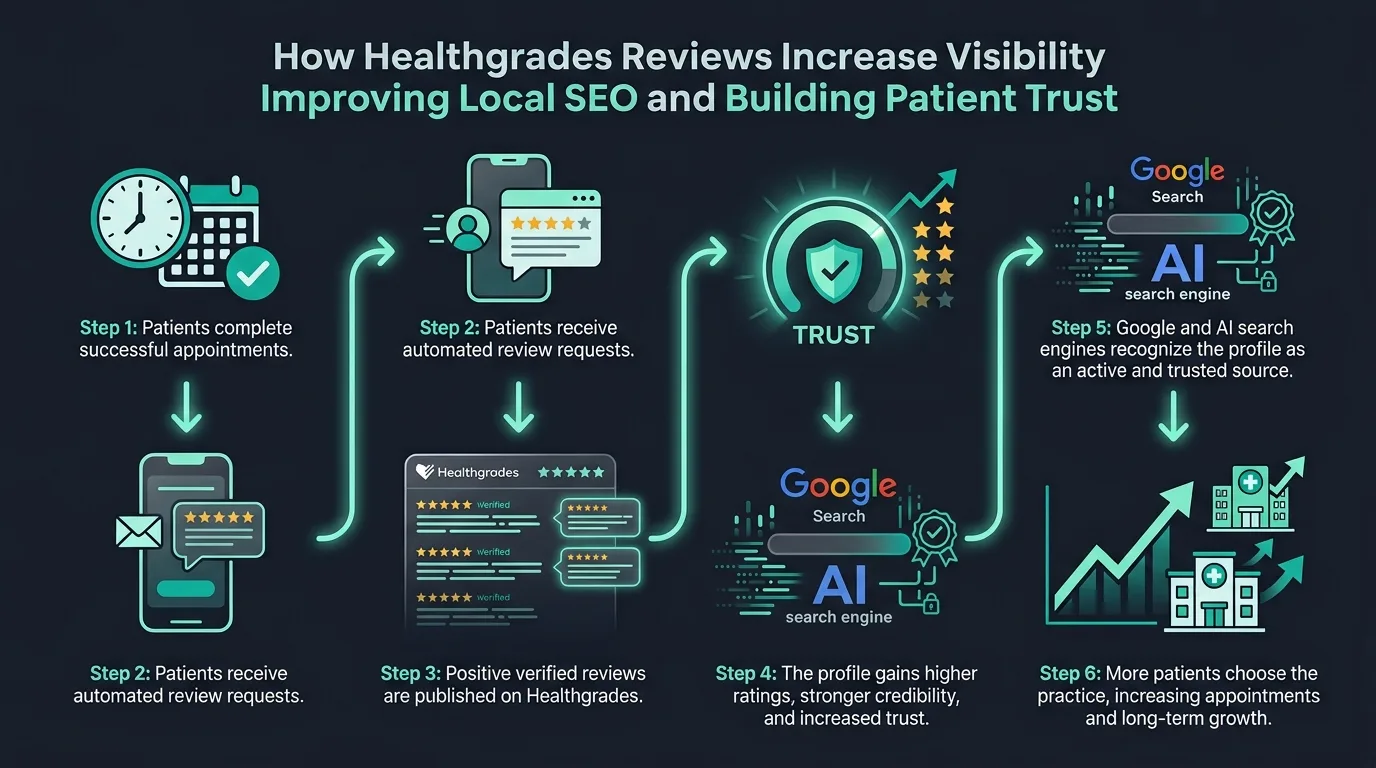 Figure 3: How patient reviews on Healthgrades drive trust signals to Google and AI search engines.
 7. Step Six: Keep Your Profile Updated
A Healthgrades profile is not a set it and forget it tool. It needs regular attention to perform well for your dental local SEO.
Update your hours whenever they change. Add new services as your practice grows. Update your team photos if staff members change. Respond to new reviews promptly. Check that your contact information stays accurate.
Dental SEO companies that manage local listings for their clients build Healthgrades monitoring into their regular workflow. An outdated profile loses patient trust and loses the citation value it provides for your dental search engine optimization.
8. How Healthgrades Supports Your Full Dental SEO Strategy
Healthgrades does not work in isolation. It is one important piece of a complete dental SEO marketing plan. Here is how it connects to everything else.
Citation Building
Every directory listing where your correct practice information appears is a citation. Healthgrades is a high authority citation source. The more high authority citations you have pointing to your practice with consistent information, the more confident Google becomes about your practice. This confidence translates into better local search rankings and better Google Maps visibility.
Dental SEO strategies always include building and maintaining citations on Healthgrades alongside Google Business Profile, Yelp, Zocdoc, WebMD, Vitals, Facebook, and other key directories.
Review Diversity
Having reviews on multiple platforms including Healthgrades, Google, and Yelp signals to Google that your practice is widely trusted. Dental SEO marketing experts call this review diversity, and it is an important part of building a strong online reputation for your dental practice. Learn more in our dental practice reviews guide.
Dental Website SEO
A well optimized Healthgrades profile links back to your dental website. This backlink from a high authority health website helps your dental website SEO by improving the authority Google assigns to your site. More authority means higher organic rankings for your dental SEO keywords.
Search Engine Visibility
Healthgrades profiles rank in Google search results on their own. When someone searches for your name or a dentist in your area, your Healthgrades profile may appear in the search results alongside your own website. This gives your practice more real estate on the search results page, which increases your overall online visibility.
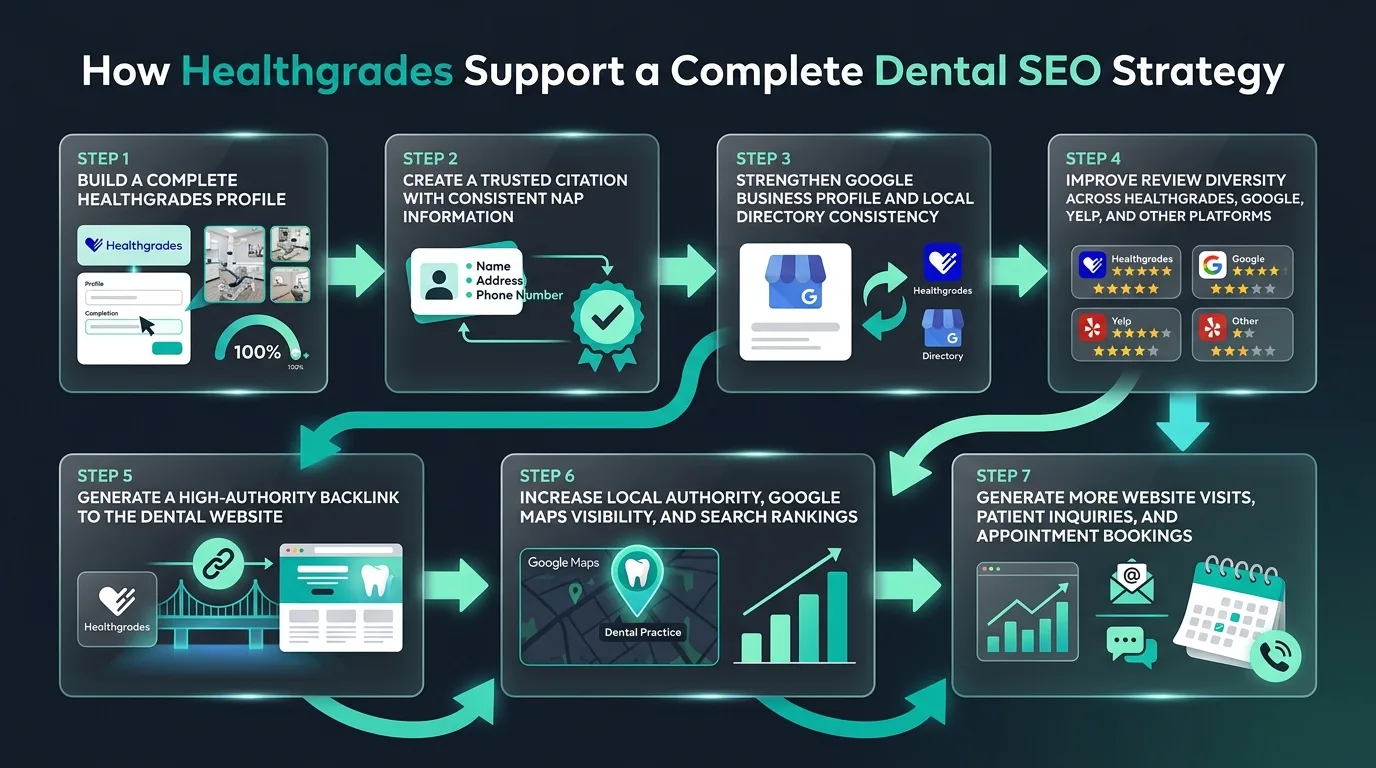 Figure 4: Healthgrades connects citation building, review diversity, backlinks, and Google Maps visibility into a unified dental SEO strategy.
 9. Why Your Healthgrades Profile Matters for AI Search Visibility
Here is something critical that every dentist must understand in 2025. Optimizing your Healthgrades profile is no longer just about Google rankings and patient reviews. It is now directly connected to whether AI tools recommend your practice to patients.
Tools like ChatGPT, Perplexity AI, Google Gemini, Microsoft Copilot, and SearchGPT are increasingly used by patients to find healthcare providers. These AI tools do not just pull results from Google. They scan trusted data sources across the internet to find verified, accurate, and comprehensive information about local providers.
Healthgrades is one of the sources these AI tools trust most. When a patient asks ChatGPT to recommend a good dentist in their city, ChatGPT pulls data from high authority health directories like Healthgrades. If your profile is complete, accurate, and filled with positive reviews, it is more likely to be identified as a verified source and cited in the AI answer.
If your profile is incomplete, outdated, or missing, you are invisible to those AI tools and you lose that patient recommendation.
This is why dental SEO marketing strategies must now include what is called AI search optimization alongside traditional local SEO for dentists.
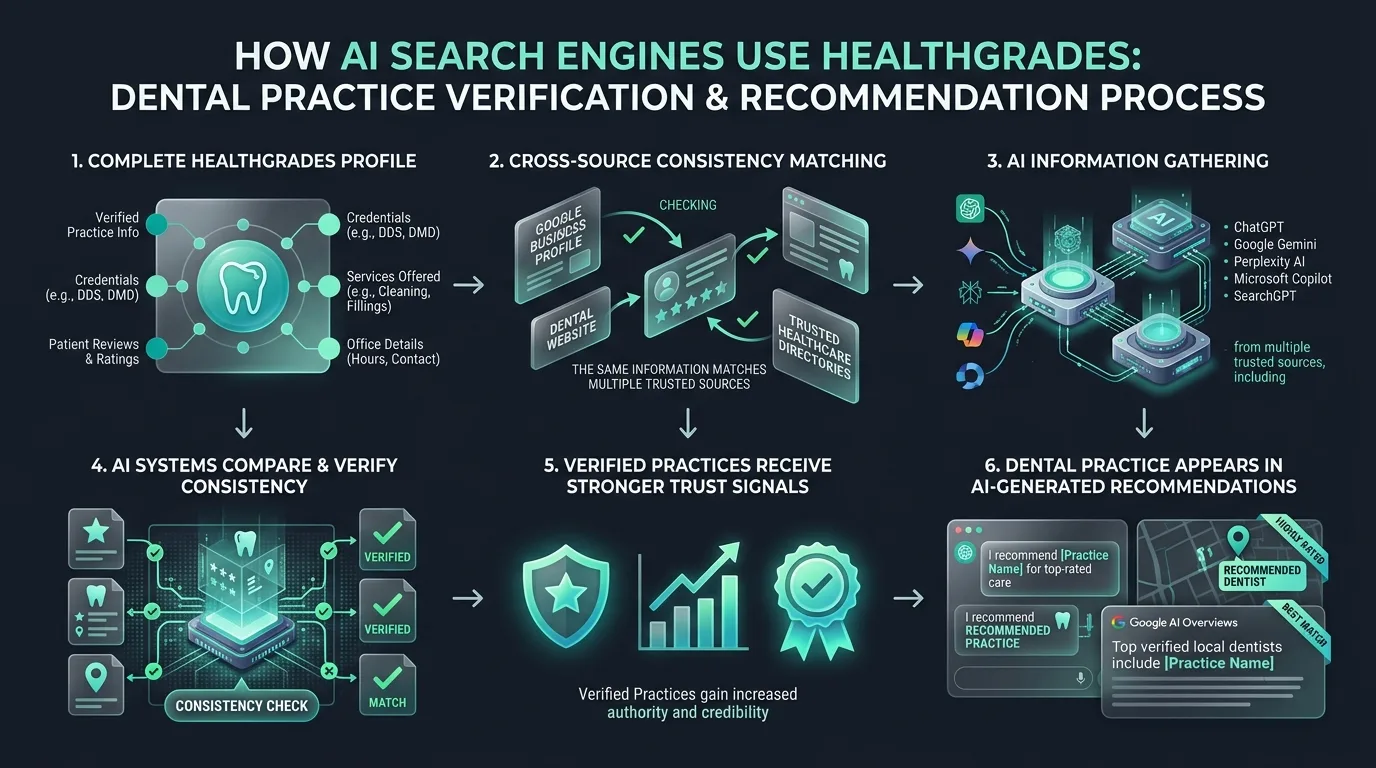 Figure 5: AI engines cross-reference Healthgrades data with multiple sources to verify and recommend dental practices.
 10. Generative Engine Optimization and Your Healthgrades Profile
Traditional SEO means getting your dental practice to rank on Google. That still matters. But it is no longer enough on its own.
Generative Engine Optimization, or GEO, is the process of structuring your dental practice data so that AI engines can identify your practice as a credible, verified source and actively cite you in their generated answers.
Your Healthgrades profile is part of your GEO strategy whether you realize it or not. AI tools like ChatGPT and Perplexity AI crawl and reference data from trusted health directories. A fully optimized Healthgrades profile gives these tools more complete and trustworthy information about your practice. More complete information means a higher chance of being cited when an AI tool answers a patient's question about dentists in your area.
Dental SEO agencies that understand GEO build optimization strategies that cover all major data sources AI tools use, including Healthgrades, Google Business Profile, your dental website, and other health directories. The goal is to make your practice the obvious verified choice that AI tools confidently recommend.
If your dental SEO company is not talking about GEO and how your directory profiles contribute to AI visibility, it is time to ask why.
11. Answer Engine Optimization and Patient Facing Content
Answer Engine Optimization, or AEO, is a strategy focused on making your dental content the source that AI tools pull from when answering patient questions directly.
Tools like Google AI Overviews, Perplexity AI, and Microsoft Copilot favor content that gives clear and direct answers. When a patient asks one of these tools "What is the best dental implant dentist in my city?" the tool looks for structured, clear, and trustworthy content to base its answer on.
Your Healthgrades profile contributes to AEO because it is a structured data source that describes your credentials, services, location, and patient ratings in a clear and organized way. AI tools can read this information easily and use it to construct answers.
Your dental website also needs to be optimized for AEO. Pages on your website that directly answer common patient questions like "How much does a dental implant cost?" or "What should I look for in a dentist?" help AI tools use your content in their answers. This is a form of dental content marketing that dental SEO marketing experts use to increase a practice's AI visibility and organic traffic.
Dental SEO strategies that include both GEO and AEO put your practice in a far stronger position than practices that only focus on traditional Google rankings. The best dental SEO companies build all three layers of visibility, traditional search, Google Maps, and AI search, into every client strategy.
12. Common Healthgrades Profile Mistakes Dentists Make
Here are the most common mistakes that hurt dental SEO marketing results on Healthgrades and how to avoid them.
- Leaving the profile unclaimed. An unclaimed profile has inaccurate auto generated information that you cannot fix. Always claim your profile.
- Using inconsistent practice names. If your name looks different on Healthgrades than it does on Google or your dental website, it weakens your citation signals. Use the same name everywhere with no exceptions. Learn more about NAP consistency.
- Not listing insurance plans. Patients filter by insurance. Missing insurance listings means missing patients who are actively looking for a dentist that accepts their plan.
- Ignoring reviews. Not asking for reviews and not responding to the ones that come in hurts both your patient conversion rate and your online reputation. See our guide on handling negative reviews.
- Leaving the profile static. A profile that never gets updated looks abandoned. Update it regularly and treat it as a living part of your dental SEO marketing strategy.
- Not linking to your dental website. Make sure your Healthgrades profile links to your current dental website. This backlink has real value for your dental website SEO.
13. Who Benefits Most From Healthgrades Profile Optimization
Every type of dental practice benefits from an optimized Healthgrades profile. But some situations make it especially important.
- A startup dental practice needs every advantage to start generating new patient leads quickly. A fully optimized Healthgrades profile with early reviews can produce new patient calls within weeks of opening. See our new dental practice SEO guide.
- An established dental practice that has been around for years may have an old and incomplete Healthgrades profile. Optimizing it can produce quick wins in new patient visibility without requiring a large marketing budget.
- A solo practitioner competing against group practices and DSOs can use a highly optimized Healthgrades profile to stand out. Patients trust individual reviews and detailed profiles. A solo dentist with a well built Healthgrades presence can attract high value patients who are looking for a personal and experienced dental provider.
- A multi location dental group or DSO needs an optimized Healthgrades profile for each location. Each dentist in the group should have their own individual profile as well. Managing this at scale is something dental SEO companies that specialize in multi location dental practices handle regularly.
- A dental practice focused on high value services like dental implants, cosmetic dentistry, or full arch cases benefits enormously from a detailed Healthgrades profile that highlights those specialties. Patients considering these services do extensive research before choosing a provider. A complete profile with strong reviews and detailed credentials makes a compelling case.
14. Final Thoughts: Optimize Your Healthgrades Profile and Stay Ahead
Your Healthgrades profile is one of the most valuable tools in your dental SEO marketing toolkit. It builds your online reputation, improves your citation profile for local SEO for dentists, drives new patient leads, and helps AI tools like ChatGPT, Perplexity AI, and Google Gemini identify your practice as a verified and trusted source.
Optimization is straightforward. Claim your profile. Fill out every section completely. Add professional photos. Generate patient reviews consistently. Keep everything updated. Link to your dental website.
But do not stop there. In 2025, your dental SEO strategy must go beyond traditional search engine optimization. Generative Engine Optimization and Answer Engine Optimization are now essential for any dental practice that wants to stay visible as AI tools become a primary way patients find dental care.
Work with a dental SEO agency or dental SEO expert who understands the complete picture. The best dental SEO companies build strategies that cover traditional local search, Google Maps, Healthgrades and other health directories, and AI search visibility all at the same time.
Your next new patient is searching for a dentist right now on Google, on Healthgrades, and inside AI tools. Make sure your practice shows up, looks great, and earns their trust the moment they find you.
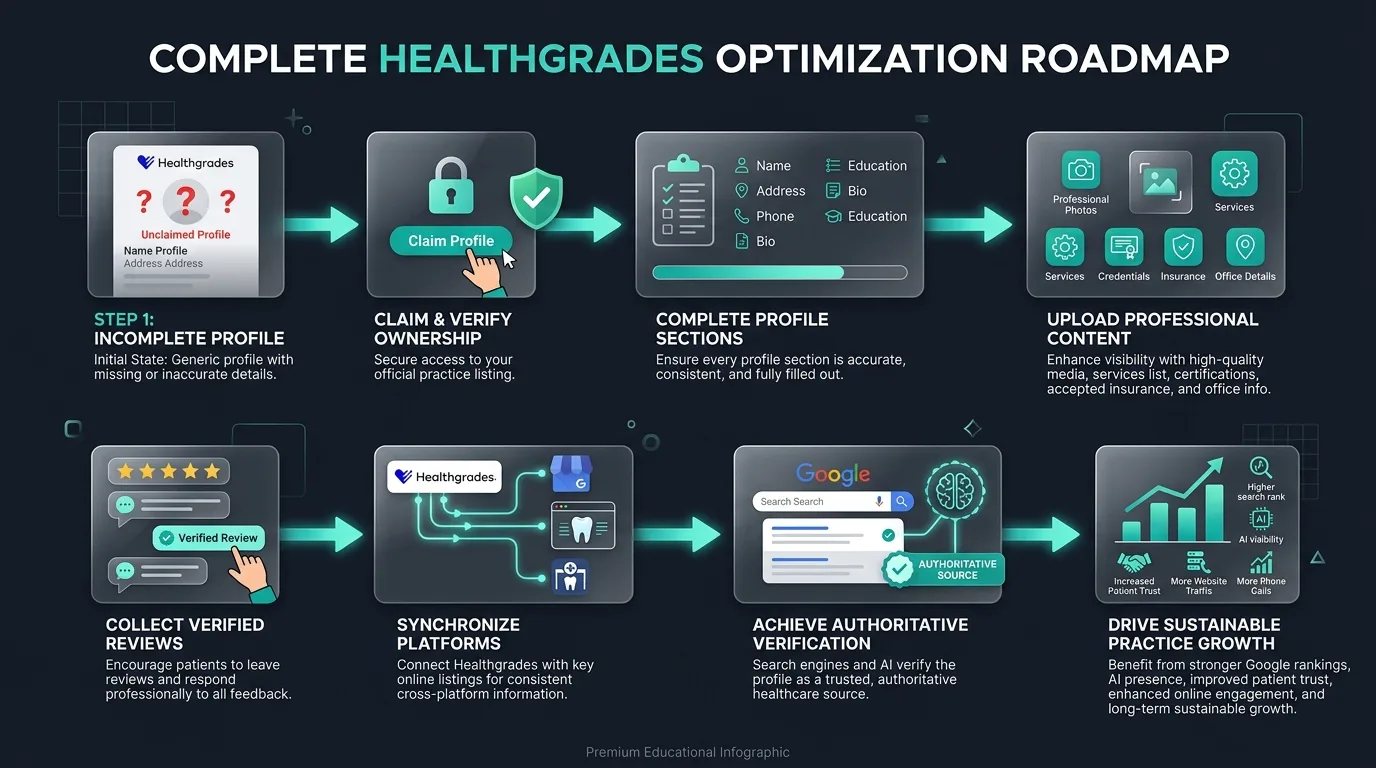 Figure 6: The complete Healthgrades optimization roadmap — from unclaimed profile to verified authority and sustainable practice growth.
 Complete Dental SEO & Local Growth Directory
Access our complete knowledge base of step-by-step guides to optimize your search engine visibility, rank in Google Map Packs, and get recommended by ChatGPT, Gemini, and search engines.
Google Business Profile
- Complete GBP Guide
- Step-by-Step Setup Guide
- Best GBP Categories for Dentists
- Google Map Pack Strategy
- GBP Weekly Posting Guide
- How to Respond to Reviews
- Google Map Photos Guide
- GBP Insights & Analytics
- How to Read GBP Insights
Reviews & Reputation
Local Citations
- Local Citations Guide
- Best Dental Directories List
- NAP Consistency Principles
- Fixing Inconsistent Citations
- Healthgrades Profile SEO
- Zocdoc SEO Strategy
Service Page SEO
- Service Page SEO Overview
- Emergency Dentist SEO
- Emergency Near Me Rankings
- Dental Implants Marketing
- Implant Cost Page SEO
- Invisalign SEO Strategy
- Invisalign vs Braces SEO
- Cosmetic Dentistry SEO
- Teeth Whitening Marketing
- Dental Veneers SEO
- Pediatric Dentist SEO
- Sedation Dentistry SEO
- Root Canal Treatment SEO
- Orthodontist SEO Strategy
Keyword Research
- Dental Keyword Research
- Geo-Modifier Keywords
- Near Me Keywords Strategy
- Long-Tail Keywords Guide
- Patient Search Intent
- Neighborhood SEO Pages
- Multi-Location SEO Pages
- Voice Search Optimization
Technical & Mobile SEO
Local Link Building
- Local Link Building Guide
- Community Backlinks Setup
- Local Sponsorship Links
- Press & PR Link Building
- Dental Guest Posting
AI Search & GEO/AEO
Frequently Asked Questions
Yes. Claiming your Healthgrades profile is completely free. You simply search for your name on the platform, select your profile, and verify your identity to gain editing access. All core profile optimization — including adding your NAP, services, credentials, photos, and responding to reviews — is available at no cost.
Healthgrades profile updates typically take a few days to reflect on the platform. The SEO impact, including citation improvements and Google indexing of updated content, usually takes 4 to 8 weeks to become noticeable in local search rankings and Google Maps visibility.
Yes. Google recognizes reviews on authoritative third-party platforms like Healthgrades as trust signals. A strong volume of positive Healthgrades reviews contributes to your overall online reputation, which is a known ranking factor in Google's local search algorithm.
Absolutely. Healthgrades and Google Business Profile serve different but complementary roles in dental SEO. Your GBP drives Google Maps visibility, while Healthgrades builds a high-authority citation, provides review diversity, and feeds data to AI search engines like ChatGPT and Perplexity AI.
AI tools like ChatGPT, Google Gemini, and Perplexity AI scan trusted healthcare directories including Healthgrades to verify dental providers. A complete, accurate, and well-reviewed profile gives these AI systems the confidence to recommend your practice in generated answers to patient queries.

Ready to Dominate Local & AI Search?
Navigating the complexity of Local Map Packs, traditional search rankings, and emerging AI engine visibility can be difficult. Schedule a practice growth audit with our dental SEO specialists today. We will analyze your practice listings, audit your competitor strategies, and layout the exact plan needed to capture high-value cases.
Schedule Growth Assessment